The Kimi K3 distillation controversy is not simply a story about a Chinese model improving quickly. In July 2026, a U.S. administration official and Anthropic alleged that Moonshot AI had extracted outputs from Claude-family models at scale and used them to train Kimi K3. This Claude unauthorized extraction allegation cannot be independently proved or disproved by Moonshot’s released Kimi K3 weights and technical report alone. This article does not turn an accusation into a verdict. It asks instead what distillation is, and where permitted knowledge transfer ends and unauthorized capability extraction begins.
The available public record does not establish that “Kimi K3 stole Claude.” Unauthorized extraction in this article is an allegation by Anthropic and U.S. government figures; no court finding or independent audit of the entire training corpus is public. If the allegation of mass output collection through fraudulent accounts and access evasion is true, however, calling it merely “distillation” would be an overly gentle description.
1. What is disputed, and what is actually known
The DataNet article supplied by the reader introduced the Kimi K3 distillation dispute in Korea. Automated access to its full text was blocked, so the core factual claims here have been checked again against primary material and several reports.
In February 2026, Anthropic said that accounts it associated with DeepSeek, Moonshot, and MiniMax had tried to extract capabilities from its models at industrial scale. It said Moonshot-linked activity accounted for more than 3.4 million exchanges and described fraudulent accounts and proxy-mediated access evasion. A White House Office of Science and Technology Policy official later publicly repeated the claim that Moonshot had distilled output from Anthropic’s Fable into Kimi K3. Anthropic’s announcement, Axios reporting, and ITmedia’s report document the allegation and the policy response.
There is an important fact on the other side as well. Moonshot released the Kimi K3 technical report and weights, describing a stabilized latent MoE design that activates 16 of 896 experts per token. That explains model structure and claimed training efficiency; it is not a complete ledger proving the origin of every external teacher-model output. Similar benchmark performance is not proof of distillation either. Similar public data, architecture choices, and benchmark optimization can also produce similar results.
| Question | What can currently be checked | What remains unverified |
|---|---|---|
| Unauthorized extraction | Anthropic and U.S. officials allege mass output collection and evasion | Complete access records and a judicial factual finding |
| Kimi K3 release | Moonshot released weights and a technical report | The provenance of all training data and teacher outputs |
| Similar performance | Comparable benchmark outcomes may be observed | A causal link from similarity alone to distillation |
| Rule breaking | Possible violations of terms and account controls are debated | Final contract, copyright, and unfair-competition liability |
2. What distillation originally means
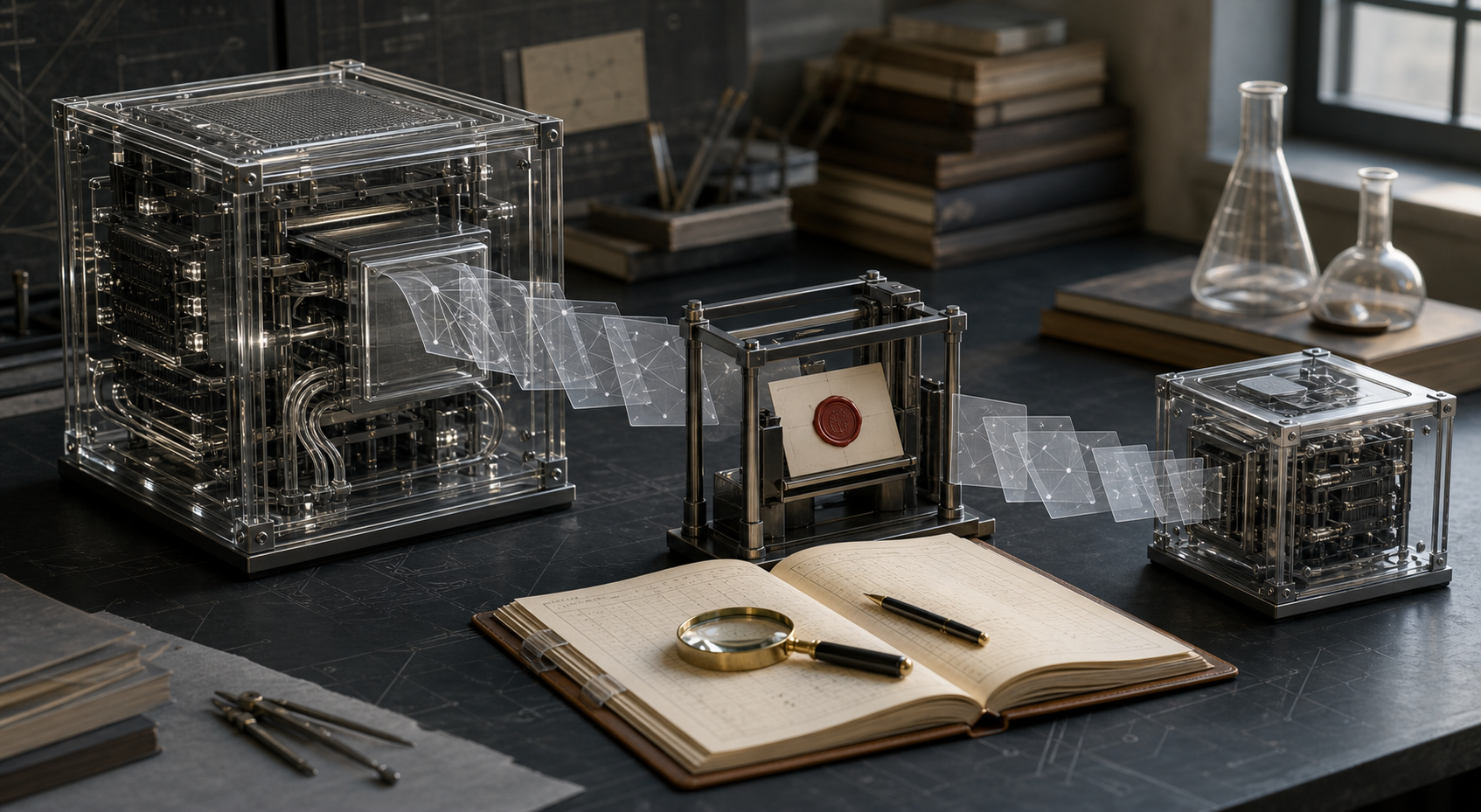
Knowledge distillation is a technique for training a smaller or easier-to-deploy student model with the output distribution, explanations, or reasoning traces of a stronger teacher model. The 2015 paper by Hinton, Vinyals, and Dean set out a way to transfer a large model’s or ensemble’s “soft” output probabilities to a student, helping compression and generalization. Distillation is therefore not originally the name of an unlawful act; it is a standard method for model compression and transfer. The original paper is the starting point.
In its simplest form, the teacher answers a prompt and the student learns not only a target string but also how plausible the teacher considered each alternative.
Commercial model APIs often return text rather than soft logits. In practice, a developer may collect explanations, code, and reasoning answers through many prompts, then fine-tune a student on them; this too is often called distillation in a broad sense. The central question is not the equation but rights and the access path.
- Did the teacher-model owner permit reuse of the outputs for training?
- Do the prompt data and user data carry that reuse permission?
- Was collection performed within the ordinary API contract, pricing, and rate limits?
- Is there a reviewable record of who used which teacher to produce how much output?
When these conditions are clear, distillation is useful for research, efficiency, and on-device deployment. If a party instead bypasses terms to replicate a private service’s capabilities at scale, the technical word “compression” does not erase the conduct’s economic meaning. I regard that as close to knowledge theft in substance. That is an ethical and industrial-policy judgment, however; copyright infringement and contract breach in any individual case still require evidence and the applicable law.
3. Chinese AI and disclosed distillation families: why they cannot be treated as one category
The word distillation is not unfamiliar in Chinese AI. The best-known disclosed example is the AI model distillation family released by DeepSeek. The DeepSeek-R1 model card lists six DeepSeek-R1-Distill family models based on Qwen2.5 and Llama variants, and says the Qwen-based models were fine-tuned on 800,000 samples curated from DeepSeek-R1. That does not resolve the Kimi K3 allegation. It shows a different kind of claim: the model card identifies the teacher, base models, and data scale in public, alongside released weights and conditions.
| Family | Public explanation of teacher and base | Release form | Relation to the Kimi K3 dispute |
|---|---|---|---|
| DeepSeek-R1-Distill-Qwen/Llama | Model card says DeepSeek-R1 data fine-tuned Qwen2.5 and Llama bases | Weights and model cards | A declared distillation example; evidence of unauthorized access is a separate question |
| Smaller Qwen derivatives | Base and derivative relationships are often listed in model cards and repositories | Weights and license conditions | Disclosure and compliance with each license remain decisive |
| Kimi K3 | Moonshot released structure and weights | Weights and technical report | Provenance is central because of the unauthorized teacher-output allegation |
Nationality cannot be the test. The legitimacy of distillation depends on the teacher model’s rights, data provenance, terms of use, access method, and auditability. Conversely, an “open weights” label is not a pardon. If weights were produced with unauthorized collection of model outputs, releasing the final weights does not remove the controversy.
4. Well-known distilled models on Hugging Face, including Hugging Face OpenR1
Hugging Face makes it especially clear that distillation is not always an undisclosed practice. Prominent public examples include the following.
| Model | What was distilled | Why it matters |
|---|---|---|
| DeepSeek-R1-Distill-Qwen-32B | A Qwen2.5-based model post-trained with selected DeepSeek-R1 data | A representative transfer from a strong reasoning model into a smaller public model |
| DeepSeek-R1-Distill-Llama-70B | DeepSeek-R1 data with a Llama-based model | A large public-weight derivative with its base relationship stated |
| OpenR1-Distill-7B | Qwen2.5-Math-7B post-trained on 350,000 verified reasoning traces distilled from DeepSeek-R1 | A community project that documents a reproducible data and training route |
Hugging Face’s Open R1 project is an attempt to make teacher-output training as reproducible as possible. Its card identifies the base model, number of reasoning traces, and dataset, and distributes the artifact under Apache-2.0. That does not automatically solve every rights question. It does provide a much larger surface for outsiders to inspect what was transferred, from where, and by what method.
5. Are web-trained AI and model-output distillation the same problem?
There is an uncomfortable but unavoidable objection. Today’s large language models were also built by collecting large quantities of public-web writing, images, code, and databases. Where AI training data was crawled without the explicit consent of creators or rightsholders, that too is vulnerable to a critique of unauthorized knowledge appropriation. The U.S. Copyright Office says that it cannot decide in advance that all AI training is fair use or that all of it is infringing, and that voluntary licensing can be feasible in some cases. Its AI report portal and a Congressional Research Service summary capture that legal uncertainty.
The two issues should not be flattened into one, however. Web training raises questions of copying, adaptation, fair use, databases, and compensation for original works. Distillation of a service model adds an API contract, account identity, rate limits, output-use terms, and technical access controls. Both are about consent and compensation, but the evidence and contractual relationships that decide them differ.
| Question | Public-web training | Service-model output distillation |
|---|---|---|
| Main object | Original works such as writing, images, and code | Model-generated answers, reasoning, and code |
| Central issues | Copyright, collection, fair use, compensation | Terms, authentication evasion, output-reuse rights, copyright and unfair competition |
| Records needed | Collection lists, opt-outs, licenses, training impact | Account/API logs, proxy and automation traces, output datasets, teacher contract |
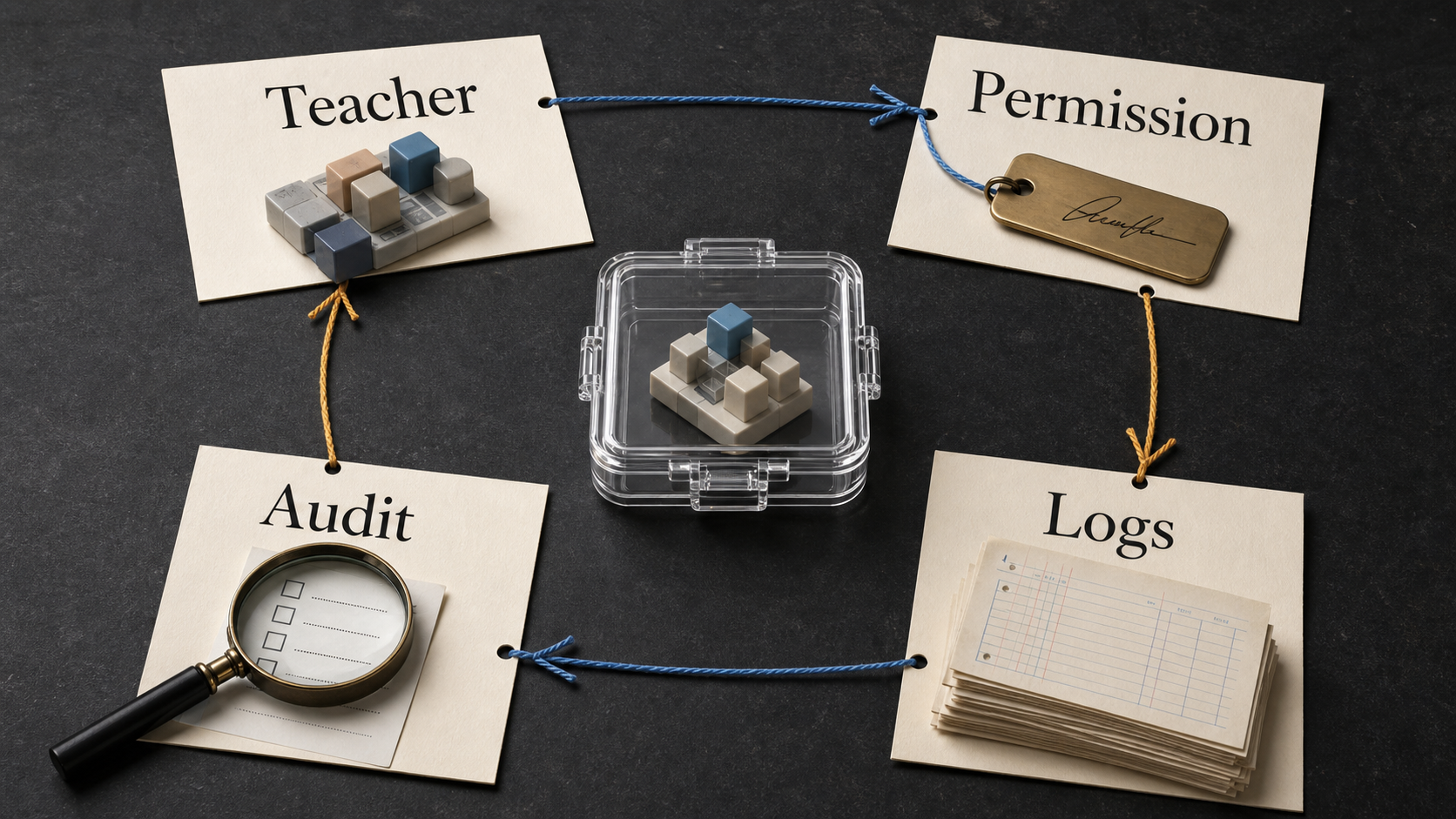
| Better response | Provenance, opt-outs, licensing, compensation | Explicit training permission, rate limits, provenance ledgers, independent audit |
So “big AI scraped the web too, therefore criticism of distillation is hypocrisy” does not resolve the issue. It should instead lead to a rule set for both stages: provenance, consent, compensation, and auditability. Past opacity is not a license for the next opaque practice.
Conclusion: how might this dispute end?
The Kimi K3 distillation controversy is unlikely to end with one statement or one benchmark table. The more probable outcome is a stack of rules rather than a single court ruling. Model providers will strengthen account integrity, abnormal-query detection, rate limits, watermarking, and provenance records. Permission to reuse outputs for training is likely to move from a small API-terms clause into a distinct license. Open-weight projects will face pressure to disclose their base models, teacher outputs, synthetic data, and filtering process in more detail.
Political conflict among competing countries will continue, but nationality and marketing language will not create trust. A third party needs to be able to check whose capabilities were transferred, under what permission, at what scale, and with what records. Distillation is a useful technique. If provenance-free distillation becomes the industry norm, the incentive to invest in creating the next generation of teacher models and original work weakens with it. This dispute will likely end as a struggle to rewrite the ownership, compensation, and verification rules for AI knowledge—not merely a race over intelligence.



No comments:
Post a Comment