Showing posts with label Artificial Intelligence. Show all posts

Wednesday, August 5, 2026

How Claude Is Reshaping the Industrial Landscape

The most important change in Claude automation is not another model score. It is the point where automation begins. In the past, teams first designed which screen a person should open and which button a robot should press, then connected an RPA or API workflow. Now a task can begin with an outcome: “Read these documents, apply the decision criteria, create a report, and share it with the team.”

Anthropic describes Claude Code as an agentic tool that reads codebases, edits files, runs commands, and connects to development tools. Claude Cowork extends the same architecture beyond the terminal into knowledge work, producing formatted documents, organized files, research summaries, spreadsheets, and presentations. This article examines where Claude overlaps with existing automation products and how the work itself may change.

The transition also extends the development shift described in Claude 4 agentic coding and long-running AI workflows into knowledge work.

The role of records, permissions, and audit trails inside enterprise systems becomes clearer when compared with ServiceNow's AI Control Tower and workflow automation.

The same question appears in Microsoft's vertical integration from Azure to Copilot, where identity and work data become part of the platform strategy.

In this article, “threat” does not mean that existing products will disappear immediately. It means that Claude expands the area where unstructured input can be read, a plan can be formed, and several tools can be called, putting pressure on the way automation products are built, priced, and differentiated. The 90% and 95% figures are the author's conditional estimates, not public benchmarks.

Automation is moving from flows to agents

From Claude Code to Claude Cowork

Claude Code is not just a chat window that prints an answer. It is a loop that tries to finish a task: read the code, edit several files, run commands, inspect failures, and choose the next action in the same session. The official Claude Code documentation describes connections to external tools and data through MCP, as well as recurring tasks.
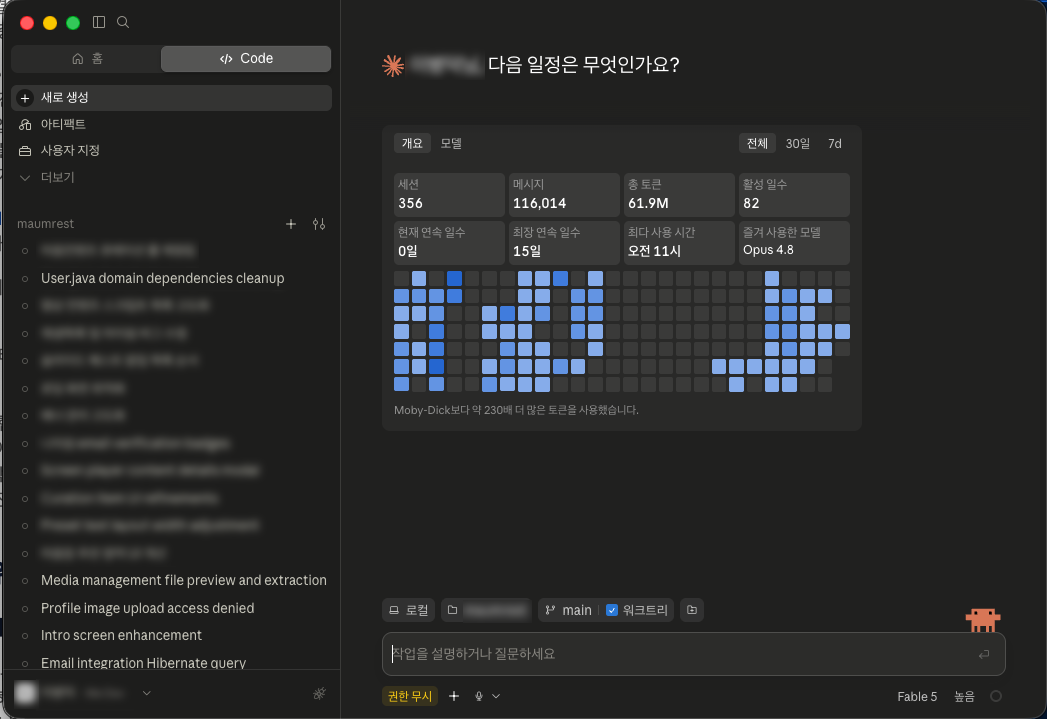
A real Claude Code dashboard showing sessions, token usage, and recent activity

<Claude Code activity dashboard 1.1>

Claude Cowork exposes this structure to non-developers. Instead of learning terminal commands, a user describes the desired outcome. Claude can read files and connectors, carry out multiple steps, and leave behind documents, spreadsheets, or presentations. The Claude Cowork guide describes Cowork as bringing Claude Code's agentic architecture to knowledge work beyond coding, with scheduled tasks and project-level files, instructions, and memory.
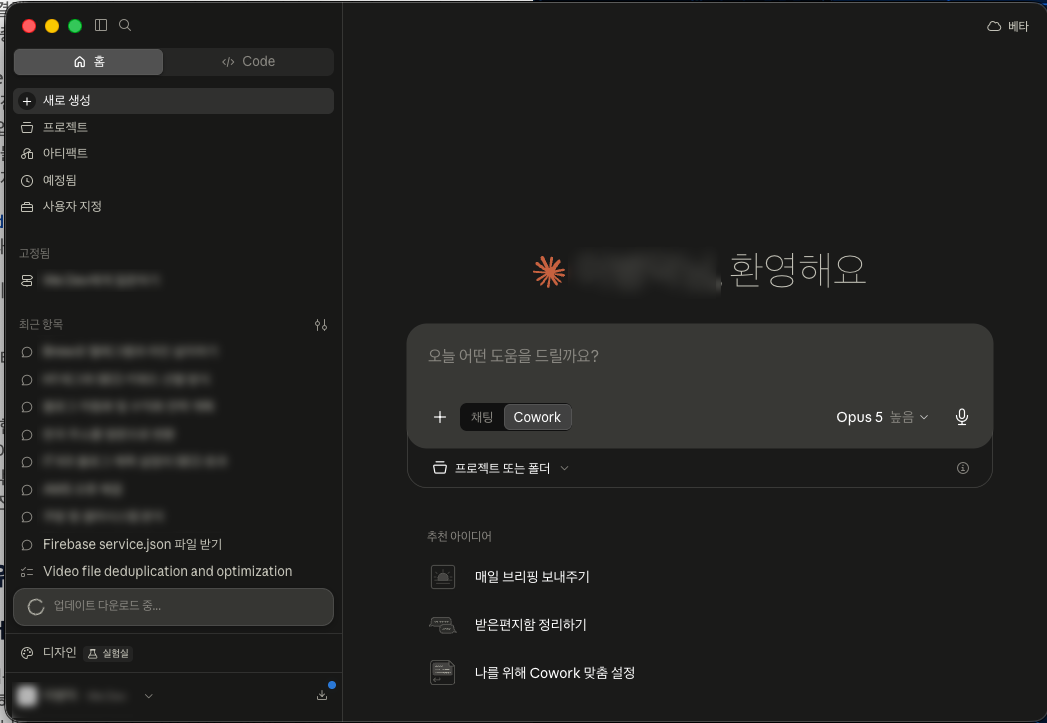
A real Claude Cowork home screen with the Cowork task mode selected

<Claude Cowork task screen 1.2>

The important shift is that developers are no longer the only people who can create the first version of an automation. Developers still need to design permissions, data structures, exception handling, and deployment. But a subject-matter expert can describe what should be processed, when it should happen, and what approval is required.
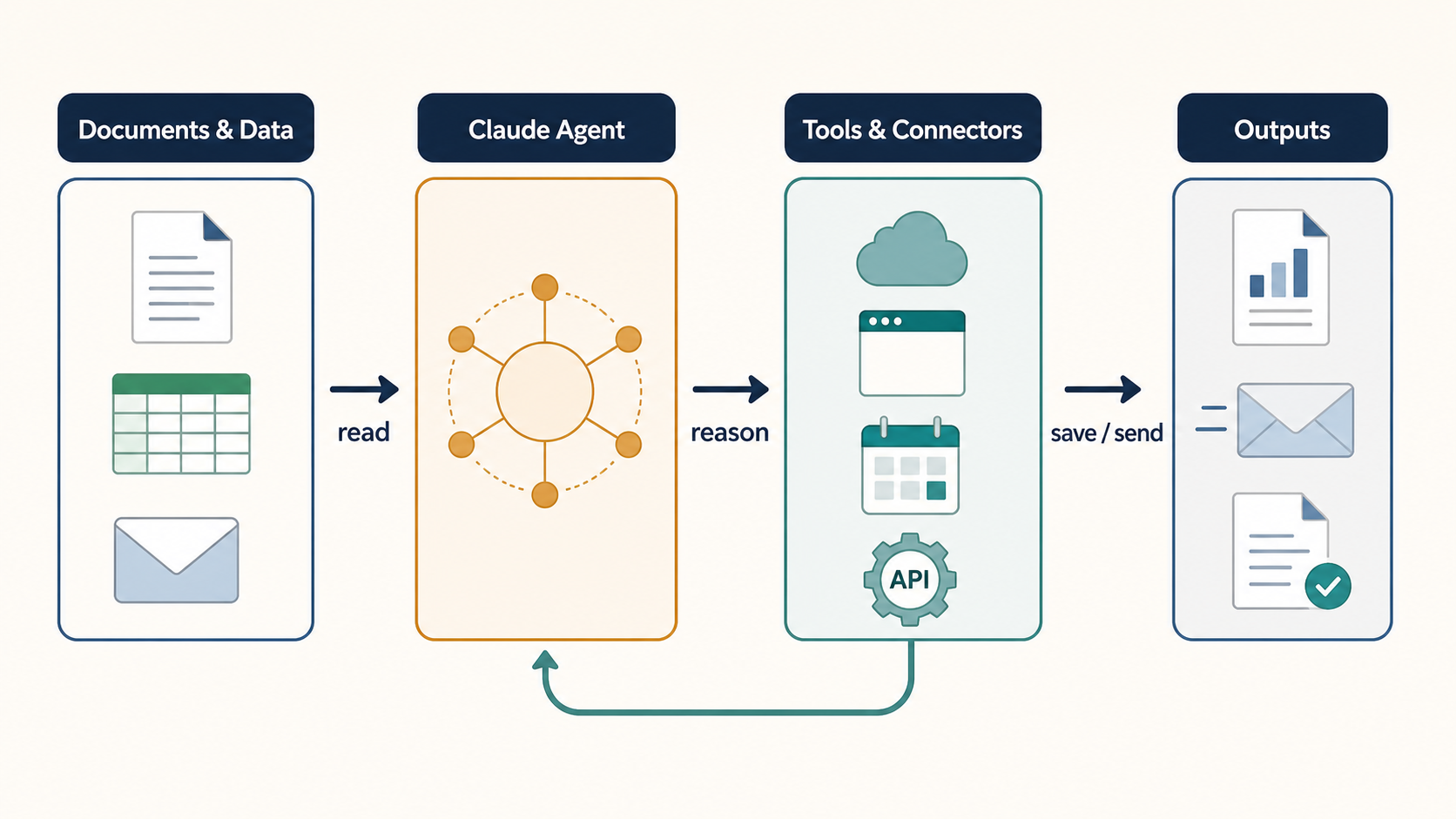
A diagram showing documents and data passing through a Claude Agent to tools and connectors, producing reports and messages

<The Claude agent automation loop 1.3>

Two directions of tool-calling loops

Automation does not have to flow in only one direction. A document can trigger a tool call, or a tool can provide the first input for a new document.

  1. A document-first loop: Read PDFs, Word files, spreadsheets, or email; summarize, classify, and organize the content; save a new document in Google Drive, prepare an email draft, or record the result in a business system.
  2. A tool-first loop: Pull data from a CRM, calendar, Drive, Slack, or an internal API; compare and summarize the results; then create a report, meeting brief, follow-up list, or downstream update.

Anthropic's Google Workspace connector guide describes searching Gmail, Calendar, and Drive, creating documents, and saving generated files to Drive. When no connector exists, computer use in Cowork can navigate a browser or screen directly. It is still a research preview, however, and is slower and more error-prone than a direct connector.

The narrow edge of traditional RPA was the question of exactly where on a computer to read data, which tool to use, and what format to send or save. Screen coordinates, cell locations, filenames, credentials, and exception screens had to be defined in advance. An LLM agent turns part of that problem into contextual reading and planning, but RPA and APIs remain better fits for repetitive work and strict audit requirements.

The automation products Claude puts under pressure

Claude does not replace every existing product. But once a user can describe a goal in natural language, have an agent read an unstructured document, and let it choose the next tool, the overlap with the following product groups grows quickly.

Area Overlapping products Where Claude overlaps Where existing products remain strong
UI and RPA automation UiPath Platform, Power Automate Desktop, Automation Anywhere, Blue Prism Seeing a screen, opening files, and handling long-tail multi-step work Deterministic execution, unattended operation, permissions, audit, retries, and large robot fleets
App connections and iPaaS Zapier Agents, Make AI Agents, n8n, Workato Connecting apps and APIs from natural-language goals and choosing tools conditionally App catalogs, visual flows, run history, retries, and operator monitoring
Document processing and IDP Microsoft AI Builder, UiPath Document Understanding, ABBYY products Reading, classifying, and extracting from PDFs, Word files, and email Fixed schemas, field-level confidence, validation queues, bulk processing, and regulated templates
CRM and back office Salesforce Agentforce Operations, ServiceNow AI Agents Coordinating email, documents, ERP records, and people across a process Native CRM and ITSM context, permissions, process templates, approval chains, and accountability
Enterprise work platforms Microsoft 365 Copilot and Workflows, Google Workspace and Gemini, Notion products Summarizing files, producing briefings, searching team knowledge, and creating follow-up work Tenant security, identity, sharing permissions, and native storage integration

The first part to feel pressure is simple automation-building services. A small team once had to choose triggers and actions one by one to connect an incoming email, file classification, summarization, notification, and storage. Claude can create the first design from the goal and the data location, which lowers the value of purely mechanical wiring.

Existing automation platforms are not treating Claude only as an enemy. UiPath is moving toward a control plane that coordinates agents, robots, tools, and people. Microsoft describes a complementary pattern in which an agent handles judgment while a workflow provides structure and an audit trail. The next differentiator is therefore less “a robot that clicks buttons” and more a safe operating system for deploying, observing, and governing many agents.
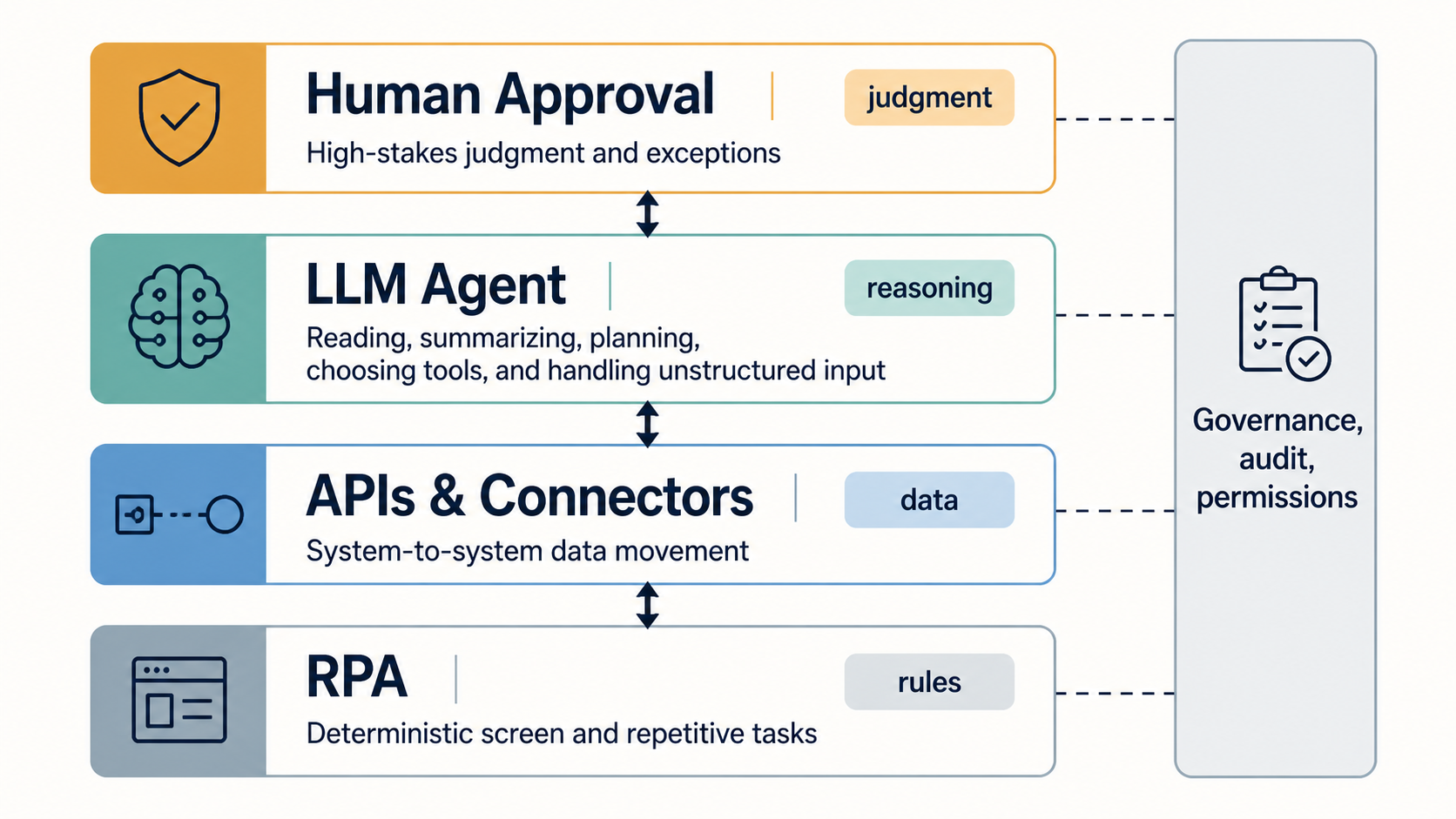
A layered diagram showing RPA, APIs and Connectors, LLM Agent, and Human Approval under shared governance, audit, and permissions

<The boundary between RPA, APIs, LLM agents, and human judgment 2.1>

Claude is better understood as a catalyst that widens the top of the automation market than as one RPA automation product competing with every incumbent. RPA can handle defined screen work, APIs can provide stable system-to-system paths, and an LLM agent can interpret unstructured input and plan the next action. The practical architecture combines all three.

The conditions for automating 90% of knowledge work

Cloud storage and file formats become the foundation

The success of agentic work depends at least as much on tools as on the model.

  • Google Drive, SharePoint, Dropbox, and similar cloud storage become shared locations for files and permissions.
  • Synced folders and desktop connectors reduce manual uploads when an LLM needs access to local files.
  • Word, Excel, PowerPoint, PDF, TXT, and Markdown tools and parsers provide the entry point for opening and understanding files. For region-specific formats such as HWP, teams must verify whether the connector or parser actually supports the format.
  • APIs, MCP, and shell scripts provide the exit path for sending results to another system or producing a new file.

Claude is not limited to reading files. Its file creation and editing capabilities include creating spreadsheets, presentations, documents, and PDFs. When the model that reads and summarizes a file is connected to the tools that produce and deliver the result, the subject-matter expert can focus on the purpose and approval rules instead of each product's menu.

Marketing plans and structured analysis move first

Consider a marketing plan: gather market material, list competitors, classify customer groups, write campaign hypotheses, draft a schedule and budget, then produce a report and presentation. The human still needs to define what should be investigated and which constraints apply. An agent can handle much of the reading and assembly.

I estimate that the document-writing and deliverable-production portion of a well-defined marketing plan can be about 90% automated. This does not mean that an entire campaign is 90% autonomously executed. People still need to verify current market numbers, competitor facts, budget assumptions, and legally sensitive language.

Analysis, summarization, planning, and production in a fixed format can reach a higher level of automation. If the input documents are sufficient, the output format is stable, and a human approval step exists before writing to an external system, I expect more than 95% of that production work to be automatable. This is a conditional estimate that varies with the organization, documents, and permissions.

Scheduled tasks in Claude Cowork turn recurring work into a product feature: summarize email, Slack, and calendar items each morning, or collect Drive material and create a weekly report. The unit of automation changes from “press this button” to “deliver this outcome every week.”

The next competition is security, governance, and judgment

What changes in government, legal, tax, and real-estate work

Public institutions, law firms, tax and accounting practices, and real-estate consultancies can benefit greatly from LLMs because they handle large volumes of text and high-value information. Their work often involves searching historical records, comparing context, drafting policies or opinions, and reporting in a prescribed format. Microsoft's AI Builder document-processing architecture also assumes a flow that receives documents, extracts information, routes review, and communicates the result while people handle exceptions.

These organizations cannot simply send every document to an external LLM. Personal information, confidential records, legal privilege, and sensitive government data may be involved, and an audit must show who accessed which document and which decision was made. Anthropic's Cowork safety guide distinguishes the risk of read tools from write tools and warns that scheduled tasks, browsers, and connectors can pass data across services, so permissions and human review must match the stakes.

In organizations that solve the security, regulatory, and audit problems, I expect much of the routine work currently performed by staff to become automated. “Ninety-five percent of staff become unnecessary” is not the point. The point is that people can be released from the repetitive work of copying, searching, organizing, and formatting, then spend more time on judgment and design.

The roles of idea-setter and document producer separate

In the past, policy and business-plan owners often spent nights searching old records, organizing ideas into documents, preparing drafts, and writing reports. In the future, finding and comparing historical context and generating multiple directions, prototypes, and report drafts will increasingly be automated.

People will spend more time choosing a better direction, applying real-world constraints, and testing whether the result will work in practice. The valuable skill shifts from making one polished document under pressure to judging many candidates and quickly validating a prototype.

Existing RPA and APIs do not disappear in this model. They become more important because an agent's decision still needs to be reflected safely in a business system through APIs, business rules, approval chains, and audit logs. The market is moving toward combining agent reasoning with the control of existing systems, not toward “one LLM does everything.”

The fact that an agent can read a document and call tools does not mean it should run unsupervised. Malicious instructions inside a document, excessive permissions, stale data, API errors, or hallucinations can lead to an unintended message, deletion, or policy decision. Separate read and write permissions, and keep human approval before external transmission and final reporting in sensitive workflows.

Summary

Claude changes the industrial landscape through more than better answers:

  1. Claude Code turns developers' file, command, and tool work into an agentic loop.
  2. Claude Cowork extends that architecture to non-developers working with documents, files, and cloud tools.
  3. RPA, APIs, document processing, and collaboration products are likely to move toward governed orchestration rather than simply disappear.
  4. Structured work can reach a high automation rate, but direction, accountability, security, and final approval are not automatically solved.

Companies that move early are redesigning workflows around AI instead of merely adding another tool. What does your company still copy, search, organize, and reformat by hand? If you can define the purpose, data access, and approval boundary, the first useful automation may be closer than it appears.

Tuesday, August 4, 2026

AI Model Parameters — From 14B to Four H100 GPUs

When people compare AI models, they often see numbers such as 7B, 14B, and 70B. Those numbers count parameters: learned numerical values in the model. More parameters can provide more representational capacity, but quality, speed, and GPU memory are not determined by parameter count alone. Our guides to AI-server GPU bottlenecks and GPU-cloud economics show why model size quickly becomes an infrastructure cost.

Parameters, weights, and model size

A neural network passes inputs through layers using many multiplications and additions. The numbers adjusted during training are parameters. Weights are the important parameters multiplied along connections; biases, embeddings, and normalization values are also parameters in the broader accounting. The terms are often used interchangeably in casual explanations, but they are not perfectly identical.

Model “size” usually means parameter count. Runtime memory starts with parameter count × numerical precision.

Format Approximate bytes per parameter 70B weights alone
FP16/BF16 2 bytes about 140GB
INT8 1 byte about 70GB
4-bit quantization 0.5 byte about 35GB

Real VRAM also needs KV cache, runtime buffers, framework overhead, and headroom. So “70B at 4-bit is about 35GB” is a lower-bound calculation, not a promise that every 35GB card will run it comfortably. Longer context and larger batches require more memory.

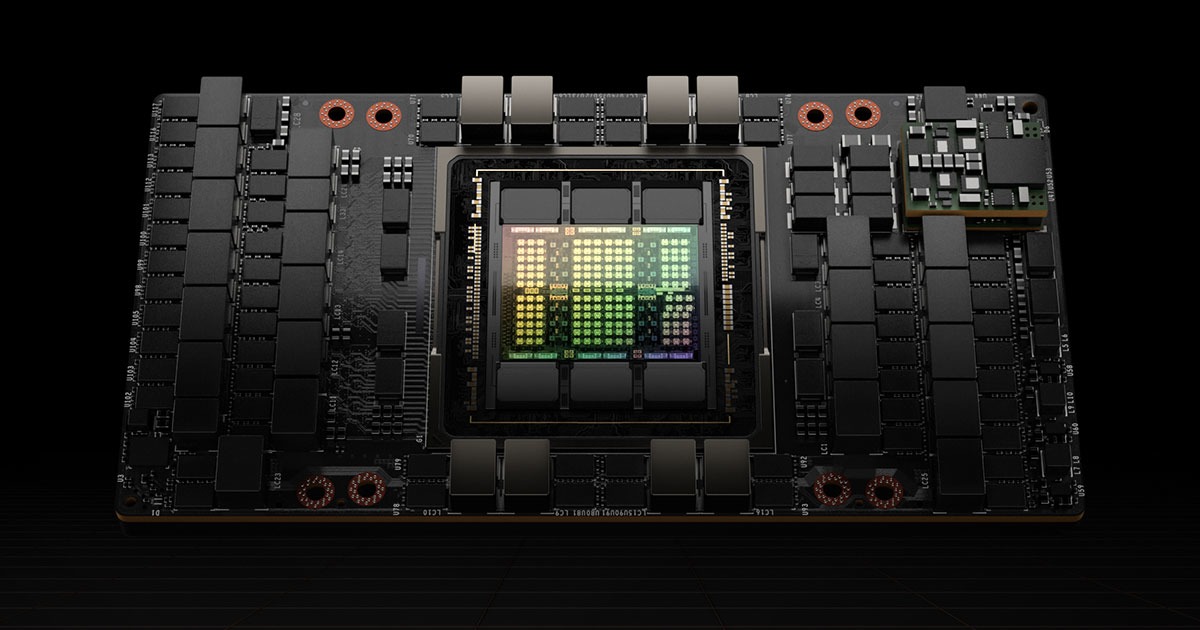
Black NVIDIA H100 data-center GPU board with a central chip

<Official NVIDIA H100 image. NVIDIA distinguishes 80GB H100 SXM from the 94GB H100 NVL in its specifications. Source: NVIDIA>

Practical execution ranges by parameter size

This table is a conservative practical guide based on weight memory and ordinary inference headroom. Quantization, context length, kernels, and model architecture can move the boundary, so these are not hard cutoffs.

Hardware Practical range to expect Reading the result
RTX 5090 32GB 7B–14B comfortably; 20B–27B mainly at 4-bit 30B+ usually needs low context or offloading
One H100 80GB Around 30B in BF16; 70B at 4-bit 40B BF16 is about 80GB for weights alone and leaves no headroom
Four H100 80GB 70B BF16 comfortably; 100B–120B depending on batch and context 150B+ requires careful sharding and deployment design
Four H100 80GB, 300B-class Ordinary dense BF16 is not practical 300B needs about 600GB for BF16 weights alone; MoE still stores total weights

NVIDIA itself describes H100 NVL, with 188GB of combined HBM, as a configuration for Llama 2 70B. That is a useful real-product reference against the claim that a 70B BF16 model fits comfortably on one 80GB H100. A 70B 4-bit model may fit on one card, while BF16 naturally benefits from combined memory such as H100 NVL.

The RTX 5090’s 32GB of GDDR7 expands the realistic range for personal quantized models. But the speed difference between 14B and 30B depends on memory bandwidth and optimized kernels as well as file size. In servers, simply adding GPU memory is not enough: tensor parallelism and GPU-to-GPU communication also cost time.

Open-weight models worth trying on an M4 MacBook

On the 48GB unified-memory M4 MacBook Pro used by the author, the operating system and applications share memory with the GPU. The full 48GB is not available to the model.

  • 8B–14B at 4-bit or 8-bit: Qwen3 8B/14B, Llama 3.1 8B, Gemma 3 12B, and DeepSeek-R1-Distill-Qwen-14B are sensible starting points.
  • 20B–32B at 4-bit: possible, but long context and fast responses become difficult to combine. Check quantization quality for coding and reasoning models.
  • 70B at 4-bit: not a general recommendation for a 48GB MacBook once file size and runtime headroom are included. Even a 128GB unified-memory model is not guaranteed to feel laptop-fast.

Ollama, LM Studio, and MLX are low-friction ways to begin with local AI. Always check the model license: open weights mean the checkpoint is available, not that commercial redistribution or hosted service is unrestricted. The main advantage of local Mac AI is control over private documents and a low entry cost, not maximum throughput. Apple’s MacBook Pro specifications explain the relevant unified-memory configurations.

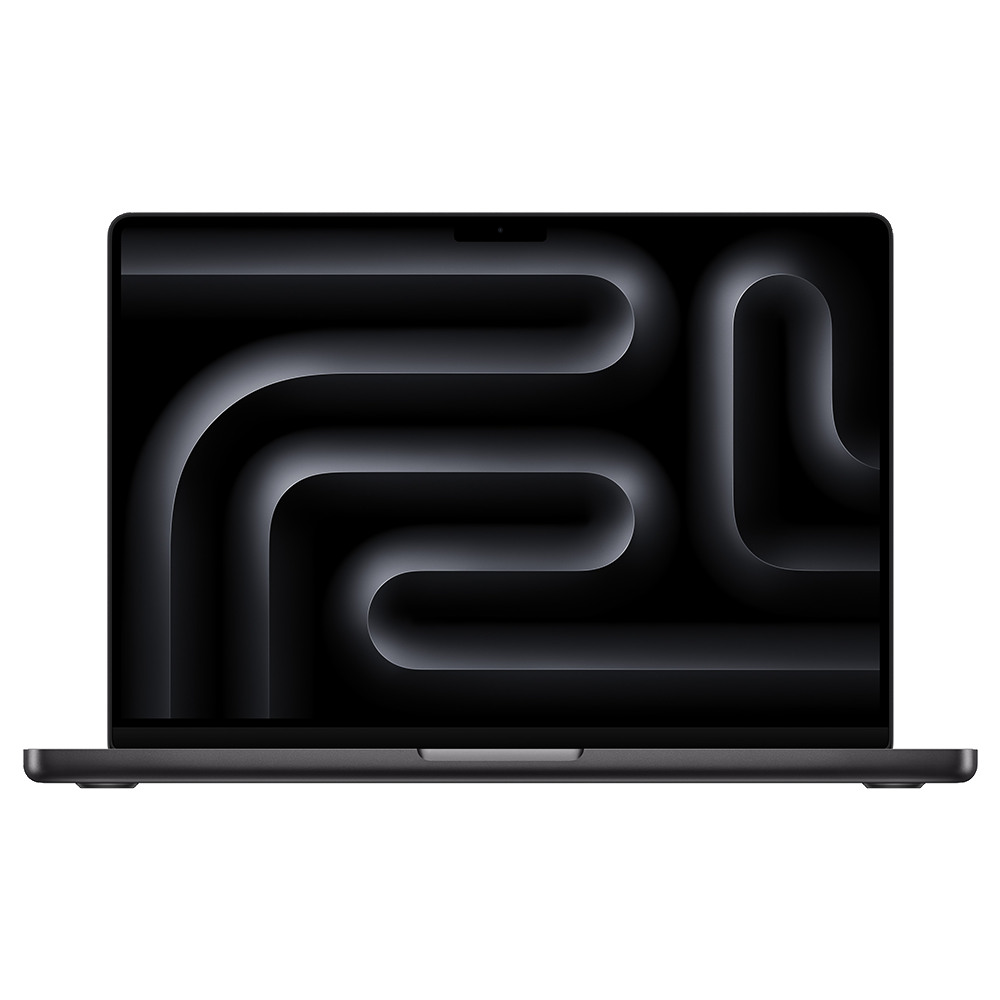
MacBook Pro M4 product image with a black screen

<Official MacBook Pro M4 product image. Unified memory is shared by the CPU and GPU, so it cannot all be assigned to a model. Source: Apple>

Why current GPU prices feel so different

Public figures available in early August 2026 show a sharp difference between consumer GPUs and data-center accelerators.

GPU or configuration Available price reference Caveat
GeForce RTX 5090 $1,999 launch MSRP; recent market reporting around $4,288 Highly volatile by inventory and region
H100 Industry estimates around $25,000–$40,000 Market estimates, not a normal NVIDIA consumer MSRP
H100 cloud rental Public on-demand comparison around $3.85–$12.29 per GPU-hour Region, commitment, host, and network change the price
HGX B200 8-GPU server 2026 market estimate around $400,000–$500,000 Complete server estimate, not a one-card retail price

Compare the RTX 5090’s MSRP and street price using NVIDIA’s official marketplace and Tom’s Hardware’s market tracking. For H100, combine NVIDIA’s specifications with Google Cloud’s GPU price table and independent rental comparisons. For most individuals, renting H100 time is more rational than buying one.

Conclusion: personal agents will arrive from both directions

Parameter count indicates potential representational capacity, but practical usability is determined by precision, quantization, context, bandwidth, and software optimization together. Today, an M4 with 48GB is a sensible home for 8B–14B local models, while 30B-class models require compromises. One H100 makes 70B quantized inference realistic; four H100s make 70B BF16 much more comfortable.

My one-line hope is simple: I want to install a personal model on my own computer and use an AI agent that only I control. That future will probably be built by both smaller models and smarter graphics hardware. It also needs file permissions, sandboxing, and approval gates before a local agent becomes a trustworthy personal assistant.

Motif 3 Beta Review — A 314B Korean AI from a 30-Person Startup

Motif 3 Beta is a sovereign AI experiment in how far a small Korean startup can go by optimizing architecture and infrastructure rather than simply counting GPUs. Our review of GPU bottlenecks in AI servers provides useful context for why sparse computation matters. It is also an unfinished beta: commercial licensing and training-data disclosure remain limited, so the technical headline should be read together with those constraints.

Official blue three-dimensional Motif Technologies logo symbol

<Official Motif Technologies logo, credit Motif Technologies 1.1>

What kind of company is Motif Technologies?

Motif Technologies was established in February 2025 after growing out of the AI business of Moreh, an AI-infrastructure company. Moreh focuses on GPU-cluster optimization, distributed inference, and model efficiency, while Motif focuses on model design and generative-AI products. Motif describes itself as more than a chatbot company: it combines foundation models, infrastructure knowledge, and enterprise AI-transformation work.

The CEO is Junghwan Lim. According to the company’s official profile, Lim holds a bachelor’s degree from KAIST and a Ph.D. from the University of Oxford. He previously worked as a data scientist at PUBG and Samsung Research, then served as Director of AI at Moreh. That combination of mathematical research, industrial data work, gaming, and GPU infrastructure helps explain Motif’s emphasis on efficient independent model design.

Public company databases put Motif at roughly 30 employees as of June 2026 and classify it as an unlisted startup. It is not a large company by conventional enterprise standards, but it is unusually small for a team releasing a 314B-parameter model. Earlier 2025 reporting described a team of fewer than 25 people, so the headcount should be treated as a dated estimate rather than a permanent fact. THE VC’s company profile lists Motif as a 2025 startup, names Lim as its representative, and marks it private.

Official portrait of Motif Technologies CEO Junghwan Lim

<Junghwan Lim, CEO of Motif Technologies, credit Motif Technologies 2.1>

The key idea is a large MoE model with a much smaller active computation

The Motif-3-Beta model card lists about 314 billion total parameters, roughly 13 billion active parameters per token, and a 256K-token context window. It is a Mixture-of-Experts model rather than a dense model that computes every parameter for every token. The router selects eight experts from 384 routed experts, along with one shared expert.

Item Public specification Why it matters
Total parameters About 314B Overall model capacity and storage scale
Active parameters About 13B per token Approximate computation selected for each token
Expert routing 384 routed experts, top-8, plus one shared expert Sparse computation that changes with the input
Context 256K tokens A design target for long documents and repositories
Layers and hidden size 53 layers, 4096 hidden size Core architecture details in the model card
Tensor type bfloat16 Numerical format for training and inference

Motif says the model starts from an in-house design rather than repackaging the parameters of an existing open model. The card identifies Grouped Differential Latent Attention, Grouped PolyNorm per expert, a modified mHC component, and a Multi-Token Prediction head. The MTP head can support self-speculative decoding by predicting future tokens ahead of the normal sequence.

That does not mean that 314B automatically equals GPT-4-level quality. MoE separates total capacity from per-token computation, but routing, memory movement, and parallel communication can still dominate real operating cost. Thirteen billion active parameters is an interesting efficiency figure, not a guarantee of low total serving cost.

Official Motif-3-Beta model-card image showing Motif Technologies and the Hugging Face repository

<Official Motif-3-Beta model-card image, credit Hugging Face Motif Technologies repository 3.1>

Strong early evaluation, but a narrow verification window

The Motif-3-Beta model card reports an Artificial Analysis Intelligence Index score of 44. The third-party index combines several dimensions such as knowledge, reasoning, mathematics, and coding, and its ranking changes as more models and evaluations arrive. The careful claim is therefore that the beta checkpoint recorded AAII 44, not that it holds a permanent global rank.

There is another important limitation: the model card does not provide a complete Motif-3 benchmark suite for KMMLU, HumanEval, MBPP, or SWE-bench. The earlier Motif 2.6B card reported HumanEval 68.3 and MBPP 60.3, but those numbers cannot be transferred to Motif 3. A larger model does not automatically become a better coding agent.

Motif 3 is a general-purpose multilingual text model, and the public beta does not support image input. Developers can serve it locally with vLLM or SGLang through OpenAI-compatible endpoints, but the model card lists B200 and H200 as the tested GPU environments. That is a serious barrier for an individual developer. A 256K context window may help with repository-scale context, but actual coding quality depends on tool calls, file selection, test execution, and error-repair loops.

Is it free, paid, or available through an API?

The Motif-3-Beta weights can be downloaded from Hugging Face without an access request. However, the current license allows use, modification, and redistribution for personal, educational, and non-commercial research purposes only. Commercial use requires prior written permission from Motif Technologies. “Open weights” therefore does not mean unrestricted commercial open source.

Motif’s official Open API page currently describes the Motif 12.7B Reasoning API and an OpenAI Chat Completions-style call flow. It does not present a public commercial price table or model-specific hosted API terms for Motif-3-Beta. The practical distinction is:

Access path Current public status
Motif-3-Beta weights Downloadable under a non-commercial research license
Hosted Motif-3-Beta API No public commercial price or availability confirmed
Motif 12.7B Reasoning API Official page explains key issuance and API-style calls
Local API Possible through vLLM or SGLang with an OpenAI-compatible server

For an enterprise deployment, downloading a checkpoint is only the beginning. Licensing, GPU bills, incident response, privacy controls, and vendor support matter more than the first successful inference. A beta checkpoint should be evaluated in an isolated environment before it touches customer data.

What training data was used?

This is where the public record needs a clear boundary. The official Motif-3-Beta card discloses architecture, parameters, context length, and usage, but it does not provide a detailed list of source datasets, copyright arrangements, language-token distribution, or filtering process. It is therefore not responsible to claim that a specific set of websites, books, or code repositories trained the model.

The earlier Motif 2.6B card states that it used 384 AMD MI250 GPUs for 42 days and trained on 2.4 trillion tokens. That is information about the earlier model, not Motif 3. Government-program reporting and secondary coverage discuss Korean data and large-scale resources for Motif 3, but a definitive answer about the final corpus should wait for a technical report and a clearer data-governance disclosure.

This distinction matters for Korean AI. A large Korean corpus is not enough by itself. Long-term trust depends on how news, web, public documents, code, and dialogue data were licensed; how duplication, contamination, and personal information were removed; and whether evaluation sets were kept out of training.

How did Motif obtain GPUs and capital?

Motif’s earlier advantage was experience with AMD GPUs. The official Motif 2.6B card records 384 AMD Instinct MI250 GPUs and 42 days of training, while company interviews emphasized the ability to make a small model infer on a single AMD GPU and to lower infrastructure cost. This fits Moreh’s background in software that makes heterogeneous GPU infrastructure usable rather than tying an entire model effort to one vendor.

Motif 3 is a different scale. Motif was selected as an elite team in the government’s Independent AI Foundation Model project, known in Korean coverage as Dokpamo. Reporting says that a roughly 30-person team used more than 700 government-provided GPUs and completed a preview checkpoint in about five months. Within the consortium, Motif leads model design while Moreh handles GPU-cluster optimization, distributed inference, and compression.

This should not be simplified to “the government gave the company cash to buy GPUs.” Public material clearly describes GPU resources and a government development and evaluation structure, but it does not clearly disclose direct cash support or GPU ownership terms. On the investment side, 2026 reporting mentioned 5 billion won from Forest Ventures and 10 billion won from other institutions, while another report described a total 24 billion won financing and an approximately 130 billion won valuation. Because the public detail is incomplete, the careful wording is “reports described a 24 billion won financing,” not a fully verified cap table. DealSite’s report provides the available detail.

Official Motif model-family image representing the relationship between AI models and infrastructure

<Official Motif AI model-family image, credit Motif Technologies 4.1>

The next target is an industrial AI ecosystem

Motif’s stated goals have three layers. First, it wants to extend language models into image and video generation. Second, it wants to move from multimodal models toward physical AI and robotics. Third, it wants to open models and software commercially where possible and build public and industrial AI-transformation examples. This is also an infrastructure problem, similar to the economics of AI GPU cloud services.

That is ambitious for a 30-person company, but it also explains why Motif combines model research with Moreh’s infrastructure work and enterprise AX projects. Model sales alone may not cover frontier-scale GPU costs. A sustainable route is to build enterprise-specific models, infrastructure, and transformation revenue, then reinvest that revenue into foundation-model development. The partnership with Samil PwC is one example of this B2B route.

What Motif needs to prove for the vibe-coding era

I hope Korean AI models grow beyond Korean conversation and summarization into genuinely useful vibe-coding systems. Vibe coding is not just generating one code block. It means repeatedly completing a software task:

  • reading a repository and selecting only the necessary files;
  • breaking a request into small changes and explaining a plan;
  • safely calling terminals, tests, browsers, and Git tools;
  • reading an error log and repairing the actual cause;
  • explaining security risks and waiting for human approval before high-impact actions.

Motif 3’s 256K context and sparse MoE design are promising foundations for this direction. But the public beta does not yet provide enough Motif-3-specific coding and tool-use evaluation, and its non-commercial research license prevents a straightforward commercial coding service. A future release should publish SWE-bench-style results, tests on Korean repositories, failure-repair rates, tool-call success, long-task latency, and cost—not only one headline score.

The goal of Korean AI should not be to win one ranking against a foreign model. It should be to let Korean developers control their code and data while achieving world-class productivity. Motif 3 Beta is an interesting intermediate result that shows this possibility, while leaving data transparency, commercial licensing, and real-world evaluation as its next assignments.

Conclusion

Motif Technologies is an unlisted startup of roughly 30 people, but it combines Lim’s research and industry background, Moreh’s GPU software foundation, government compute from Dokpamo, and private investment to produce Motif-3-Beta. Its approximately 314B total parameters, 13B active parameters, 256K context, and custom MoE architecture are technically notable.

The AAII 44 score is a starting point, not proof of commercial success. Training-data provenance, Motif-3 coding performance, commercial API pricing, final licensing, and stable operating cost still need to become clearer. If Motif keeps publishing those details and connects the model to vibe coding and industrial agents, Korean AI can move from “a model that understands Korean” toward “a model that completes Korean work.”

Gemini 3.6 Flash Rewrites the Cost Math for AI Agents

Gemini 3.6 Flash is the latest fast-response branch in Google’s Gemini API model lineup. The important word is “Flash.” Instead of spending the longest possible reasoning budget on every request, it is designed around wide input, quick turnaround, and lower-cost repeated calls across documents, images, code, and audio. That makes the more interesting question not whether it is a smarter chatbot, but where it belongs in an agent that repeatedly calls tools, checks results, and revises its work. The practical adoption question is AI agent cost: how a multimodal AI model with long context AI capabilities should be routed inside a product.

Google’s Gemini API model documentation describes Gemini 3.6 Flash as a model that can handle text, image, video, and audio inputs with text output. The latest models guide and API changelog also show why developers need to verify model names, supported inputs, and feature availability against the live API documentation. For a fast model, the design center is less “what can it answer once?” and more “where should repeated calls sit in the workflow?”

Background: the bottleneck after the large-model race

In a real AI product, the expensive moment is often not a single answer. It is the failed iteration. Search, file reading, code edits, test runs, summaries, and another round of edits can multiply model calls quickly. As earlier Claude 4 agentic coding patterns showed, using the strongest model at every step can stabilize quality, but it also raises latency and cost. Using only a cheaper model can introduce mistakes in tool order, long-context handling, or final reasoning.

A fast multimodal model such as Gemini 3.6 Flash targets that middle layer. It can take in a broad bundle of documents, screenshots, logs, and short media descriptions, then reserve deeper reasoning for the moments that actually require it. Independent hands-on reviews tend to highlight speed and everyday task handling as strengths while still warning that complex reasoning and factual claims need separate checking. That is not simply a weakness; it defines the value of the Flash tier. Its strongest role is often running the loop cheaply and quickly, not making every final decision by itself.

Design question Where Gemini 3.6 Flash fits What still needs care
Are there many documents and a short answer? Meeting notes, logs, and requirements summaries Preserve links to supporting passages
Does the input include images or screens? Screenshot classification and UI-state explanation Recheck small text, charts, and visual details
Will an agent call the model repeatedly? Planning drafts, candidate filtering, result cleanup Put final decisions through stricter checks
Is latency a core product constraint? Chat-style work assistants and real-time support Measure the speed-accuracy tradeoff in production

Principle: read broadly, iterate lightly

Imagine an internal development assistant asked to summarize the cause of last week’s payment outage and draft a prevention checklist. The agent has to inspect incident tickets, deployment logs, Grafana screenshots, related code diffs, and customer-support summaries. A Flash model can quickly scan that bundle, narrow the suspicious areas, and send only the highest-risk logs or code paths to a stronger model or human reviewer.

The same routing logic appears in practical OpenAI Codex cloud agent workflows. The key idea is layering. The fast model organizes evidence and reduces the candidate set. The more expensive model focuses on ambiguous root-cause analysis or final wording. When a model card is available, as in Google DeepMind’s Gemini 3.6 Flash model card, teams should read supported inputs, safety evaluation, and known limits together. “Fast” is a product advantage, but the operating rule must still specify which inputs the model handles well and which decisions it should not own alone.

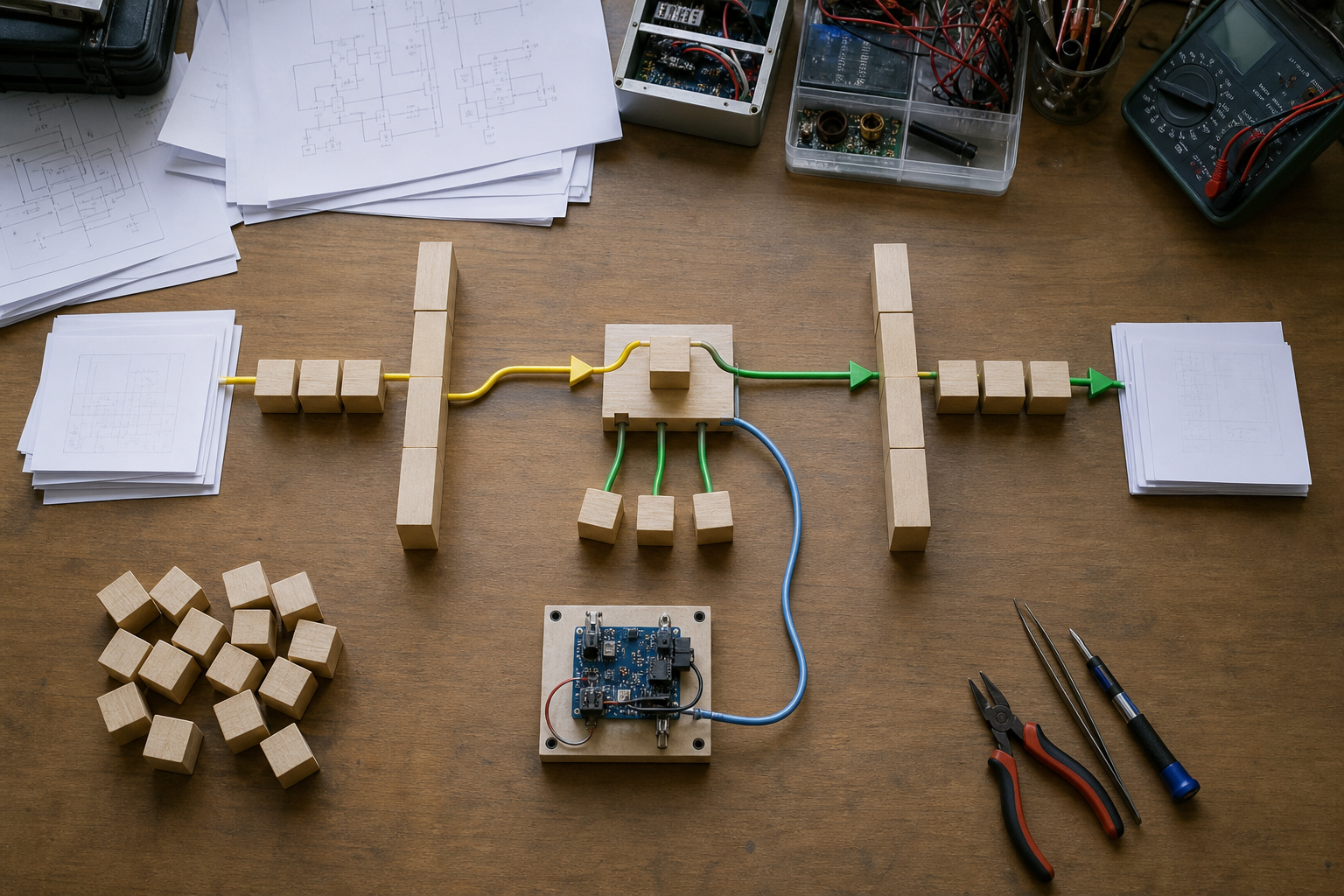
A work desk where documents and screen inputs pass through a fast model before review steps

<How documents, images, and logs can be organized first, with important judgments routed to a separate review layer 3.1>

Structure: where it fits inside an agent runtime

A practical runtime has four boxes. First, the collection layer groups documents, images, and logs into the same work unit. Second, Gemini 3.6 Flash performs fast summarization, classification, and candidate extraction. Third, high-risk judgments go to tests, rules, a stronger model, or human review. Fourth, the final response preserves supporting links and the remaining uncertainty.

A developer workbench with a laptop, printed logs, image notes, and review cards for a multimodal workflow

<A multimodal agent workbench that groups different inputs while separating the verification stage 4.1>

In this architecture, the Flash model is not the single brain that decides everything. It is a fast operating layer. It fits tasks such as clustering thousands of customer messages by theme, extracting release-risk areas from notes, or reading screenshots together with logs to draft reproduction steps. It is a weaker fit for vulnerability decisions, legal wording, financial figures, or medical judgments unless those outputs are backed by evidence and a separate review path.

Checkpoints: four things to examine before adoption

First, real cost comes from call structure, not only token price. If a fast model creates duplicate summaries and follow-up questions, total cost may not fall. Teams should split the workflow into initial organization, candidate extraction, and final verification, then measure the failure rate at each stage.

Second, long context is an input window, not memory. A model may accept many files without treating every detail equally. Important numbers, policy clauses, and API names should keep their original locations and be checked again before they appear in the final answer.

Third, multimodal input changes the user experience, but it also changes verification. A model can appear to understand a screenshot while still misreading small text, table structure, color meaning, or time-series context. A product that relies on screen input should store the original image and the model’s explanation together so later review is possible.

Fourth, current model names should be configuration, not hard-coded product logic. Google’s model documentation and changelog show that names, features, and recommended usage keep changing. Long-lived products should keep model choice in environment configuration or a routing table and prepare fallback paths when a model, feature, or safety route is unavailable.

Gemini 3.6 Flash does not mean every request should move to one smartest model. It signals that agent products increasingly need separate lanes for fast models, stronger models, and rule-based verification. If a team needs to organize a lot of input quickly, this model is worth evaluating first on a workflow cost chart, not only on a leaderboard.

Monday, August 3, 2026

KEA IoT and Big Data Support for Korean Startups

KEA IoT and Big Data Planning Support: what Korean startups should check before August 31

The K-Startup notice for KEA’s IoT product development and big data planning support is aimed at Korean companies that have connected-device products or product data but need help turning that data into a practical analytics or AI project. Applications close at 18:00 KST on August 31, 2026. Before applying, teams should define the product, the available data, and the business question they want the support to address.

This is a Korean startup support program with a Google Form application flow. Keep a copy of the submitted response and final attachments, especially if filing close to the deadline.

Program snapshot

Item Details
Program KEA IoT product development and big data planning support
Application window July 28, 2026, 14:00 to August 31, 2026, 18:00 KST
Eligible applicants Companies preparing or holding IoT home-appliance or electronic-device products; companies that need product-data analysis; teams exploring AI data-based services or business models
Support IoT product development support and big data analytics project planning
Application Google Form
Organizer Korea Electronics Association

Korea Electronics Association and K-Startup program identifier image

<Program and organizer identifier 1.1>

Who should look at it

This is a strong fit for a Korean hardware, appliance, or device startup that already has a product concept and wants to use product data more effectively. It is less useful as a general lecture program and more useful when the company can point to logs, sensor data, quality data, usage patterns, or operational data that could become an analytics or AI planning project.

What to prepare

The application should connect four points: the device, the data, the problem, and the expected result. For an AI startup Korea team or a device company entering a K-Startup program, a concise problem statement will matter more than broad claims about digital transformation. Explain what data exists, what decision it could improve, and what internal owner will continue the work after the support period.

Checkpoint What to prepare
Product Current or planned IoT device and its core function
Data Available product, sensor, quality, or user data
Goal Prediction, personalization, quality improvement, or operational efficiency
Execution Internal owner, schedule, and follow-up plan

Application cautions

The notice describes a review process that moves from eligibility screening to a kick-off meeting and final support decision. The public application link is a Google Form, and the notice lists KEA contact numbers for platform operation and data analysis. Applicants should treat the K-Startup notice as the controlling source for the deadline and retain proof of final submission. This Korean startup grant style program is practical only if the company can commit people and data, not just an idea. It is also a focused IoT data support Korea opportunity for device teams.

Sunday, August 2, 2026

KICXUP Challenge: Korea PoC grant for AI, data and security startups

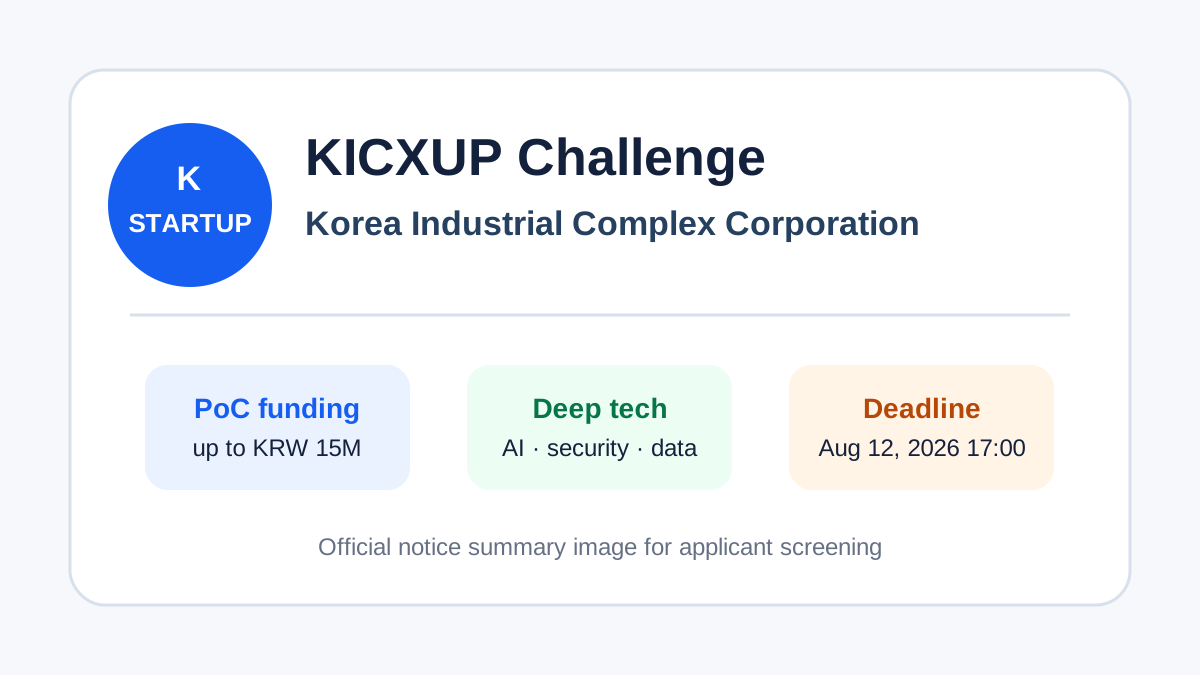
The KICXUP Challenge grant is worth a close look if your startup can test technology with Korean industrial-complex companies, rather than only attend a showcase. The 2026 KICXUP Challenge & Local program is run through K-Startup by the Korea Industrial Complex Corporation with Korea Credit Guarantee Fund support. According to the official notice, applications close at 17:00 Korea time on August 12, 2026.

K-Startup and Korea Industrial Complex Corporation KICXUP program identification image

<KICXUP program identification image 1.1>

What the program offers

Item Details
Program 2026 KICXUP Challenge & Local startup recruitment
Lead organization Korea Industrial Complex Corporation, with Korea Credit Guarantee Fund support
Application window July 31, 2026, 09:00 to August 12, 2026, 17:00 KST
Application route Online form linked from the official K-Startup notice
Main support PoC funding up to KRW 15 million per case, corporate matching, investment and TIPS linkage, financial and non-financial support
Contact kicxup@cntt.co.kr, +82-2-3152-8657

For international readers, K-Startup is Korea’s central government startup-support portal. Programs listed there are usually written for companies that can operate in the Korean market or collaborate with Korean institutions. This Korea industrial PoC grant is especially relevant because it connects startups with industrial demand companies and gives selected teams a structured route to prove a B2B use case. The official notice is available on the K-Startup detail page.

Who should consider applying

The notice says the program is open to domestic and overseas startups seeking technology collaboration with industrial-complex demand companies. The standard eligibility window is companies up to seven years old and prospective founders; universities and research institutions are also included. For Korean deep tech PoC fields, startups up to ten years old may be eligible. The listed deep-tech areas include AI and big data, cybersecurity and networks, semiconductors, bio-health, future mobility, energy, robotics, aerospace and quantum technologies.

That makes the Korean startup grant most useful for teams with a concrete industrial workflow to validate:

  • AI or data platforms that reduce cost, downtime or defects in manufacturing, logistics or energy operations
  • predictive maintenance, visual inspection, safety monitoring or process-automation products
  • industrial cybersecurity, OT security or network-monitoring products
  • B2B SaaS companies that already have a pilot-ready product but need a Korean reference customer and a PoC budget

A consumer app or a broad productivity tool may struggle unless the team can explain a specific industrial-complex use case. Before applying, write one plain sentence describing the customer problem, the deployment site, the PoC metric and the expected business outcome.

Selection flow and documents

The KICXUP Challenge track plans a first document screening of 140 companies and a second presentation round selecting around 70 companies. The Local track is smaller: eight consortia in the first round and four in the final round. The presentation format is short, with seven minutes for the pitch and three minutes for Q&A, so the strongest deck will not be the one with the most technology slides. It should show the demand company’s problem, the implementation plan, the data or environment required, measurable success criteria and what happens after the PoC.

Required documents include the application form, personal-information consent, a business plan or company introduction, and, for the Local track, a collaboration commitment or MOU. Applicants should also check ordinary exclusion risks such as tax arrears, financial default, prior sanctions for false documentation and restricted industries.

Why this was selected over the KOCCA candidate

A relevant KOCCA-listed candidate was the 2026 Game Development AI Transformation support program posted by Busan IT Industry Promotion Agency. It supports AI maturity diagnosis, consulting, education, expert matching and AI platform usage for small and indie game developers. That is a strong fit for game studios, and the official KOCCA notice is useful for that niche. For a broader English-speaking audience tracking KICXUP AI startup opportunities, however, KICXUP is more broadly applicable: it covers AI, data, cybersecurity and other deep-tech fields, and it links the Korea PoC grant to corporate collaboration and follow-on financing routes.

Practical takeaways

Treat KICXUP as a customer-validation program, not just a subsidy. The PoC funding matters, but the bigger value is a structured industrial collaboration that can become a reference case in Korea. If your team has an AI, data, security or platform product that can be tested with a Korean industrial partner, check the official K-Startup program notice, confirm the online form and supporting documents, and finish the submission before the August 12 deadline rather than waiting until the final hour.

SynthID Detector: AI Watermarking for Content Provenance

SynthID Detector is not a magic machine that can judge all AI content. More precisely, it is a verification portal that looks for SynthID watermarks embedded in images, audio, video and text generated by Google AI tools. As generative media enters newsrooms, advertising, education material and internal documents, that distinction matters.

A convincing image or voice clip can lose its context once its production history disappears. Teams need clues about who made it, whether it was edited, and which model ecosystem it came from. SynthID’s core idea is to embed a signal that humans do not perceive and that preserves content quality, then let a detector read that signal later.

AI watermarking should be understood as an additional evidence layer for explaining provenance, not as a one-click verdict on truth and falsehood.

Background

Google announced SynthID Detector in May 2025, describing a portal that brings detection across images, text, audio and video into one place. The announcement says SynthID has been applied across Google generative products such as Gemini, Imagen, Lyria and Veo, and that more than 10 billion pieces of content had already been watermarked.

DeepMind describes SynthID as embedding digital watermarks directly into AI-generated images, video, audio and text. For images and video, the watermark is designed to preserve quality while remaining detectable after common transformations such as cropping, filters, frame-rate changes and lossy compression. For audio, it is designed to remain detectable after changes such as added noise, MP3 compression and speed changes.

Text watermarking works differently. Large language models generate text by assigning probabilities to candidate next tokens. SynthID text watermarking adjusts those probability patterns in a way readers should not notice, leaving a statistical signal that a detector can later analyze.

How it works

A user uploads an image, audio file, video or text to the portal. The Detector scans for a SynthID signal. If it detects one, it highlights portions that are more likely to be watermarked. Google says audio results can identify specific segments, while image results can indicate likely regions.

The advantage is that the signal is not a visible sticker. A label at the bottom of an image can be cropped out, and file metadata can disappear during copying or platform transfer. An embedded watermark is hidden inside the content signal, so it can leave clues after sharing and editing.

Method Strength Weakness
Visible label Immediately understandable Can be cropped or removed
File metadata Simple to implement Often lost across platforms
SynthID watermark Hidden in the content signal Requires ecosystem support for embedding and detection
Human review Can judge context Hard to scale consistently

Structure

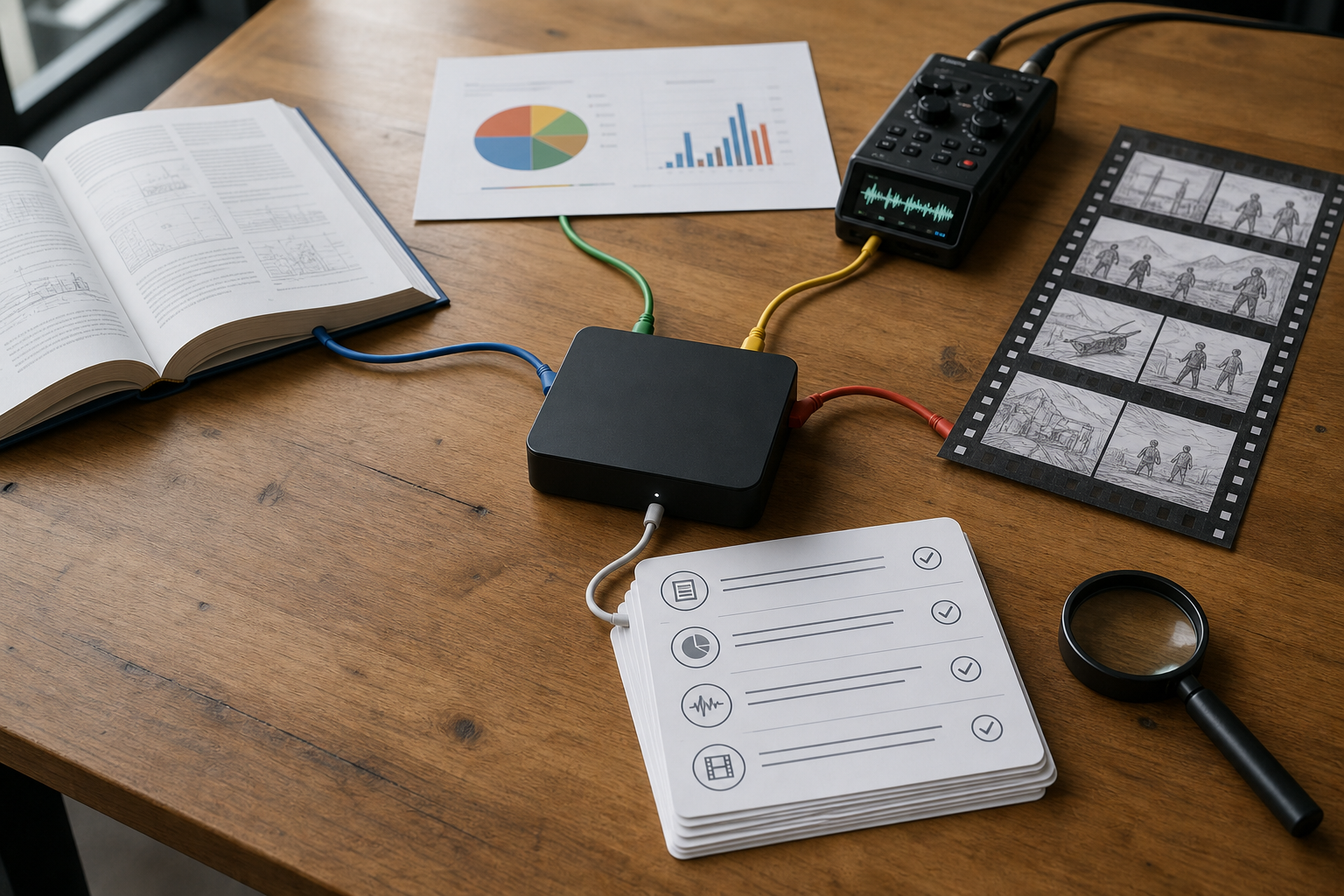
AI content verification desk — monitors show an image, audio waveform, video frames and document review

<Generative media verification scene 3.1>

For a newsroom or brand team, the real question is rarely just “is this AI?” They need to know which tool produced the asset, what changed during editing, and whether the context is safe to publish. Detector results provide one technical clue for that broader decision.

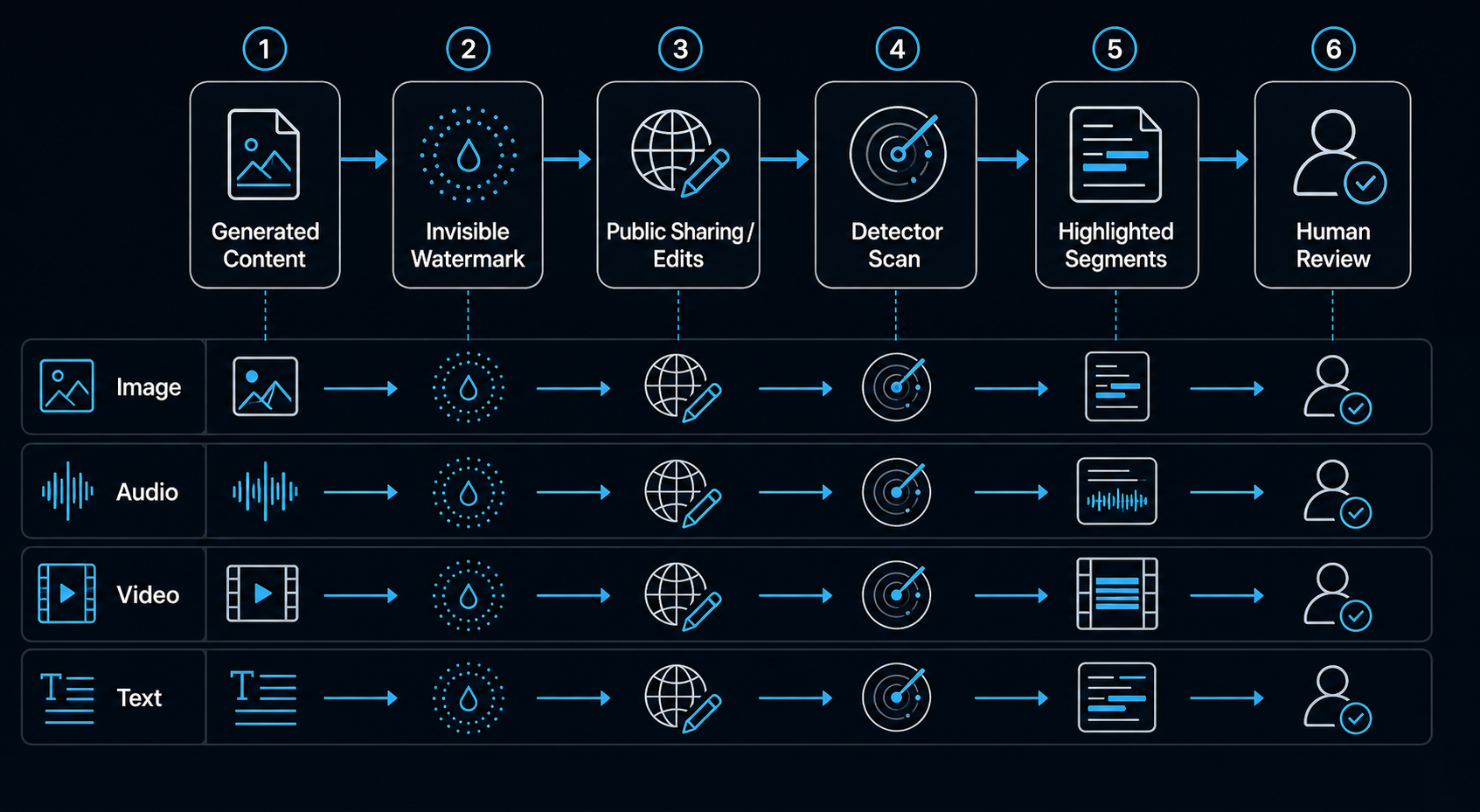
SynthID Detector flow — generated content, invisible watermark, sharing, detector scan and human review

<SynthID detection flow 3.2>

The diagram shows the watermark entering at generation time and being read again after sharing, compression or editing. The last step remains human review because a detection result does not replace contextual judgment.

Checkpoints

First, the absence of a watermark does not prove human authorship. SynthID is a system for detecting signals inserted by supported generation tools. It is not a universal truth detector for every model or for every attempt to remove provenance signals.

Second, ecosystem adoption matters. Google has pointed to collaboration around NVIDIA Cosmos preview NIM microservices and a partnership with GetReal Security. The more generation tools and verification platforms can write and read the same kind of signal, the more useful provenance verification becomes.

Third, privacy and copyright remain separate questions. A watermark can indicate generation history, but it does not automatically resolve training-data rights, likeness permission or publication approval. Organizations need watermark checks, usage permission records, edit history and release approval workflows together.

SynthID Detector points to a clear direction. As generative media quality improves, verification becomes less about guessing from appearance and more about reading signals left at creation time alongside records from distribution. For content teams, the better question is not “does this look AI-made?” but “can we explain its origin and editing history?”

Sources: Google SynthID Detector announcement, Google DeepMind SynthID overview

Saturday, August 1, 2026

Microsoft Company Review — Vertical Integration From Azure to Copilot

The Microsoft AI platform reflects a company changing from a vendor of Windows and Office into one that connects corporate work data, cloud infrastructure, and AI agents inside one identity system. Azure supplies compute and storage; Microsoft 365 and Dynamics hold work context; GitHub controls much of the development flow; and Copilot puts a common interface in front of those assets. Maia accelerators and Cobalt CPUs now extend the company downward into silicon.

This Microsoft company review focuses on the economics of vertical integration rather than listing Copilot features. It asks how data-center investment returns through Azure consumption and application subscriptions, why the OpenAI relationship and internal models and chips are needed at the same time, and how supply constraints and depreciation create risk behind rapid growth. Financial figures follow the official third quarter of fiscal 2026, ended March 31, 2026.

In this review, Azure AI means the full layer connecting compute, data, deployment, and enterprise controls, not merely a model API.

Official Microsoft corporate logo

<Official Microsoft corporate logo 1.1>

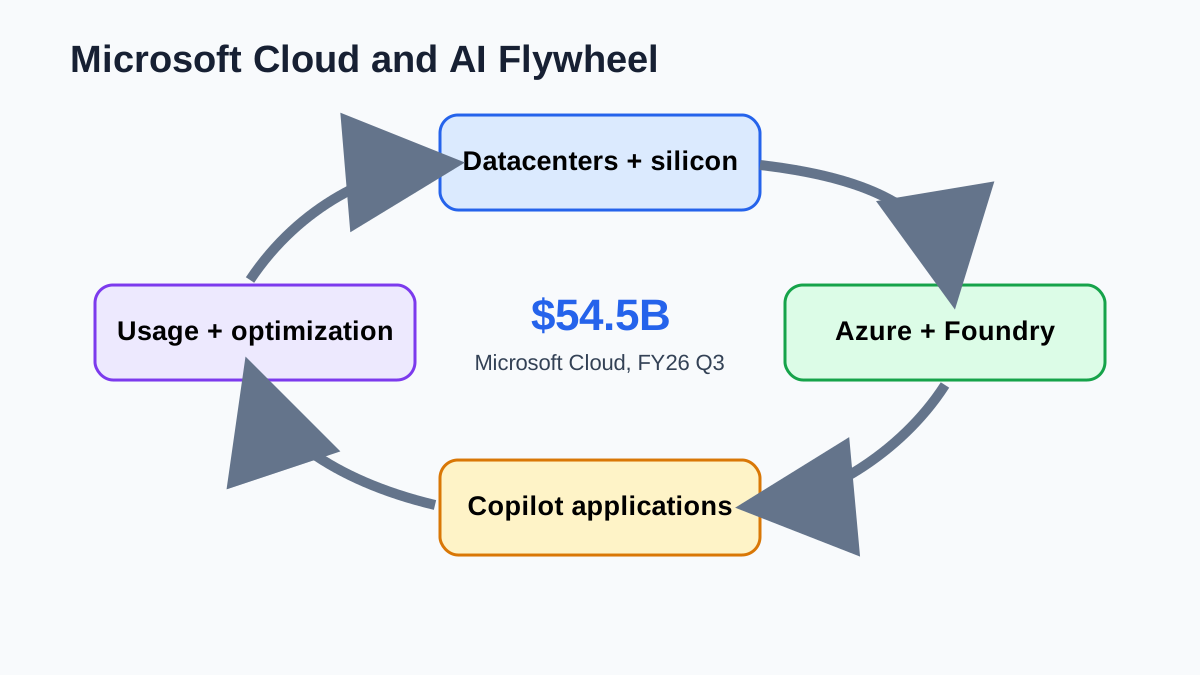
Four layers form the Microsoft AI platform loop

The first layer is data centers and silicon. Microsoft deploys NVIDIA and AMD accelerators while designing Azure Boost networking and storage silicon, Cobalt CPUs, and the Maia 200 inference accelerator. The objective is not dependence on one supplier but a portfolio that can lower cost and power for a given workload. Maia 200 emphasizes the economics of repeatedly generating tokens rather than every stage of model training.

The second layer is Azure and the model platform, where customers manage data, security, model selection, evaluation, and deployment. The third layer comprises Microsoft 365, Dynamics, GitHub, and Security applications. They already contain corporate users, permissions, documents, and workflows, giving AI a place to produce action. The fourth layer is operational feedback: more requests provide signals for GPU scheduling, caching, and model routing, and efficiency gains create more available service capacity.

Platform layer Representative assets Revenue model Strategic role
Infrastructure Data centers, NVIDIA/AMD, Maia, Cobalt Azure consumption Capacity and unit-cost control
Data and models Azure, Fabric, Foundry Usage and cloud contracts Model choice plus enterprise data
Applications M365 Copilot, GitHub, Dynamics, Security Seats and consumption AI monetization in existing work
Control Entra, Purview, policy and observability Platform and security revenue Consistent identity and compliance

Diagram linking Microsoft data centers, Azure, Copilot applications, and optimization

<Microsoft cloud and AI value loop 1.2>

One product can reduce the selling cost of another. Microsoft can offer GitHub Copilot to an Azure customer, run a Microsoft 365 customer's agents on Azure, and extend Entra permissions and Purview policy to both. Bundling is not automatically customer value, however. Complex licensing or an unclear boundary between existing features and Copilot charges can cause customers to remove unused seats and buy lower-cost specialist tools for selected jobs.

Satya Nadella's two priorities and an $82.9 billion quarter

CEO Satya Nadella described two priorities on the Q3 FY2026 call: build cloud and AI infrastructure for agentic computing, and build high-value agentic systems in productivity, coding, and security. Infrastructure alone faces commodity pricing; applications alone remain exposed to outside compute costs. Owning both layers lets Microsoft connect supply and demand internally.

Microsoft's Q3 FY2026 release reported revenue of $82.9 billion, up 18% year over year. Operating income rose 20% to $38.4 billion, and GAAP net income increased 23% to $31.778 billion. Microsoft Cloud revenue was $54.5 billion, up 29%, while Azure and other cloud services grew 40%. The disclosed annual revenue run rate of the AI business exceeded $37 billion, growing 123%.

Q3 FY2026 metric Result Interpretation
Total revenue $82.9 billion 18% year-over-year growth
Operating income $38.4 billion 20% year-over-year growth
Microsoft Cloud $54.5 billion 29% year-over-year growth
Azure growth 40% Demand across AI and non-AI workloads
Quarterly capital expenditure $31.9 billion CPUs, GPUs, and long-lived facilities
AI business ARR More than $37 billion 123% year-over-year growth

The cost structure matters as much as growth. Quarterly capital expenditure was $31.9 billion, and roughly two-thirds went to shorter-lived assets, mainly GPUs and CPUs. The balance funded sites and facilities intended to monetize for at least 15 years. Corporate gross margin was 68%, but AI infrastructure investment and rising AI usage reduced the percentage year over year. Rapid accelerator replacement directly affects depreciation and profitability even with strong operating cash flow.

Maia 200, Cobalt, and Copilot create technical differentiation

The central claim in the official Maia 200 announcement is token economics rather than a single benchmark. Microsoft knows the request patterns of its own services and can coordinate silicon with data-center power, networks, and software. Maia 200 was live in Iowa and Arizona in Q3, and management said it delivered more than 30% better tokens per dollar than the latest silicon then in its fleet. Cobalt CPUs were deployed in nearly half of Microsoft's data-center regions and ran customer workloads including Databricks, Siemens, and Snowflake.

Microsoft is not abandoning outside accelerators. It uses NVIDIA Blackwell GPU systems, AMD products, and internal silicon according to workload. Internal chips are a way to improve negotiating leverage and selected workload efficiency, not necessarily a single replacement bet. Hiding hardware choice behind Azure APIs lets customers evaluate throughput, latency, and price rather than a processor brand.

Distribution is the application advantage. Paid Microsoft 365 Copilot seats exceeded 20 million, while GitHub places AI inside coding and review. An enterprise agent that reads email, creates documents, and changes systems needs identity, least privilege, audit logs, and data boundaries in addition to model quality. Microsoft connects Entra, Purview, and its security portfolio as that control layer.

Seat count alone does not prove productivity. Enterprises need active-use rates, completed tasks, human review time, errors, and security incidents. As with GitHub Copilot coding agents, greater execution authority makes verifiable changes and approval boundaries more important than faster generation.

Microsoft's AI advantage is not one model. It is the ability to place enterprise data and permissions, Azure compute, and development and work applications inside a shared operating boundary. Only sustained usage converts that integration and data-center spending into a platform moat.

Capital expenditure, capacity, concentration, and conclusion

Investment pace is the first risk. Microsoft says demand exceeds supply and is adding capacity aggressively. Delays in power, transformers, construction, GPUs, or memory postpone revenue even when contracts exist. The opposite mismatch is equally important: if capacity arrives faster than AI usage, depreciation and energy costs pressure margins. Q3 free cash flow of $15.8 billion, reflecting higher capital expenditure, illustrates the balance.

The OpenAI relationship is the second risk. It stimulates Azure demand and product development while adding complexity to investment results, capacity commitments, and model dependence. Offering multiple models through Foundry and developing internal models and silicon increases optionality. Regulation and bundling are the third risk. Joining cloud, productivity, security, and AI can simplify operations for customers but may look like leverage from one market to another to competition authorities. Security is the fourth. Agents with more corporate data and execution rights increase the potential impact of prompt injection, excessive permissions, and leakage.

Microsoft is building a vertical platform from compute to work execution, not merely selling AI models. Revenue of $82.9 billion and 40% Azure growth show demand; $31.9 billion of capital expenditure shows the cost of turning demand into supply. The indicators to follow are Copilot active usage, Azure capacity constraints, realized Maia and Cobalt unit-cost gains, cloud gross margin, free cash flow relative to capital spending, and security outcomes—not AI ARR alone. When infrastructure and applications raise each other's utilization, they form a powerful loop. When unused seats and idle compute accumulate, the same vertical integration becomes fixed-cost risk.

404 Dev Room 30 - Taming

Series · 404 Dev Room Webtoon · Ongoing Episode 30 · 404 Dev Room 30 - Taming The trainer in the AI coding room has changed. <...