Showing posts with label New Technology. Show all posts

Friday, July 24, 2026

Cloudflare Internal DNS Brings Private DNS Into Zero Trust Operations

Cloudflare Internal DNS is designed to change the old pattern of leaving private DNS to separate appliances and cloud-specific settings. In July 2026, Cloudflare announced general availability of Internal DNS, saying private name resolution can now be managed from the same control plane used for public DNS, Zero Trust, and networking. The goal is to manage internal service names, VPN-only domains, and cloud-private zones in one place.

This matters because outages often begin in small, old pieces of infrastructure. When public DNS, private DNS, cloud DNS, and security policy move separately, split-horizon DNS becomes hard to keep in sync. Drift appears when internal and external users are supposed to receive different answers for the same name. As services such as Cloudflare Workers AI spread across edge environments, consistent name-resolution policy becomes more important.

Background

According to the Cloudflare announcement, Internal DNS has two main components: Gateway Resolver and Internal Authoritative DNS. Gateway Resolver handles recursive resolution and policy evaluation. Internal Authoritative DNS serves authoritative answers for internal zones. Cloudflare also says the feature is included with Cloudflare Gateway for Enterprise customers at no additional charge.

Problem Common operating model Internal DNS approach
Public/private split Separate DNS platforms One control plane
Split-horizon DNS Manually synchronized duplicate zones Views and zone references
Security policy Policy outside DNS Resolution controlled by Gateway policy
Change propagation TTL and appliance-specific delays API input followed by global propagation

How it works

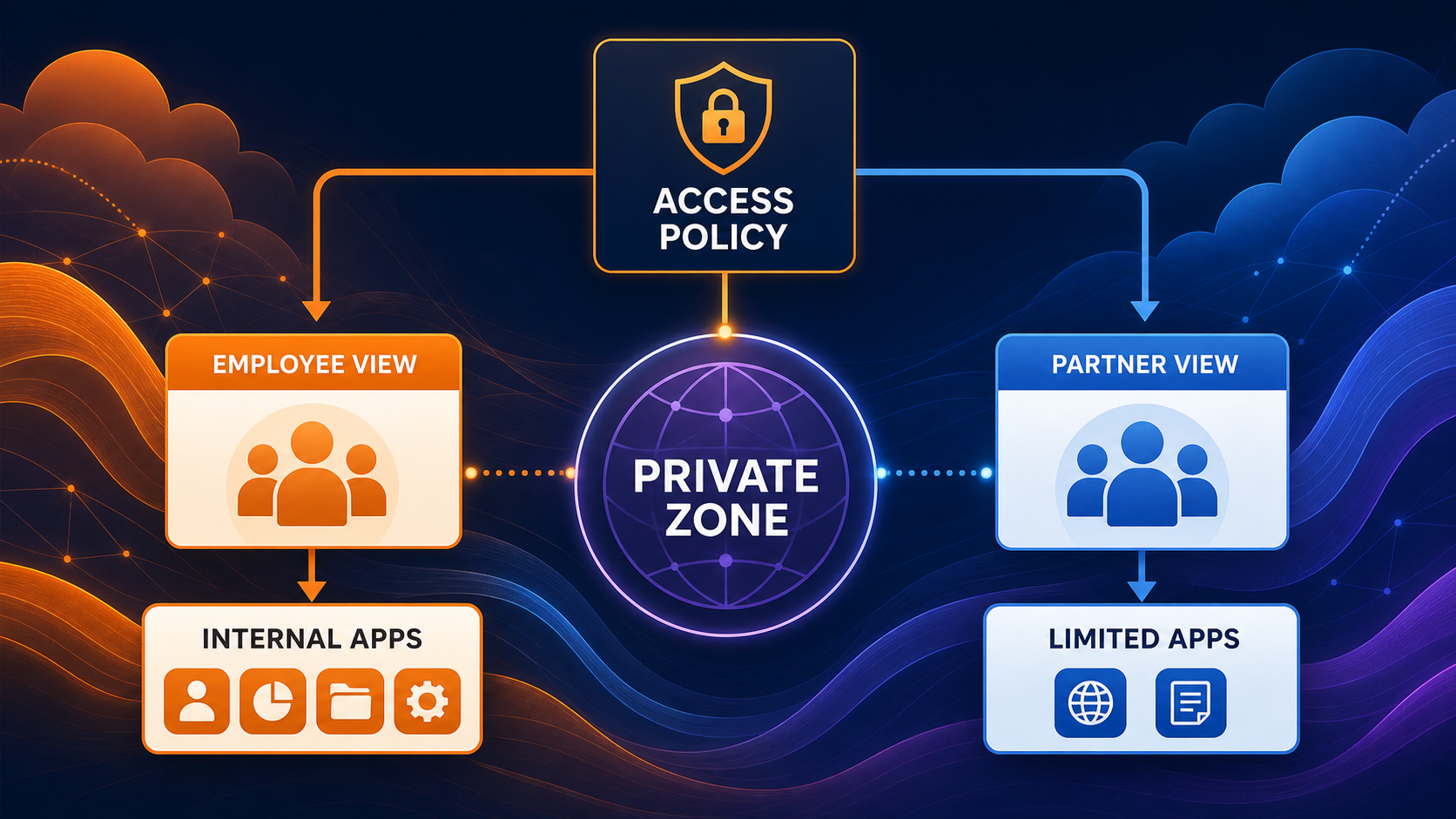
A DNS query first reaches Gateway Resolver. There, policy decides which view should answer based on the user, device, location, and expression rules. If a policy points to an internal view, Internal Authoritative DNS answers from the matching internal zone. If policy blocks the query, it is dropped. If the name is not internal, the query can follow the public DNS path through 1.1.1.1. The separate Cloudflare DNS policies documentation explains the policy and blocking model in more detail.

The key object is the zone reference. A common zone such as intranet.local can be referenced across multiple views rather than copied repeatedly. That allows different answers for regions, teams, or devices while reducing duplicated records. In edge containers and multicloud environments, this turns the question “which network can see which name?” into policy rather than scattered configuration.
Photographic concept image of Cloudflare Internal DNS choosing views between Gateway Resolver and Internal Authoritative DNS

<Gateway Resolver and internal DNS views 3.1>

Architecture

The first image shows a user query passing through a policy board and branching to an internal view, a block decision, or public DNS. The second image shows dashboard, Terraform, and API changes entering one DNS Records API before propagating to the global edge.
Photographic concept image of DNS record changes propagating from an API to global edge locations with physical cards and network lines

<DNS record propagation path 3.2>

Modernizing private DNS is not only about faster name resolution. The larger change is bringing public names, private names, user policy, and audit logs into the same operating model.

Checkpoints

Internal DNS is a natural fit for Enterprise organizations already using Cloudflare Gateway, but it will not match every environment immediately. Organizations with existing Active Directory DNS, cloud-native private zones, and on-premises conditional forwarders need a careful migration order. Internal name resolution has a large blast radius, so view design and rollback plans matter.

The significance of Cloudflare Internal DNS is that private DNS is moving from an old back-office infrastructure item into the Zero Trust policy layer. Teams with many internal services and complex multicloud networks should treat DNS not merely as record storage, but as the starting point for access control and visibility.

Amazon Bedrock Managed Knowledge Base for Enterprise RAG

Amazon Bedrock Managed Knowledge Base is an attempt to package the work of building RAG into a managed service. Retrieval-augmented generation improves model answers by attaching retrieved enterprise data, but real operations involve connectors, permissions, parsing, chunking, embeddings, reranking, vector storage, and evaluation. In its 2026 announcement, AWS positioned Managed Knowledge Base as a single primitive that reduces that complexity.

For enterprises, this is not a small shift. Internal knowledge is scattered across SharePoint, Confluence, Google Drive, OneDrive, S3, and web pages, and each source has its own permissions and formats. If an agent answers business questions, it must not only find current documents but also preserve who is allowed to see them. That makes a knowledge base less like a model feature and more like an AI infrastructure cloud operations problem.

Background

The AWS News Blog says Managed Knowledge Base manages storage, retrieval, embeddings, reranking, and foundation-model selection by default. At launch, supported connectors include Amazon S3, SharePoint, Confluence, Web Crawler, Google Drive, and OneDrive. The Amazon Bedrock documentation says Managed Knowledge Base integrates with AgentCore Gateway so MCP-compatible agent frameworks can invoke a knowledge base as a tool.

Component Role Operational burden reduced
Native connectors Connect enterprise sources Source-specific connector development
Smart Parsing Parse by document type Handling PDFs, PPTX files, and visual documents
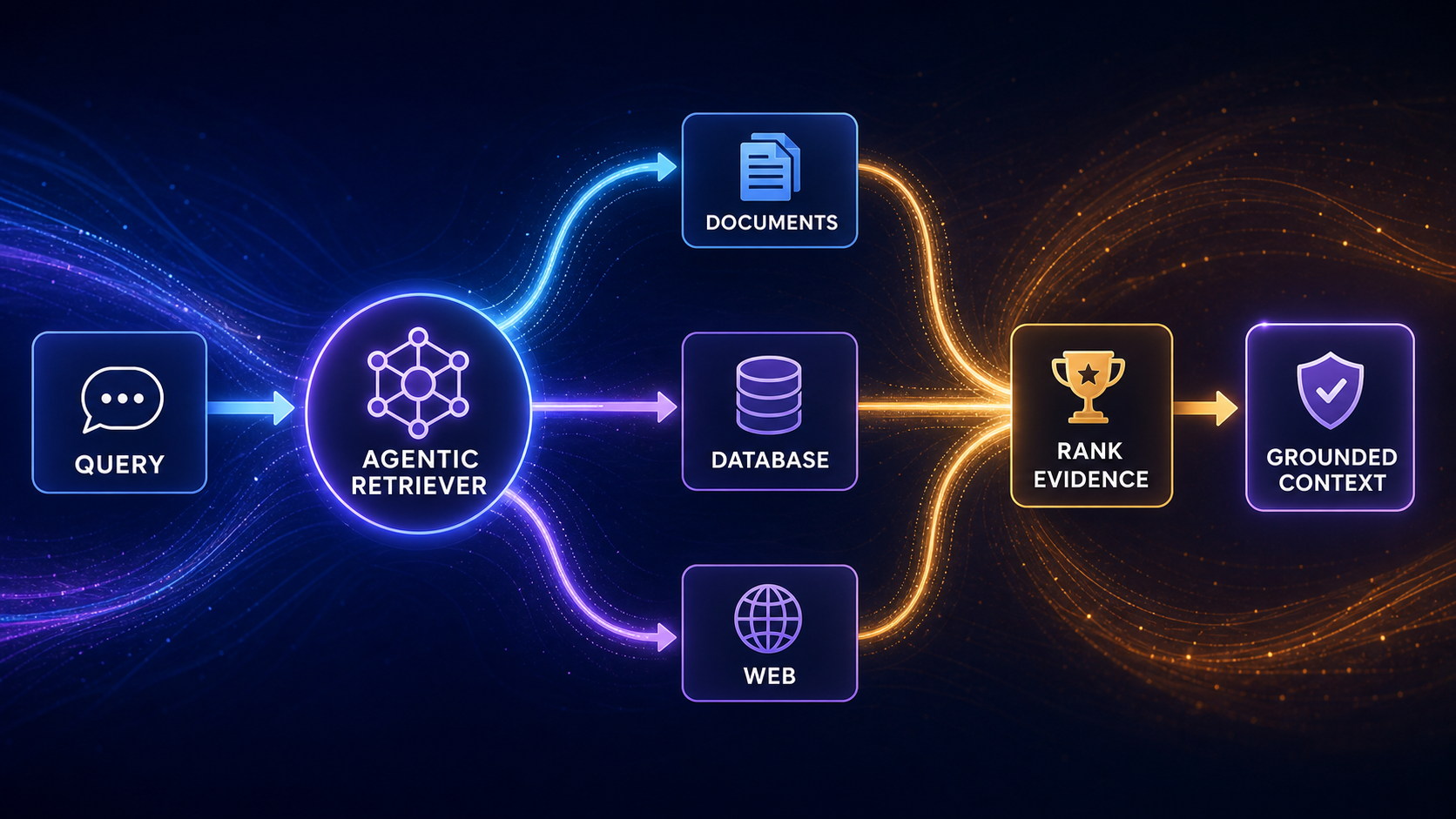
Agentic Retriever Plan multi-hop retrieval Decomposing complex questions and iterating search
Observability Retrieval traces and metrics Checking evidence and answer quality

How it works

A typical RAG pipeline chunks documents, stores embeddings, finds relevant passages for a query, and adds them to the model prompt. The problem is that real questions are rarely simple. A question such as “Can the ML platform team prepay annual commitments from its budget?” may require both the team budget document and the expense policy. AWS describes Agentic Retriever as decomposing such questions, searching across one or more knowledge bases, and gathering enough evidence before returning results.

Smart Parsing matters as well. Tables, images, scanned documents, and video descriptions are easy to lose with basic text extraction. A managed parser attempts to choose the right strategy for each document type and turn it into retrievable units. This is the memory-and-permission layer that agentic AI needs before it can move into real enterprise work.

Photographic concept image of Amazon Bedrock Managed Knowledge Base connecting enterprise documents into a RAG pipeline

<Managed RAG pipeline 3.1>

Architecture

The first image shows several stacks of enterprise documents flowing into one knowledge base, with retrieved evidence passed to an agent. The second shows Agentic Retriever splitting a complex question into smaller question cards and recombining the evidence.

Photographic concept image of Agentic Retriever splitting a complex query into smaller cards and combining evidence

<Multi-hop retrieval in Agentic Retriever 3.2>

The hard part of RAG is not merely attaching a vector database. It is preparing data and preserving permissions. Managed knowledge bases try to absorb that recurring operational work into a cloud service.

Checkpoints

A managed service can speed up the first deployment, but it can also create platform dependence. Even when connectors and default model choices are convenient, retrieval quality and permission mapping must be tested against the organization’s own data. Multi-hop retrieval may improve answers while increasing cost and latency. If sensitive documents are involved, ACL filtering, audit logs, and regional availability should be checked first.

The main point of Bedrock Managed Knowledge Base is that RAG is moving from experiment code into operational infrastructure. For enterprise agents, advantage may depend less on the model name and more on the data layer that can retrieve the right evidence safely.

NVIDIA BlueField-4: The DPU Moving AI Factory Bottlenecks

NVIDIA BlueField-4 is less flashy than a GPU, but it is a useful clue to the next bottleneck in AI servers. Agentic inference can turn one user request into a chain of model calls, tool calls, retrieval steps, memory lookups, security checks, and logs. Fast GPUs are not enough. If networking, storage, CPU orchestration, and KV-cache movement slow down together, overall token throughput falls.

In a July 2026 technical post, NVIDIA described how BlueField-4 DPUs, Vera BlueField-4 STX Storage Processors, and DOCA software fit into the data path of AI factories. As AI server bottlenecks move from individual boxes to data-center-scale systems, the DPU becomes part of the inference pipeline rather than a peripheral.

Background

The NVIDIA Technical Blog says BlueField-4 integrates up to 800 Gb/s Ethernet or InfiniBand, a 64-core NVIDIA Grace CPU, PCIe Gen6, and high-bandwidth LPDDR5X memory. NVIDIA also says it doubles networking bandwidth over BlueField-3, delivers up to six times more compute performance, four times the memory capacity, and more than three times the memory bandwidth.

Bottleneck Traditional response What BlueField-4 targets
Networking Host CPU plus NIC Routing, isolation, and acceleration on the DPU
Security Application or host-layer inspection Policy enforcement in the data path
KV cache Recompute when GPU memory runs short Optimized movement, storage, and reuse
Observability After-the-fact log analysis Telemetry in the infrastructure path

How it works

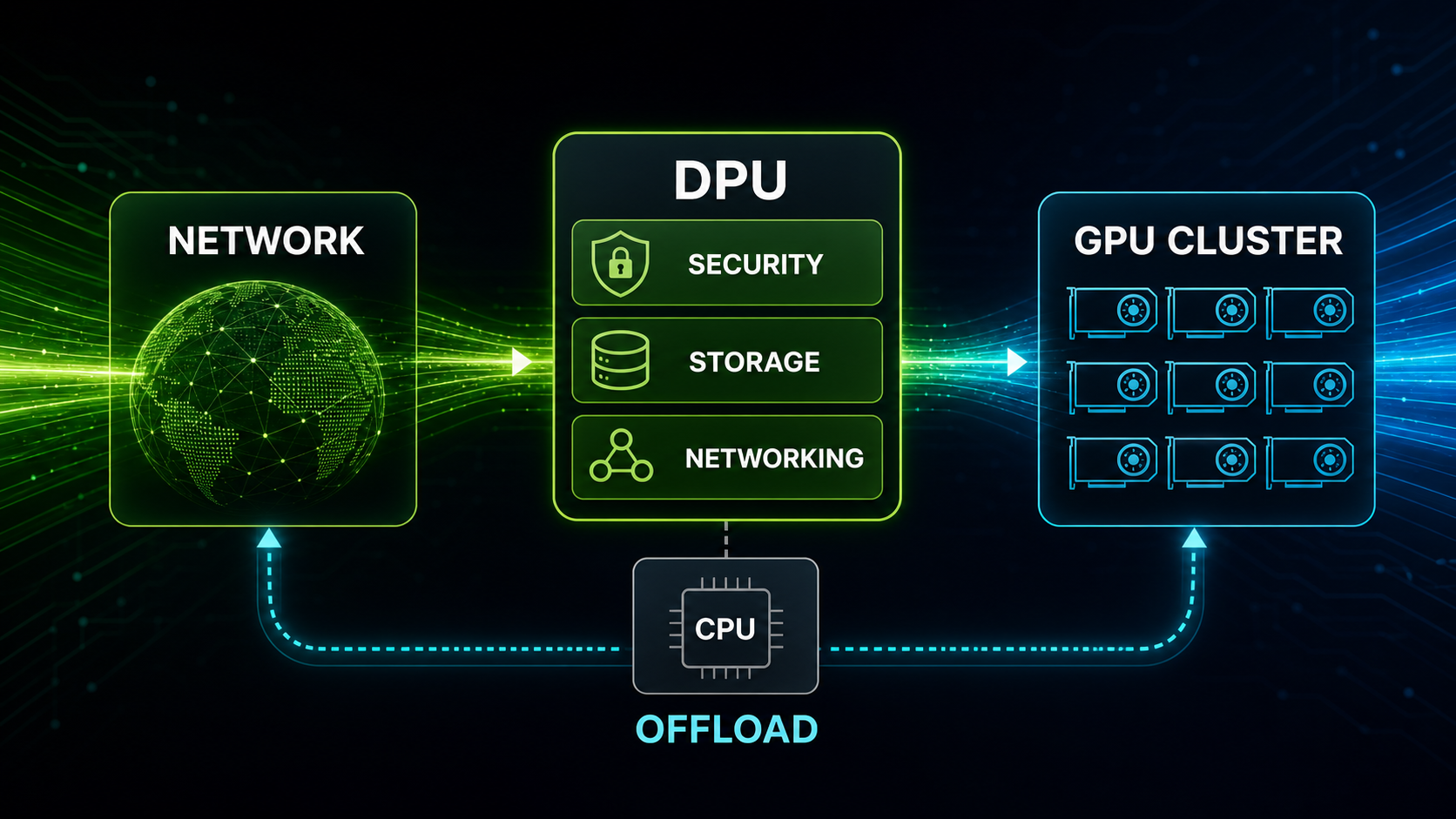
A DPU is a data processing unit. It offloads parts of networking, storage, security, and telemetry that a host CPU might otherwise handle, letting CPUs and GPUs focus on their primary work. The effect grows in agentic AI. A single user question may split into dozens of tool and retrieval steps, and each step creates small movements of data and permission checks.

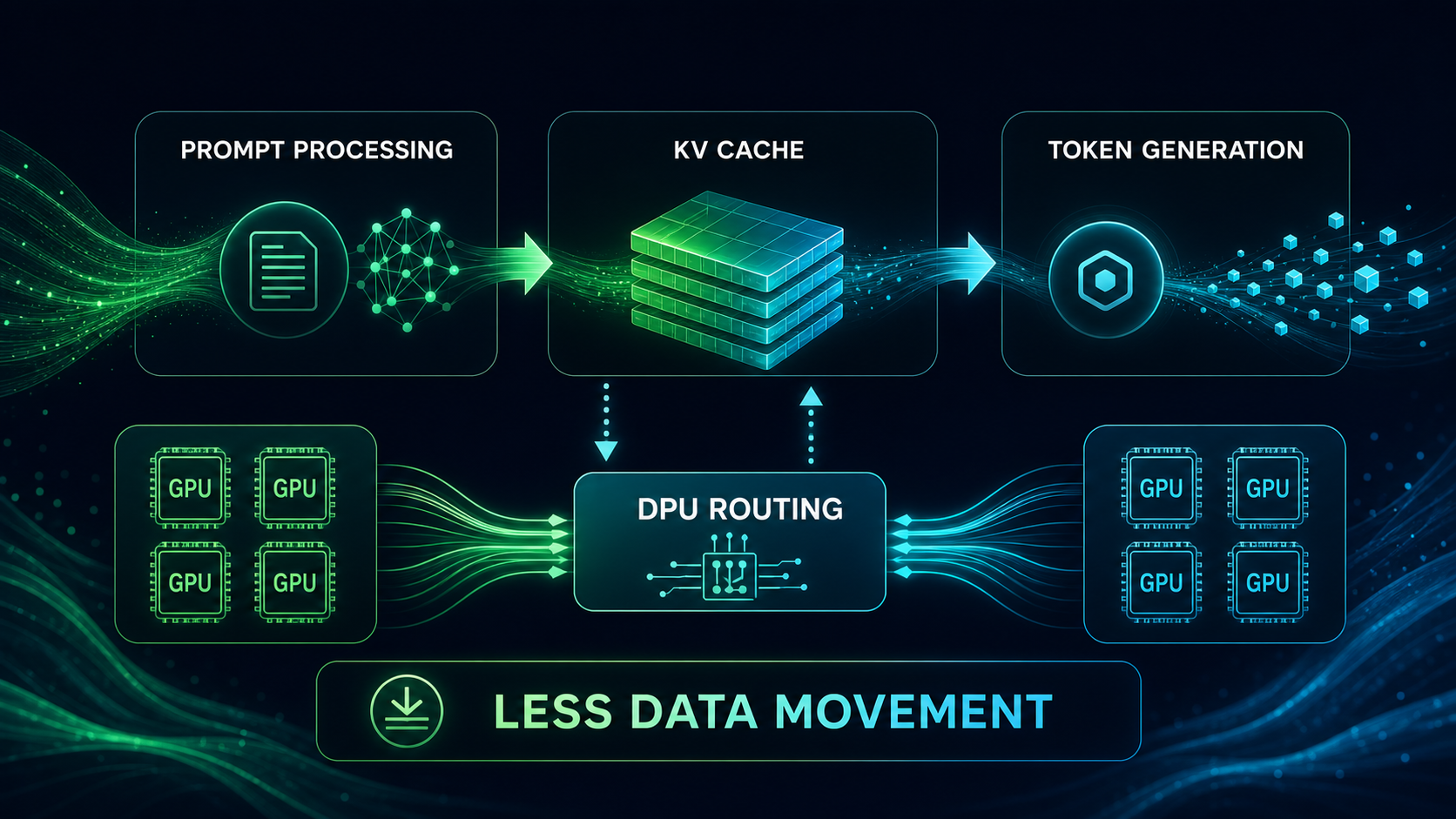
KV cache is especially important for long-context inference. When a model reads a prompt, it produces intermediate attention state that can be reused instead of recomputed. But if GPU memory is constrained, systems must evict cache, recompute it, or move it to another tier. The NVIDIA DOCA platform overview shows how NVIDIA treats this cache and AI-native storage as an infrastructure problem. That means AI infrastructure cloud competition is expanding beyond GPU supply into data-movement design.

Photographic concept image of a BlueField-4 DPU separating network, security, and storage flows beside GPU servers

<The DPU in the AI factory data path 3.1>

Architecture

The first image shows a separate infrastructure-processing layer in front of GPU servers. The second shows KV cache from a long conversation moving between GPU memory, a storage processor, and the network for reuse. The key point is that inference performance is not determined by matrix math alone.

Photographic physical model showing KV cache reuse between a storage processor and GPUs during long-context inference

<KV-cache reuse and the storage tier 3.2>

In an AI factory, GPU utilization and cost per token are outcomes of infrastructure design. A DPU is closer to a redesign of the inference data path than to a simple network card.

Checkpoints

BlueField-4’s numbers are impressive, but real gains depend on the software stack and deployment architecture. DOCA services, storage platforms, and orchestration have to fit together; inserting a DPU alone does not remove every bottleneck. KV-cache sharing also raises strict security and isolation questions. Context residue must not leak across tenants or requests.

BlueField-4 ultimately shows that AI server competition is moving from “faster GPUs” toward “data paths that keep GPUs busy.” Teams operating large-scale inference should evaluate networking, cache, and security offload alongside model choice.

GPT-5.6 Sol and the New Model Race Around Multi-Agent Efficiency

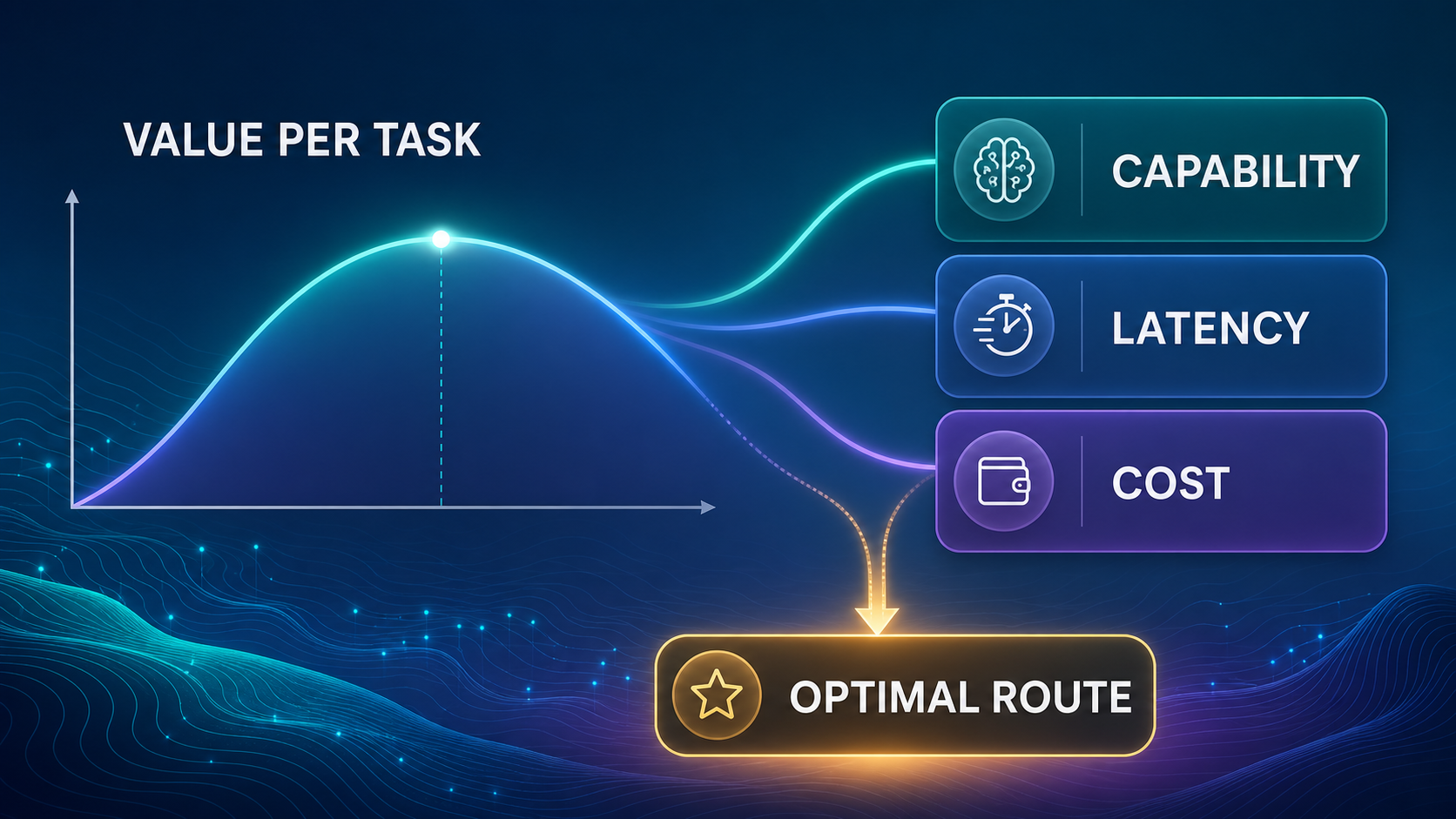
GPT-5.6 Sol is hard to explain as simply “a larger model.” On July 9, 2026, OpenAI made the GPT-5.6 family generally available with Sol as the flagship, Terra for balanced everyday work, and Luna as the cost-efficient tier. The release emphasizes work per token, latency, and cost, not only absolute benchmark scores. The ultra setting and the Responses API multi-agent beta are especially important because they turn parallel delegation into a product feature.

For developers, the shift is that model calls no longer look like one question and one answer. Code review, research, and long terminal workflows can improve when independent observations and checks run in parallel. In practical AI coding, it is increasingly natural to separate security, correctness, and missing-test review rather than ask one agent to inspect every file sequentially.

Background

The OpenAI release says GPT-5.6 Sol scored 53.6 on Agents’ Last Exam, 13.1 points above Claude Fable 5 adaptive reasoning. Artificial Analysis also lists GPT-5.6 Sol max at 59 on its Intelligence Index, close to Claude Fable 5 at 60. These are useful signals, but benchmark task mix, pricing assumptions, and reasoning-effort settings may differ from a real production workload.

Tier What the release emphasizes What teams should verify
Sol Hard coding and knowledge work Can it reproduce and fix errors end to end?
Terra Balanced daily work Are cost and latency predictable?
Luna Low cost Is the quality drop acceptable?
ultra Parallel agent coordination Does wall-clock time fall enough to justify more tokens?

How it works

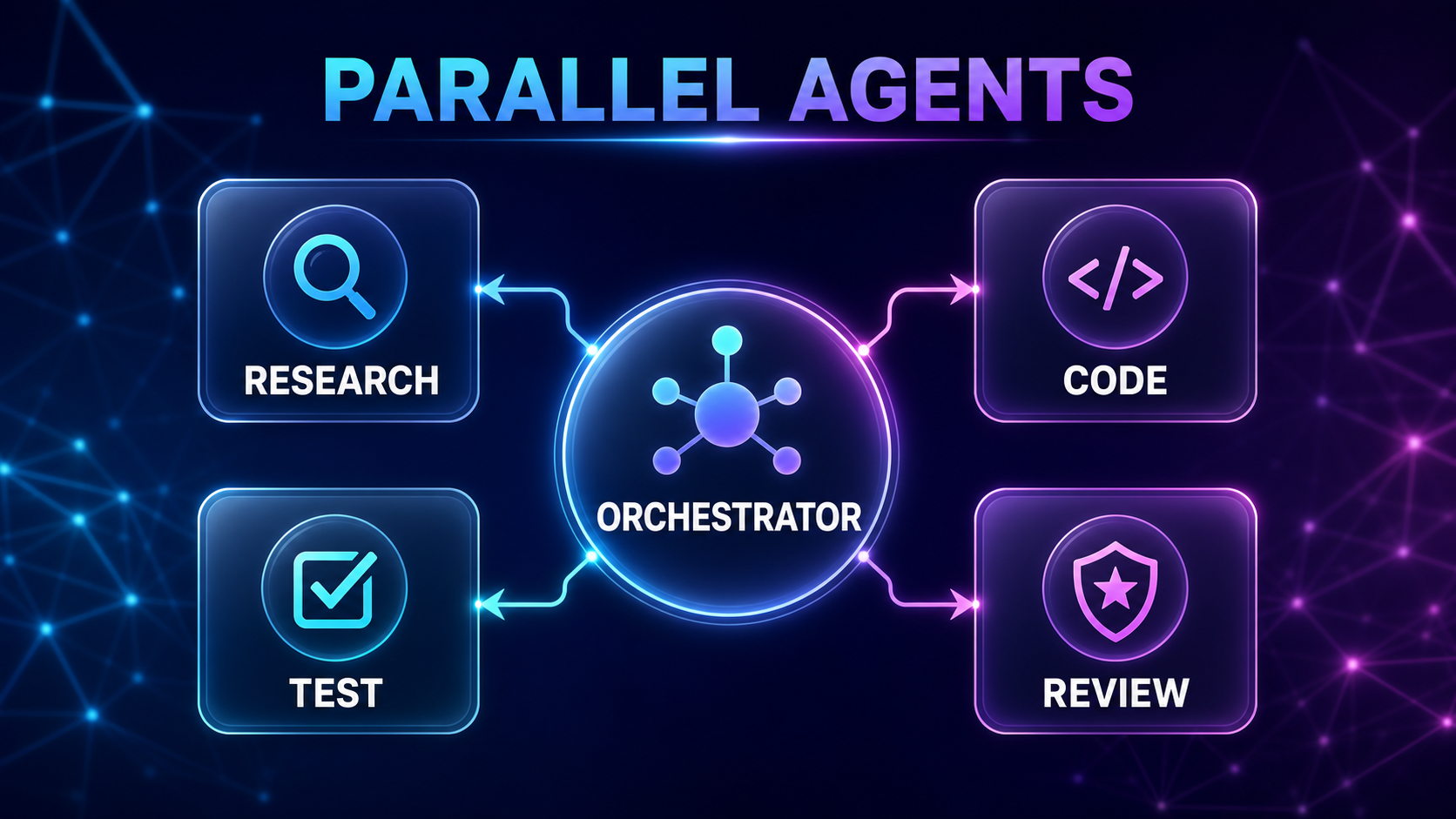
Multi-agent orchestration lets a root agent create several subagents, collect their outputs, and synthesize a final response. OpenAI’s documentation uses a pull-request review example where one agent checks correctness, another security, and another missing tests before findings are reconciled. This works best when parallel exploration helps. It can be wasteful when every step depends on the previous one or when multiple agents contend over the same file.

Programmatic Tool Calling follows the same logic. Instead of pushing every tool result back into the model context, a small program can filter intermediate data and retain only the evidence that matters. For LLM programming, that is an operational technique for keeping long tool traces from overwhelming the model.

Photographic concept image of GPT-5.6 Sol splitting a code review into three subagent task cards

<Multi-agent code review flow 3.1>

Architecture

The first image shows a root agent dividing work into security, correctness, and test cards. The second shows token use, time, and cost being compared on a development desk. The main point of GPT-5.6 is not just “one smartest model,” but a control plane for choosing reasoning effort and parallelism by task.

Photographic concept image comparing GPT-5.6 Sol token, time, and cost tradeoffs with desk cards

<Model efficiency selection criteria 3.2>

When adopting a new frontier model, do not test only the highest-capability mode. Measure the same workflow across Sol, Terra, Luna, and single-agent versus parallel-agent configurations.

Checkpoints

Benchmark numbers are a starting point, not a deployment plan. Every organization has different document lengths, codebase layouts, and approval rules. If humans must spend substantial time reconciling parallel-agent outputs, the time savings shrink. Multiple agents also complicate logs, permissions, and cost attribution. High-impact actions still need application-level approval, regardless of model setting.

GPT-5.6 Sol matters because model competition is moving from raw answer quality toward cost of completed work. Knowing when to spend extra reasoning and when to keep the workflow lean is becoming as important as choosing the model itself.

GPT-Live: Why Full-Duplex Voice AI Changes Human-Agent Interaction

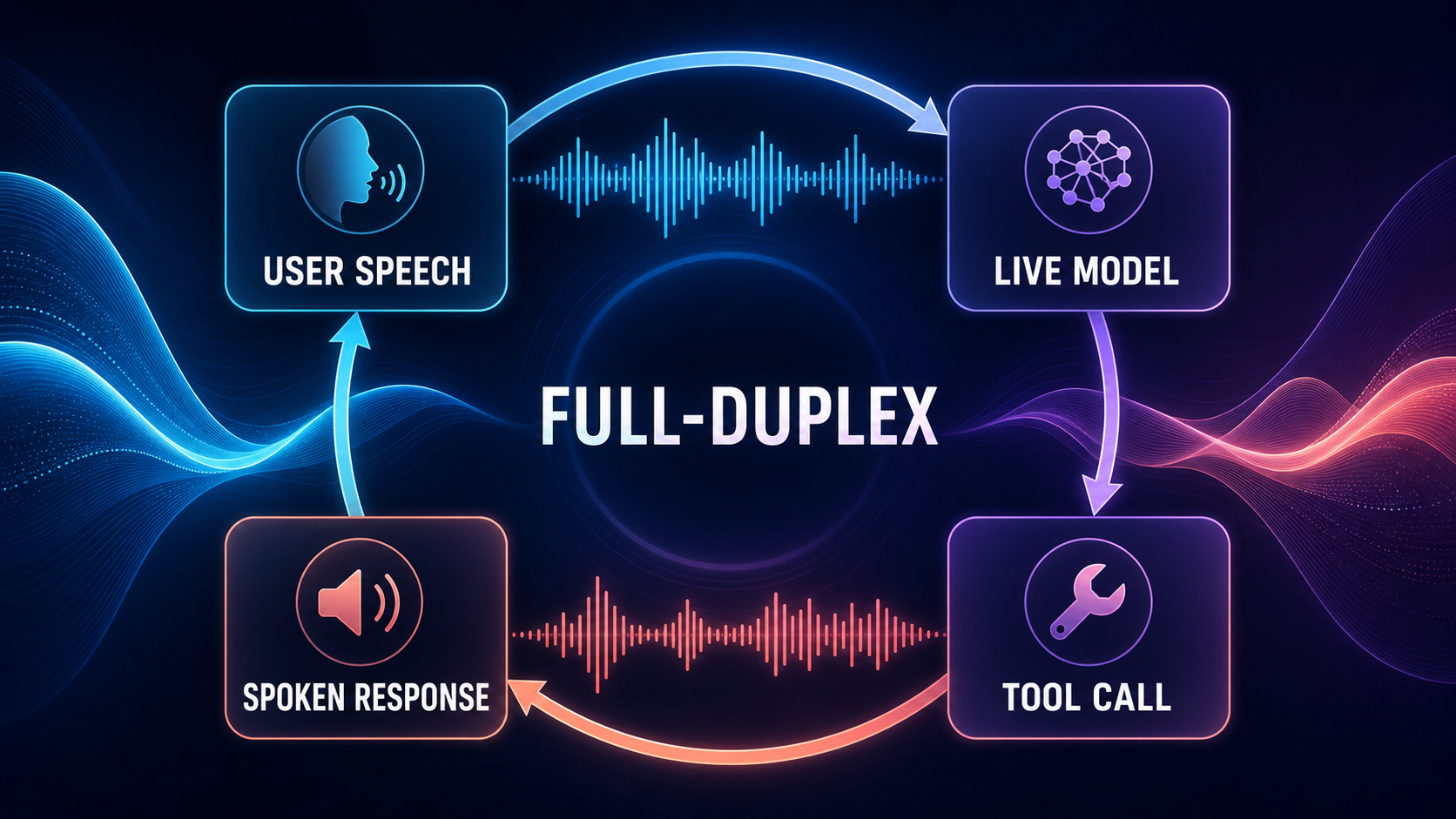
GPT-Live is an attempt to move voice AI beyond the familiar pattern of “wait until the user stops speaking, then answer.” On July 8, 2026, OpenAI introduced GPT-Live-1 and GPT-Live-1 mini, saying the new models power the updated ChatGPT Voice experience and are planned for API access. The central idea is a full-duplex architecture. Listening and speaking can overlap, and the model can make finer-grained decisions about backchannels, interruptions, and pauses, much closer to the rhythm of human conversation.

That matters because the bottleneck in voice interfaces has never been only answer quality. Earlier systems often felt hard to use as real assistants because of latency, awkward turn boundaries, and mistaken end-of-speech detection. GPT-Live separates the problem: a fast interaction layer keeps the conversation natural, while search or deeper reasoning can be delegated to a background model. As voice agents spread into support centers, language learning, in-car assistants, and accessibility tools, that separation becomes the key design pattern to watch for LLM programming beyond text chat.

Background

According to OpenAI’s technical explanation, the original ChatGPT Voice used a cascaded pipeline: speech-to-text, then a large language model, then text-to-speech. That made spoken access to frontier models possible, but information could be lost across steps and responses could feel slow. Later systems such as Advanced Voice Mode processed audio within one model, but still followed discrete turns: the model generally waited for the user to stop before responding.

GPT-Live directly targets that limitation. OpenAI says more than 150 million people use voice and dictation features with ChatGPT each week. At that scale, even a half-second delay or an unnecessary interruption can shape the product’s perceived quality. The GPT-Live announcement from OpenAI is notable because it puts conversational timing, not just model intelligence, at the center of the release.

Dimension Cascaded voice systems GPT-Live approach
Processing flow STT → LLM → TTS in sequence Continuous listening and speaking decisions
Turn detection Often inferred from silence Ongoing decisions about speaking, waiting, or yielding
Hard requests Conversation stalls while the model works Deeper work can be delegated in the background
Product meaning Voice input and output Conversational work interface

How it works

Full-duplex means both sides of the audio channel can be active at the same time, as in a phone conversation. GPT-Live keeps processing the user’s speech while deciding whether to speak, keep listening, offer a brief acknowledgment, or call a tool. If a user says, “For tomorrow morning’s meeting deck…” and pauses for a moment, the model is not forced to treat that silence as a final turn boundary.

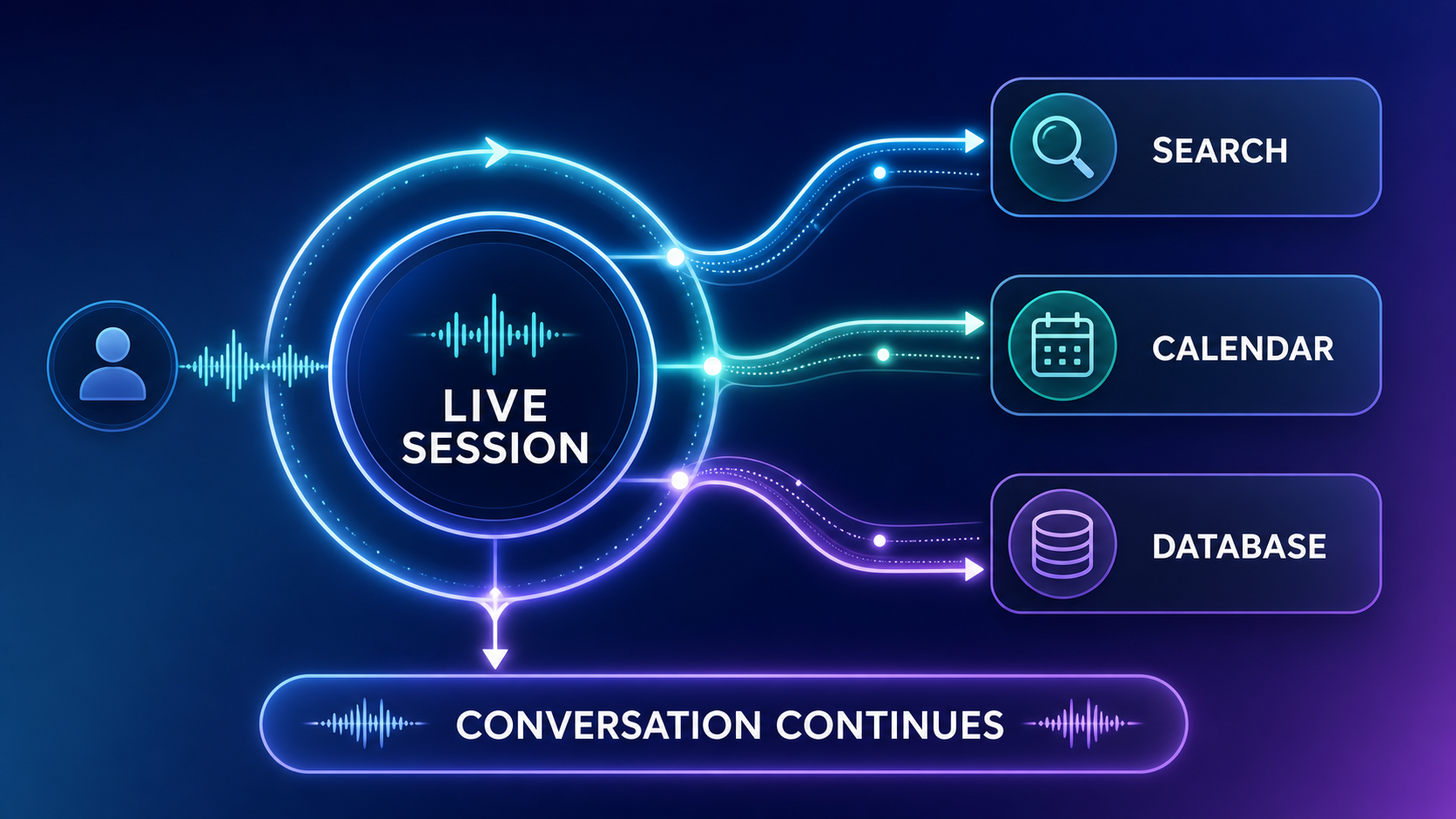
The second design choice is role separation. GPT-Live handles the fast, expressive interaction layer, while web search, deeper reasoning, and longer planning can be passed to a frontier model running behind it. OpenAI said GPT-5.5 is used in that background role at launch. Developers building similar products should also check the separate OpenAI voice agents documentation. This is the same broad pattern that makes agentic AI useful outside code and screen automation: the front layer protects the user’s rhythm, while the back layer handles slower and heavier computation.

Photographic concept image of GPT-Live full-duplex voice flow with a desk microphone and task cards

<Full-duplex voice interaction concept 3.1>

Architecture

In the first image, the microphone on the left represents continuous user speech. The small cards in the center stand for moment-by-moment model decisions: listen, acknowledge, speak, or allow interruption. The separate work cards on the right show search and analysis tasks being handled away from the live conversational flow.

Photographic concept image showing GPT-Live separating live conversation from deeper reasoning tasks

<Separating the conversation layer from the reasoning layer 3.2>

In voice AI, a smart answer and a comfortable answer are not the same problem. The real test for GPT-Live is whether latency, turn detection, and background delegation make everyday conversation feel less interrupted.

Checkpoints

First, the preference results OpenAI reports were produced under OpenAI-designed conditions. Improvements on GPQA, BrowseComp, and the internal τ³-Voice Telecom variant are useful signals, but real calls, noisy rooms, and multilingual accents still need independent validation.

Second, voice interfaces raise substantial privacy questions. If audio is continuously processed in meetings, cars, or homes, storage policy, real-time processing boundaries, and enterprise data controls become part of the buying decision.

Third, API access is still described as forthcoming. Developers who want to build their own voice agents will need to verify latency, pricing, tool-call permissions, and call-recording rules. For now, the safer way to evaluate the release is to watch how the new ChatGPT Voice experience changes daily use.

In short, GPT-Live treats voice AI less like a speaker attached to a larger model and more like a real-time work interface. Its success will likely depend less on benchmark charts than on whether conversations break less often and whether background work stays out of the user’s way.

404 Dev Room 30 - Taming

Series · 404 Dev Room Webtoon · Ongoing Episode 30 · 404 Dev Room 30 - Taming The trainer in the AI coding room has changed. <...