Showing posts with label Tesla. Show all posts

Sunday, July 26, 2026

Tesla OTA Update Technical Analysis: How Much of a Car Can Change?

Tesla OTA Update Technical Analysis: How Much of a Car Can Change?

OTA is the correct term. Over-the-Air means transferring vehicle software and data over a wireless network instead of connecting a cable or service tool. Calling it an automatic wireless update leaves out the installation decision. A Tesla can download a new version automatically, but the driver normally reviews the notification and chooses to install now or schedule a time.

That distinction matters for safety. According to Tesla Software Updates, the car can be driven during a download but cannot be driven during installation. Charging pauses if installation starts while plugged in and resumes automatically afterward. Automotive OTA is not just replacing one phone app. It has to preserve a consistent state across multiple electronic control units.

As checked on July 27, 2026, Tesla's Korean owner manual for the 2025-and-newer Model Y is published against software version 2026.20. This is not one universal latest version delivered to every vehicle at once. Tesla stages releases by model, hardware, region and regulation.

Which Tesla models receive OTA, and how does it work?

Tesla's current owner manual selector lists Model S, Model X, Model 3, Model Y and Cybertruck, plus separate manuals for legacy generations. These vehicles participate in the OTA system, but they do not all receive identical features or builds. Older Model S and X vehicles can still receive updates while missing features that require a newer MCU, Autopilot computer, camera or modem.

As explained in Tesla FSD Technical Analysis Part 1, some Computer 2.0 and 2.5 vehicles need a physical FSD Computer 3.0 retrofit for newer FSD capabilities. OTA cannot manufacture compute performance that the hardware lacks.

Download and installation are separate phases

Tesla owner documentation divides an update into these stages:

  1. The car checks for an eligible package and normally downloads it over Wi-Fi.
  2. The driver selects immediate or scheduled installation in the touchscreen or Tesla app.
  3. The vehicle checks parked state, battery condition and other installation requirements.
  4. Driving and charging are disabled while multiple modules are updated.
  5. The vehicle reports completion, shows release notes and resumes charging.

Important safety updates can be delivered over cellular. Standard Connectivity vehicles retain access to OTA, and Premium Connectivity is not a prerequisite for ordinary vehicle updates or FSD operation. Wi-Fi is still recommended for the fastest and most reliable large downloads.
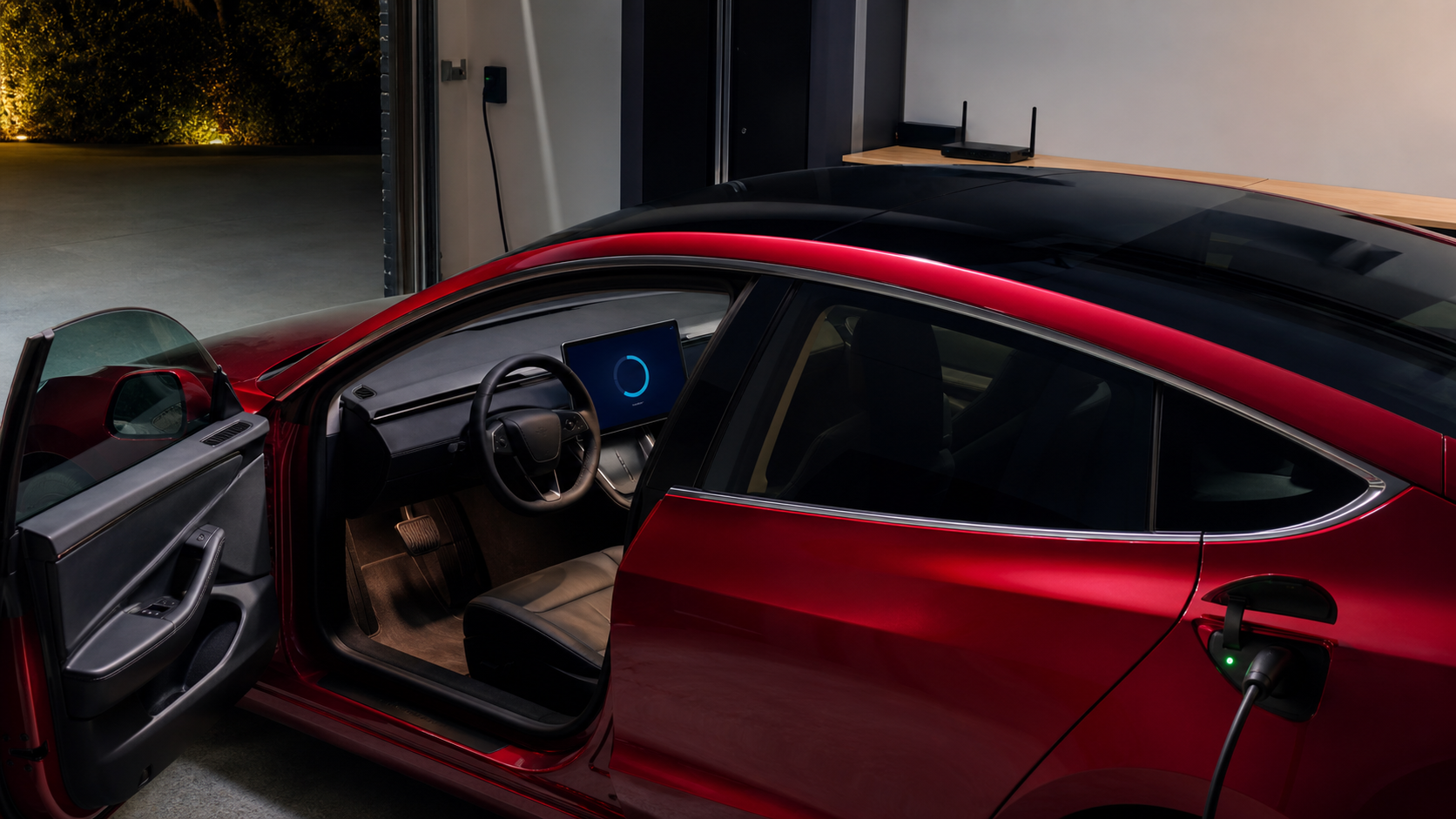
A parked electric car downloading a software update over home Wi-Fi

<Illustrative scene of a parked vehicle receiving an OTA download 1.1>

Why does the latest version differ by vehicle?

Tesla's public Service Mode release notes include the 2026.20 family at the time of this review, and the latest Model Y manual also identifies 2026.20. The build an owner receives may have a patch suffix such as 2026.20.x, while FSD can use its own product version alongside the vehicle firmware number.

Eligibility can be divided by:

  • Model S, 3, X, Y and Cybertruck production generations
  • Intel Atom or AMD Ryzen infotainment and MCU generations
  • Driver-assistance computers such as HW2, 2.5, 3 and AI4
  • Camera, radar and ultrasonic sensor configurations
  • Battery, thermal-management and charging hardware
  • Country-specific certification and permitted features

Not receiving a version seen online immediately is not proof of a fault. Staged release also limits the impact of a defect and lets Tesla observe behavior across hardware combinations.

What OTA can and cannot change

Tesla OTA reaches beyond touchscreen apps. The ECU Update Status panel in Tesla's service documentation checks whether updates succeeded on individual electronic control units. A separate service procedure for reinstalling the current vehicle software explicitly targets all CAN ECUs.

Area OTA or wireless data update examples Limit
Touchscreen and infotainment UI, media apps, browser, Bluetooth, voice commands, games and convenience features Cannot change CPU, GPU, memory or display performance
Maps and navigation Offline map data, route features, charger information and Trip Planner Road accuracy depends on regional source data
Driver assistance and FSD Neural weights, perception and planning code, driver monitoring and camera firmware Cannot exceed sensor resolution or AI computer capacity
Body control Doors, windows, lighting, wipers, climate, keys and alarm behavior Cannot add an absent sensor or actuator
Driving and energy Accelerator response, regenerative braking logic, range estimates, battery preconditioning and charging control Cannot change physical battery capacity, motor rating or brake hardware
Service and diagnostics Service Mode, alerts, ECU routines, camera and TPMS procedures A failed module still requires physical repair
Security and connectivity Certificates, vulnerability fixes, app links, Bluetooth, Wi-Fi and modem software Cannot add a newer radio standard to obsolete modem hardware

The table does not mean every physical property can be remotely rewritten. Tesla can patch software-controlled behavior broadly, but a missing camera, slow processor or unsupported actuator cannot be added by download. That is why Tesla AI Computer Installations includes separate computer and early-camera retrofit procedures.

Maps update separately from vehicle firmware

Tesla owner documentation says updated maps are automatically sent as a separate package over Wi-Fi, followed by an installation notice on the touchscreen. Navigation data and the vehicle operating software are not the same package. Tesla's FSD documentation also says current maps improve accuracy while the driver-assistance system primarily uses visual camera data.

The map supplier question in South Korea needs careful handling. Official Tesla Korea documentation describes navigation, live traffic and map updates but does not identify one current provider for Korean base maps, search and routing. Online claims cite combinations of Google tiles, Mapbox, OpenStreetMap and TMAP, often mixing the visual layer, place search and routing engine or referring to different generations. No current supplier should be asserted without an official contract or in-vehicle attribution for the exact feature.

South Korea's conditional approval in February 2026 for Google to export 1:5,000 map data does not prove that Korean Teslas immediately switched to Google navigation. The verifiable conclusion is narrower: Tesla operates regional map packages and online routing services, while its official documents reviewed here do not disclose the supplier stack.

FSD models update, but they are not public models

As Tesla FSD Technical Analysis Part 2 explains, a new FSD version is trained and evaluated in Tesla data centers before vehicle deployment. A package can contain neural-network weights, execution graphs, AI-accelerator-compiled artifacts, pre- and post-processing and control code.

Tesla does not release the latest FSD weights, full source, parameter count or exact file size. Public information consists of architecture presentations at AI Day, historical network details on Tesla's AI page and selected safety and mileage statistics. FSD is a closed commercial model delivered by OTA, not an open-source model available for independent download and inspection.

Why competitors cannot simply copy Tesla OTA

Wireless file transfer is not the hard part. The barrier is designing and operating the whole vehicle so that one bad package does not disable braking, charging, airbags or driver assistance.
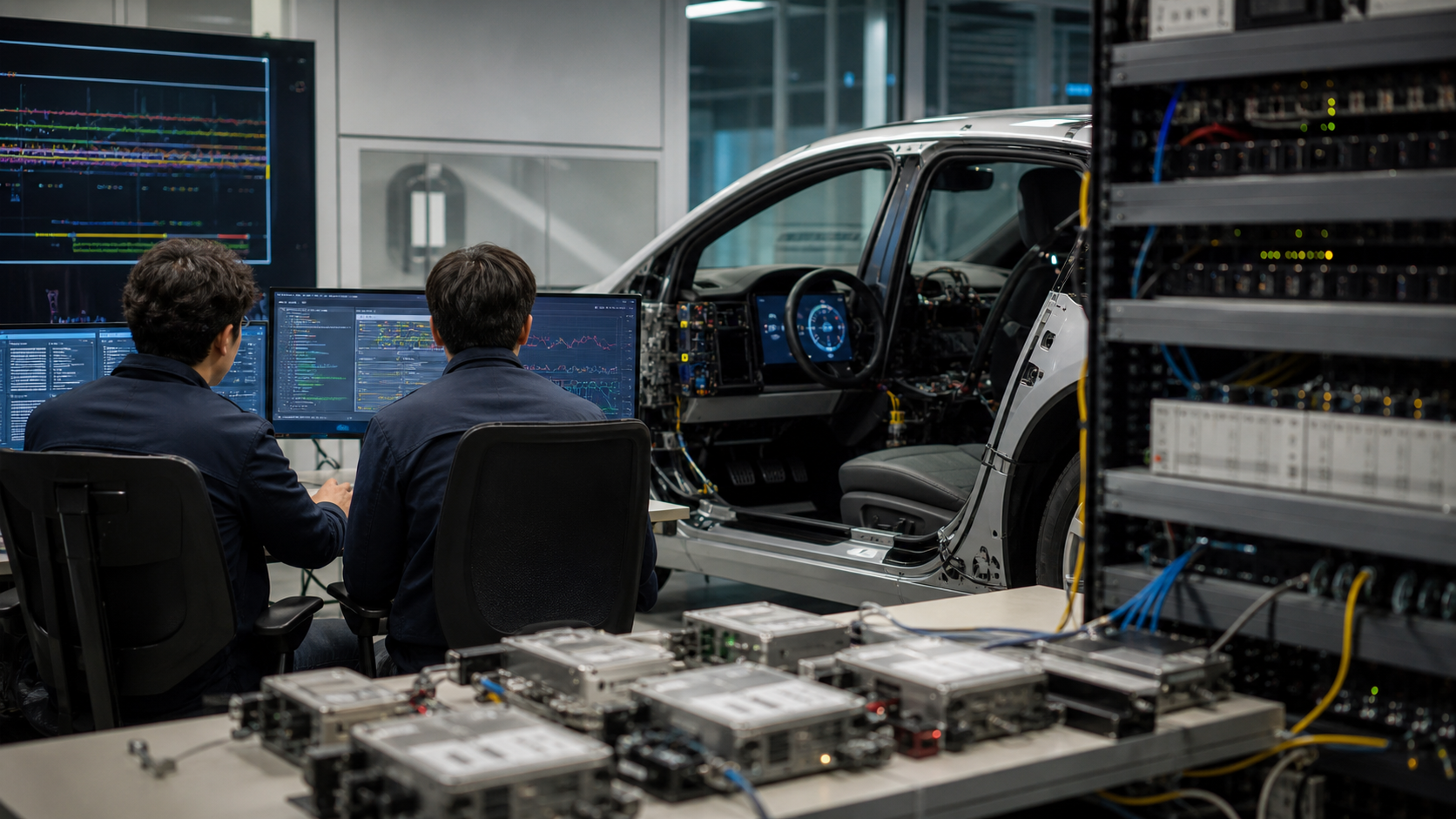
Engineers validating multiple automotive ECUs together with a test vehicle

<Illustrative whole-vehicle OTA validation laboratory 3.1>

1. The manufacturer must control a software-centric electrical architecture

Traditional cars contain supplier-specific ECUs with separate firmware, diagnostics and contractual ownership. If the automaker cannot control build, signing, compatibility and recovery across modules, only the infotainment system receives OTA while safety-critical controllers remain service-center work. Tesla vertically integrated vehicle computers, gateways, networking and software families relatively early.

2. Every hardware combination must be identified precisely

Two vehicles with the same model badge can contain different computers, cameras, batteries, thermal systems and sensors depending on production date and factory. The deployment system must know each vehicle's hardware and current versions and reject incompatible packages. Tesla's ECU-level status and camera-firmware mismatch diagnostics show this is an operational requirement, not a theoretical edge case.

3. Deployment must be recoverable and effectively atomic

If power is interrupted or one module stops responding, the vehicle must remain safe and support retry or recovery. International UN R156 rules require delivery integrity and authenticity, sufficient power, safe execution, restoration after failure and user notification. Encryption alone is not an OTA system.

4. Post-release validation and regression infrastructure must exist

Engineers need simulation, hardware-in-the-loop, validation vehicles and staged fleet deployment to confirm that changing brake logic does not break charging or climate control and that new FSD code works across camera generations. Without this organization and data, a higher update frequency can create more failures rather than more improvement.

5. Regulation and product liability must connect to version control

Changing automotive software is not complete when a new feature works. A braking, steering or safety change can affect type approval. The manufacturer must know which software is installed on every relevant vehicle and assess certification impact and recall obligations. Tesla's real barrier is linking design, validation, approval, deployment and monitoring across the vehicle lifecycle.

Technical assessment and cautions

Tesla OTA is a leading example of turning a car from a machine fixed at delivery into a software product that can keep changing. Its breadth—infotainment, maps, camera firmware, FSD, thermal management, charging and many ECUs under one operating system—is the central strength.

An update does not guarantee improvement. Risks include new bugs, regional feature differences, hardware-generation exclusions, vehicle downtime during installation and limited public release detail. Owners should read release notes and provide adequate battery, Wi-Fi and a period when the car will not be needed.

The analysis reduces to three points:

  • OTA is wireless delivery, while safe automotive OTA also requires controlled installation and recovery.
  • Tesla updates maps and infotainment as well as FSD and multiple ECUs, but cannot bypass physical hardware limits.
  • The competitive barrier is not a download button; it is unified electrical architecture, supply-chain control, validation data and regulatory traceability.

Tesla FSD Technical Analysis 2 - Data, OTA and the Safety Test

Series · Tesla FSD Technical Analysis

Article series · Completed

Episode 2 · Tesla FSD Technical Analysis 2 - Data, OTA and the Safety Test

Tesla FSD Technical Analysis 2 - Data, OTA and the Safety Test

This series tests Tesla FSD's implementation against public sources. Part 1 established that driving inference happens inside the vehicle. That raises the next questions: Does Tesla upload continuous video from millions of cars? Who pays for connectivity? How can OTA replace a large AI model? And is the architecture objectively advanced enough to deserve its reputation?

Does every video go to a server: how fleet learning works

The short answer is selective collection, not continuous raw streaming. Uploading every high-resolution camera for an entire trip would make cellular and storage costs prohibitive. Tesla has repeatedly described local processing followed by transmission of short clips or telemetry selected for particular safety events and learning conditions.

Tesla's rideshare privacy notice says external-camera ADAS processing stays in the vehicle by default. It describes two classes of transmissible recordings: safety events and fleet learning. Safety-event clips can be up to 30 seconds and may be linked with account, time and location metadata after a collision, airbag deployment or emergency stop. Fleet-learning clips help recognize lanes, signs and traffic lights and are described as not linked to the account. Policies for privately owned vehicles vary by region and consent settings, so both “every video is always uploaded anonymously” and “no video ever leaves the car” are misleading.

The learning loop is roughly:

  1. Engineers define a failure scenario, such as a yellow light in glare, an unusual work zone or a motorcycle cutting in.
  2. Vehicles select candidate clips and associated vehicle state matching the condition.
  3. Servers label, filter and organize training and evaluation sets.
  4. Data centers retrain models and run simulation, closed-loop and vehicle regression tests.
  5. A passing version is distributed over OTA and real-world performance is observed again.

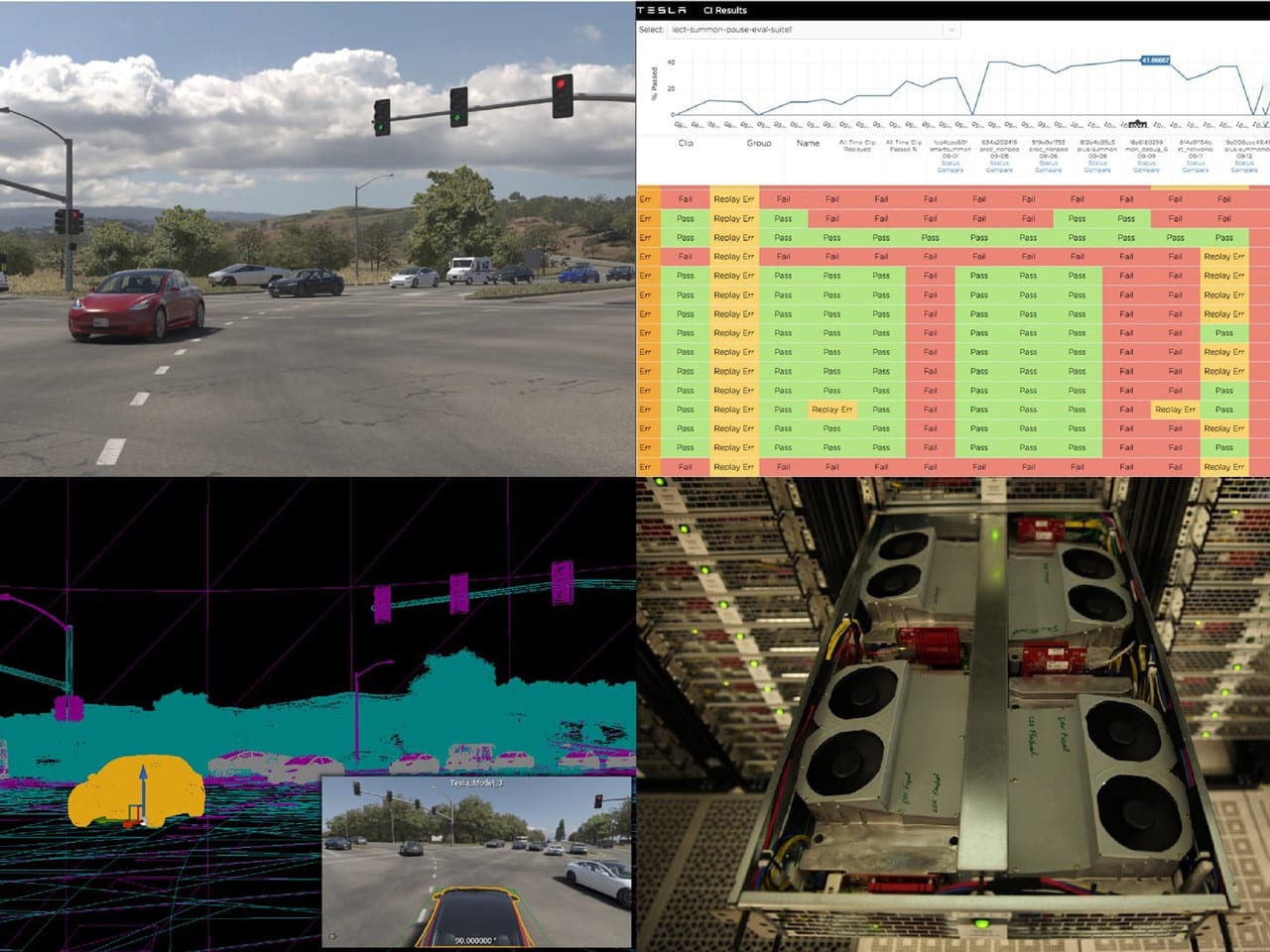
Tesla's published simulation view of its self-driving evaluation infrastructure

<Official Tesla autonomy evaluation infrastructure image 1.1>

In Evaluation Infrastructure, Tesla describes placing anonymized characteristic clips into large test suites, generating realistic graphics and sensor data and running hardware-in-the-loop evaluation. This data engine is Tesla's most important asset. The decisive advantage is not camera count alone, but how quickly failures become targeted data, new training and regression tests that prevent old problems from returning.

Who pays for mobile data?

Tesla vehicles have cellular modems and use local carriers. Owners do not activate a separate smartphone-style data plan for FSD learning traffic. According to Tesla Connectivity, Standard Connectivity is included for eight years from new delivery and provides core maps, navigation and access to OTA. Important safety updates continue over the vehicle's cellular connection.

In the United States, Premium Connectivity is $9.99 per month or $99 per year and adds cellular live-traffic visualization, satellite maps, streaming and browser features. FSD works without Premium Connectivity. Tesla states this directly in its FAQ. Pricing and included periods vary by country.

Data function Included or operated by Tesla Optional owner payment
On-device FSD inference Runs on vehicle hardware Unrelated to Premium
Important safety updates Delivered by cellular No separate mobile plan
General OTA Accessible to all vehicles; Wi-Fi commonly recommended for large downloads Owner's Wi-Fi environment
Selected learning data Sent according to consent, policy and event conditions No per-upload charge
Satellite maps, live traffic and streaming Limited without Premium Premium Connectivity

How does OTA replace the model?

OTA for a car is more than an app update. It is deployment to a safety-critical embedded system. The vehicle downloads signed packages, verifies integrity and installs firmware, neural networks, maps or control software only when installation conditions are satisfied. Tesla's FSD support page says even subscription activation requires completion of an OTA update.

It would be speculation to claim every update distributes a full model over cellular. Tesla does not publicly detail package sizes, delta-update mechanisms or partition layout. What is confirmed is that all vehicles have access to OTA and feature availability varies by hardware, software, region and model year. Download speed is less difficult than safe recovery, power-loss tolerance, signature verification, hardware branching and regression testing.

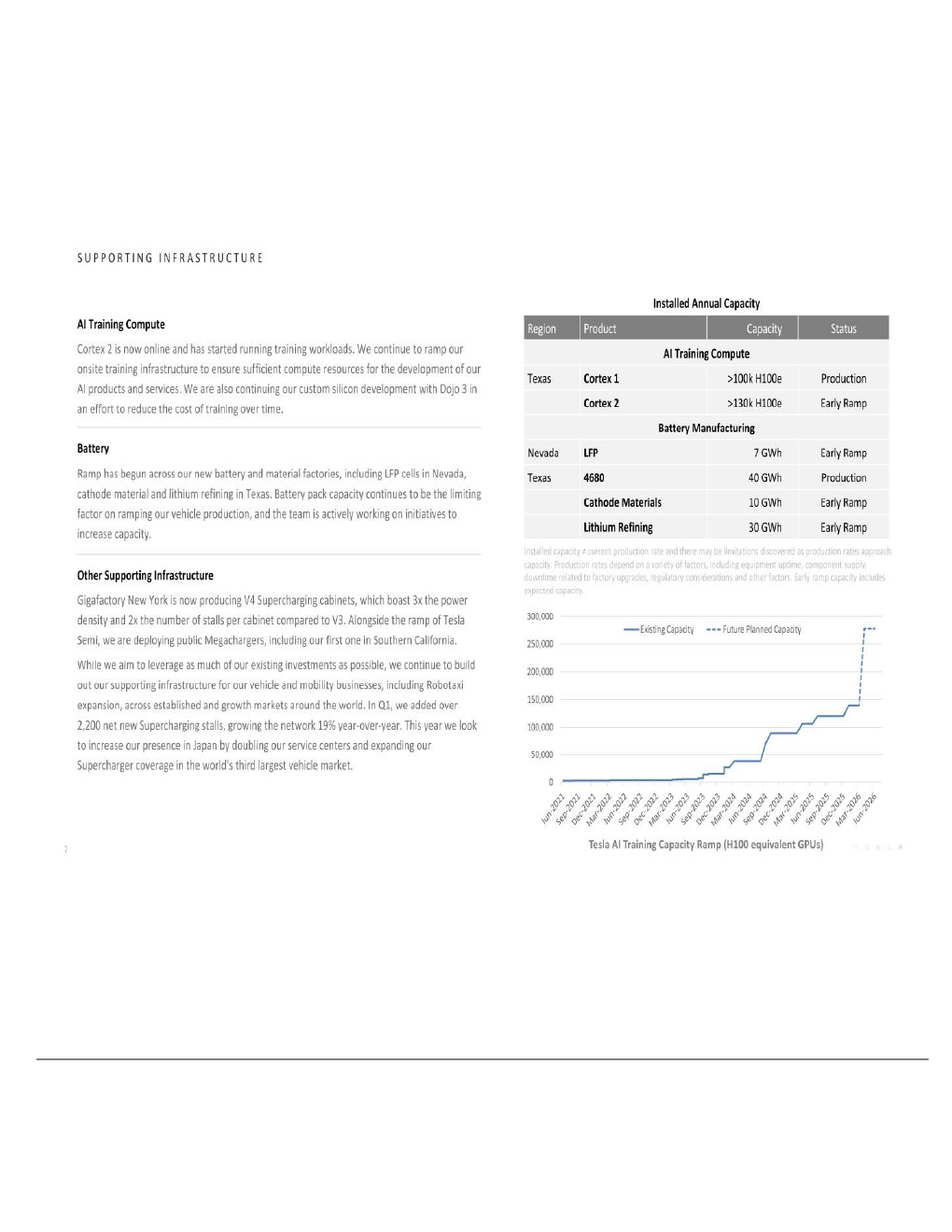
The AI software and inference compute page from Tesla's Q1 2026 investor update

<Tesla Q1 2026 published AI software material 2.1>

Tesla's Q1 2026 investor update says FSD v14.3 improved reinforcement learning for long-tail cases, enhanced its vision encoder for low-visibility scenes, and rewrote the AI compiler and runtime to reduce inference latency by up to 20%. It demonstrates vertical integration across chips, compilers, runtime, vehicles and training infrastructure. “Up to 20%,” however, is an internal company comparison, not an independently reproduced road-test result.

An objective assessment of Tesla FSD's technical lead

There are strong reasons to rate the technology highly:

  • A very large compatible fleet that doubles as a learning and evaluation sensor network
  • Time-aware multi-camera integration, occupancy modeling and planning in one evolving AI stack
  • Vertical integration of inference chips, compiler, runtime, vehicle control, OTA and training compute
  • Consumer Level 2 assistance across an unusually broad range of city streets and highways
  • A fast data engine from failure discovery through retraining, regression evaluation and redeployment

That does not prove Tesla has the world's most advanced fully autonomous system. Consumer FSD remains supervised Level 2. The NHTSA PE25012 opening document lists complaints and crashes involving red-light entries, movement into opposing lanes and incorrect lane selection. An open investigation is not a final defect finding, but it shows regulators are examining whether drivers received enough warning and time to respond to unexpected behavior.

Tesla's FSD Safety Report reports lower collision rates with FSD engaged. Its aggregation is not a randomized comparison with identical roads, vehicle ages, driver populations, interventions and crash definitions. Selection bias matters because drivers may activate FSD more often on suitable roads. Waymo, by contrast, operates driverless Level 4 within bounded areas and publishes geographically matched human benchmarks using peer-reviewed methods. “Broad supervised Level 2” and “bounded driverless Level 4” optimize different problems and should not be reduced to one league table.

Tesla's technology stack is advanced, but product naming and the actual responsibility level must remain separate. Current FSD must not be treated as full autonomy, and company safety statistics should be read beside independent evidence.

Does faster-than-human reaction guarantee safety?

Computers do not tire, can watch several directions and can issue control commands quickly. That potential is real. Safety, however, is not one average reaction-time number. What matters is how quickly a system detects camera degradation from glare, fog or dirt; what it does when lights, signs and human directions conflict; and how early it communicates an unexpected intention to the supervising driver.

IIHS emphasizes that Level 2 cannot replace the driver and that over-trust can delay intervention. It also finds limited independent evidence that partial automation, by itself, reduces crashes beyond separate collision-avoidance features. Tesla's fleet learning is therefore both a technical strength and an ethical burden: an incomplete product is monitored by ordinary customers on public roads.

Where Hyundai and Kia need to push harder

Hyundai is not a sensor laggard. Its HDA owner documentation describes fusion of a forward camera, front and corner radar and navigation for highway lane centering, speed and distance control and assisted lane changes. Radar is a defensible engineering choice for distance measurement and adverse conditions. Yet HDA2 is mainly restricted to supported controlled-access roads and does not expose one consumer product across the variety of urban intersections and unstructured scenes that Tesla attempts.

The comparison is not about sensor count.

Dimension Tesla FSD (Supervised) Hyundai HDA2
Automation level Supervised Level 2 Supervised Level 2
Main operating scope Broad city, road and highway scenarios Supported controlled-access highway sections
Sensor strategy Camera-centric, configuration varies Camera, radar and navigation fusion
Strength Fleet data, integrated AI, OTA iteration Conservative domain, sensor redundancy, production quality
Public challenge Independent safety data, over-trust, visibility and intersection failures Urban expansion, software iteration speed, data loop

Hyundai and Kia should not simply copy a camera-only design. They need consent-based failure-data collection, common software across vehicle lines, large-scale simulation and regression evaluation, faster OTA deployment and safety metrics that outsiders can reproduce.

Tesla FSD deserves a high technical rating. It changed the industry's reference point by connecting chips, cars and data centers into a product that keeps learning after sale. But advanced is not the same as finished. Red-light and low-visibility failures remain, and the driver remains responsible. Hyundai and Kia already have strong sensor and manufacturing foundations. The next challenge is to add a faster software and data loop—and transparent safety validation—to compete for trustworthy autonomy across a much wider road domain.

Tesla FSD Technical Analysis 1 - How It Drives Without Internet

Series · Tesla FSD Technical Analysis

Article series · Completed

Episode 1 · Tesla FSD Technical Analysis 1 - How It Drives Without Internet

Tesla FSD Technical Analysis 1 - How It Drives Without Internet

This series checks Tesla FSD's architecture and limitations against public sources. The first question is simple: Can FSD keep driving in a tunnel with no cellular signal? Yes. More precisely, FSD is not “serverless” in the web-development sense. It is an on-device inference system. Training happens in data centers, while perception, trajectory planning, steering and acceleration or braking commands are computed by the vehicle's AI computer.

Tesla sells the product as Full Self-Driving (Supervised). The current consumer feature is an SAE Level 2 driver-assistance system that requires continuous supervision and immediate intervention, not autonomous driverless operation.

Is FSD serverless: driving in the car, training on servers

Calling it serverless is only half right. It does not stream every driving frame to a server and wait for an answer. Network round-trip delay, dead zones and carrier failures would become safety failures. Tesla owner manuals say the FSD computer processes front, rear and side camera inputs through neural networks and makes decisions to guide the vehicle toward its destination. Tesla's official Connectivity FAQ is even clearer: a Premium Connectivity subscription does not affect how FSD works.

The system is easier to understand as three layers.

Location Role When internet is unavailable
Vehicle Camera capture, 3D scene representation, planning, steering/braking/acceleration commands and driver monitoring Core FSD inference can continue
Tesla data centers Large-scale training, auto-labeling, simulation, regression testing and model creation No immediate effect on driving
Vehicle-cloud link OTA, maps and routing, remote app services, selected telemetry and learning clips New software and online services may be limited

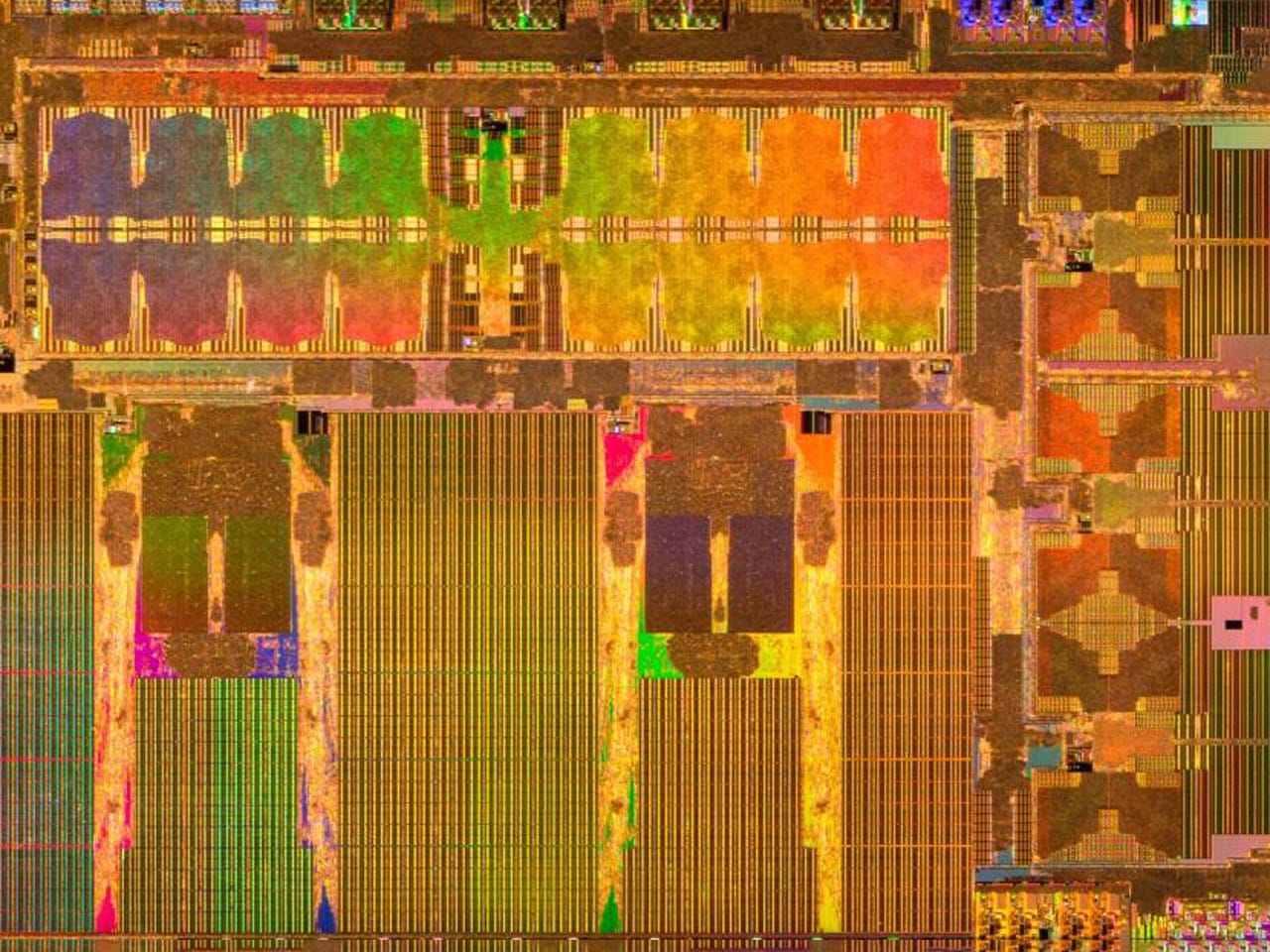
Tesla's published FSD AI inference computer circuit board and chips

<Official Tesla FSD chip hardware image 1.1>

The image comes from Tesla AI & Robotics. Tesla says it designs inference chips around performance per watt, redundancy and deterministic operation, not just peak throughput. In a car, whether an answer always arrives within its deadline matters more than an impressive average benchmark.

Is the model stored as files in the car?

Yes, but it is not best understood as one giant desktop-style model file. Vehicle firmware bundles neural-network weights, execution graphs, AI-accelerator-compiled artifacts, pre- and post-processing code and safety control logic. Tesla has not disclosed the exact size or parameter count of the current model. Claims that it is a particular number of gigabytes or billions of parameters are therefore estimates, not confirmed facts.

Tesla's AI page still cites 48 networks, 70,000 GPU-hours for a full build and 1,000 output tensors per timestep. Those figures described the stack when they were published. They should not be presented as the size of the latest end-to-end FSD model. Large GPU clusters train the system; vehicles receive only the compiled, optimized inference artifacts they need.

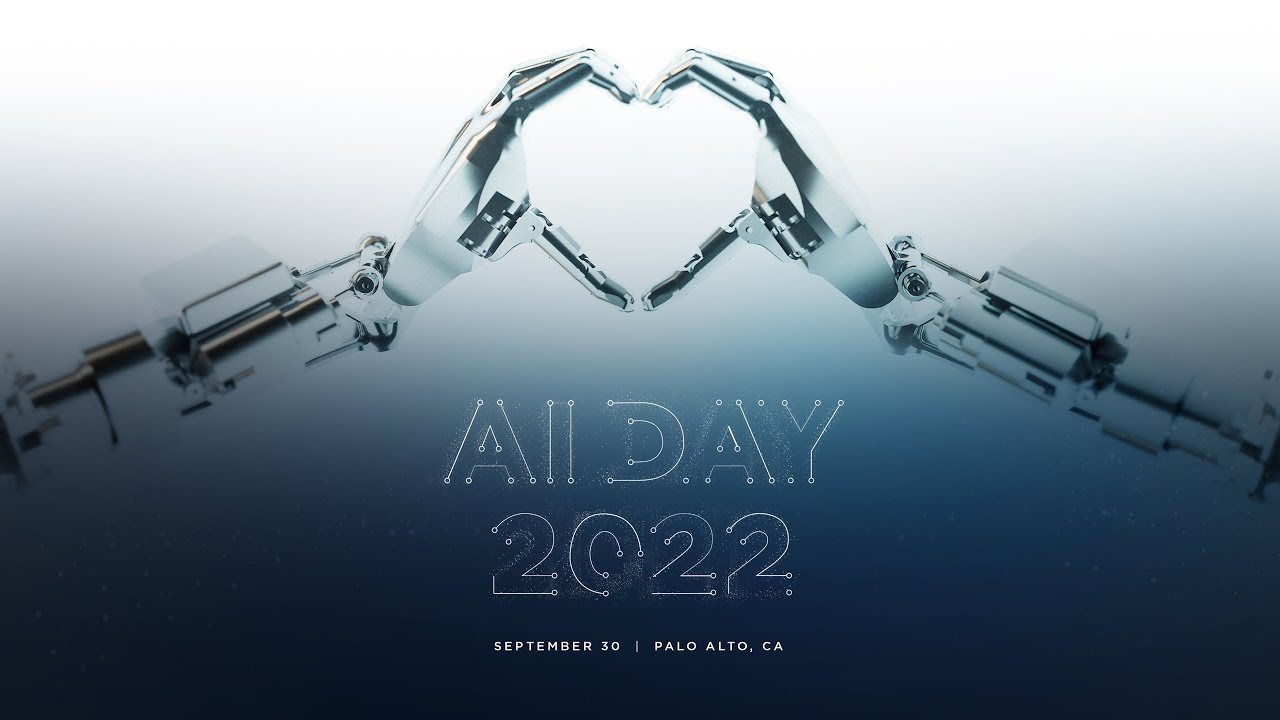
The stage and presentation screen from Tesla's official AI Day 2022 video

<Tesla AI Day 2022 official video frame 1.2>

In the official Tesla AI Day 2022 video, the company described combining time-series video from multiple cameras into one vector space and predicting occupancy. The goal goes beyond labeling objects in a single frame: the system needs a three-dimensional, time-aware representation of what is free, what is blocked and what is moving.

What inputs does FSD use besides cameras?

FSD's central perception strategy is camera-based Tesla Vision, but that does not mean the car moves from pixels alone. Public manuals and vehicle architecture point to a wider input set:

  • Front, rear and side exterior cameras
  • The cabin camera for driver attention
  • Vehicle speed, wheel rotation, steering angle, accelerator and brake state
  • IMU acceleration, rotation and vehicle attitude
  • GPS, navigation route and road information
  • Ultrasonic sensors or radar, depending on hardware generation and market

Tesla's camera and sensor documentation also identifies ultrasonic sensors and radar on vehicles that are so equipped. The core environmental perception of recent consumer FSD is camera-centric, while exact sensor configurations vary by model, year and region.

Navigation is an intent input that provides the destination and broad route. Cameras and vehicle state are real-time inputs that determine whether the next movement is safe. Even when GPS drifts by several meters, lane centering has to be solved in a camera-derived local coordinate system.

Did Tesla train every actuator into the model parameters?

The claim that a neural network simply memorized every steering and brake characteristic is too strong. Neural networks play a growing role from perception through trajectory prediction, but vehicles still contain low-level steering, braking and drive controllers, operating limits, diagnostics and independent safeguards. A useful mental model is a hierarchy: the high-level system requests a trajectory or control target, while lower-level controllers execute it using current speed, steering angle, friction and body response.

Vehicle differences are not absorbed by a single universal parameter set. Wheelbase, steering ratio, mass, tires and brake response require configuration and calibration. A common control interface lets multiple vehicles share a high-level FSD software family. That is the practical meaning of drivetrain standardization.

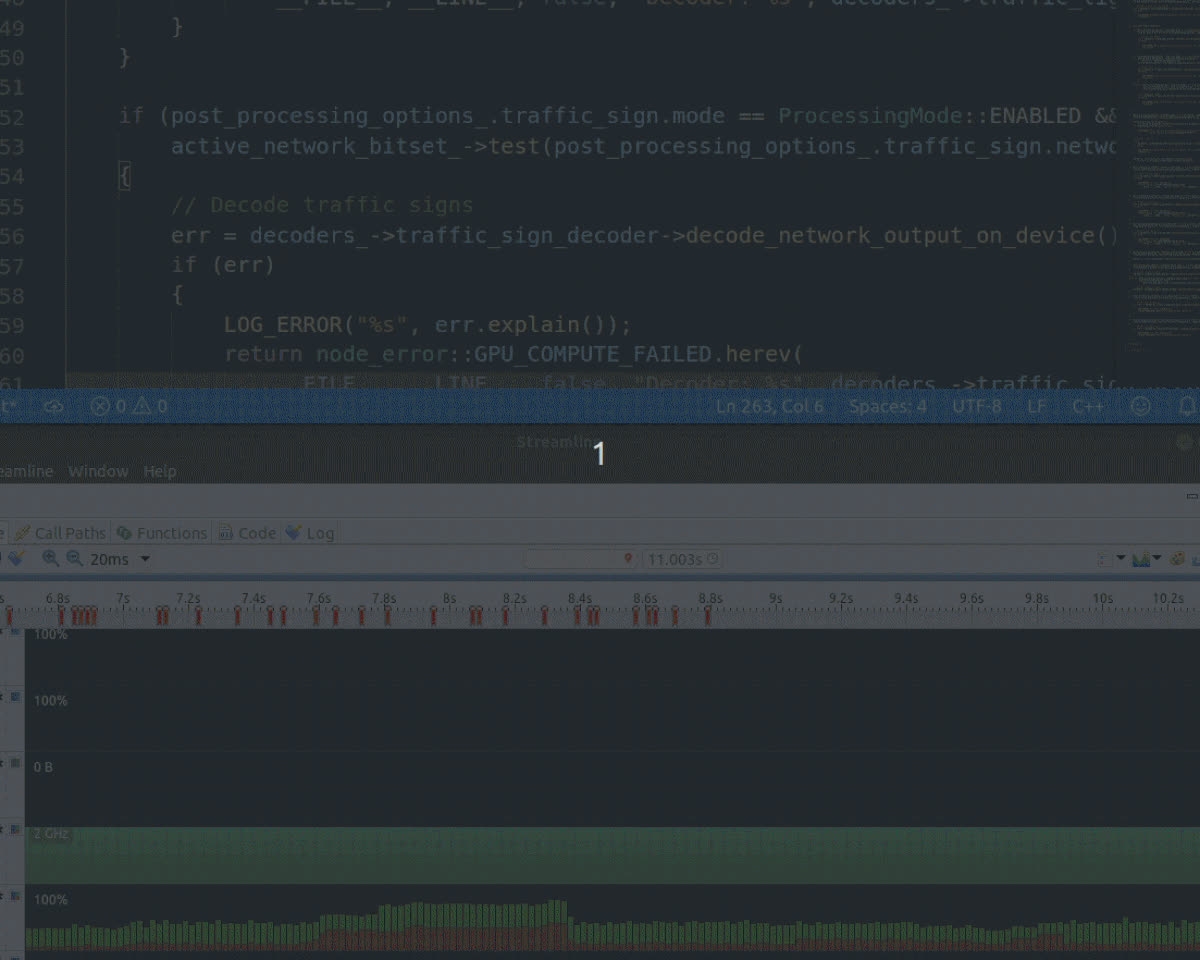
Tesla's published view of low-latency vehicle code and hardware integration

<Official Tesla vehicle code foundations image 2.1>

In its Code Foundations description, Tesla identifies throughput, latency, correctness and determinism as core metrics. It describes high-frequency sensor capture and compute pipelining across multiple system-on-chips without starving central memory or safety-critical code.

This also answers the question of being faster than a human. Human hazard recognition and muscular response cannot be compared directly with one neural-network inference time. FSD's advantage is continuous, fatigue-free observation and repeated decisions. Yet fast inference is only useful when the scene is understood correctly. A fast misunderstanding is still a fast mistake.

Why older Teslas are supported, and where support ends

Tesla gained a major head start by platformizing camera positions, vehicle communications, electronic steering and braking, and OTA deployment. It could update and test a fleet, not just one model. That does not mean every older Tesla runs current FSD at identical quality.

Tesla's AI Computer installation page says some owners who bought FSD with Computer 2.0 or 2.5 are eligible for a Hardware 3 computer replacement, and some early cameras must also be replaced. Subscription customers do not receive the same complimentary upgrade terms. Tesla explicitly says availability varies with model, year, hardware, software and region. Its Q1 2026 investor material also limited the new in-car Self-Driving app to AI4 vehicles.

Broad support rests on four engineering choices:

  1. Electronic steering, braking and acceleration were abstracted behind common software interfaces.
  2. Camera placement and vehicle networking were platformized early.
  3. The AI computer was designed to be physically replaceable on some older vehicles.
  4. OTA allows repeated improvement of the same vehicle.

But camera resolution, compute, memory and placement differences prevent one unchanged model from serving every generation. Tesla's advantage is not “almost no parameter change.” It is the ability to operate one software family at fleet scale while managing hardware variants.

Part 1 has a clear conclusion: immediate FSD driving decisions happen inside the vehicle, while the cloud is the factory that trains and distributes new brains. Part 2 examines what vehicle data is uploaded, who pays for connectivity, how OTA connects to fleet learning, and how Tesla's technical lead looks when safety evidence is included.

404 Dev Room 30 - Taming

Series · 404 Dev Room Webtoon · Ongoing Episode 30 · 404 Dev Room 30 - Taming The trainer in the AI coding room has changed. <...