Showing posts with label technology trends. Show all posts

Sunday, July 26, 2026

TSMC A16 backside power and the next AI-chip node

TSMC A16 backside power: the wiring shift behind the next AI-chip node is less about another feature name and more about a shift in operating patterns. The most important signal in the recent material is that models and services are moving from one-off generation into real workstreams. Readers should ask what bottleneck this reduces and what new responsibility it creates before focusing on the branding.

For adjacent context, see our notes on agentic AI and Runway Gen-4.

Background

The official material around TSMC A16 points toward deployable workflows rather than quick demos. The primary announcement explains the product direction and scope, while this supporting reference adds details that developers and operators need to check before adoption. Cost, permissions, latency, and data-handling boundaries have to be considered during product design, not after launch.

Watch point Why it matters
Input Work can start from text, voice, video, web requests, or engineering artifacts.
Processing Models, runtime layers, and policy controls increasingly move as one system.
Outcome The result can be customer support, generated media, software changes, or chip-design efficiency.

How it works

In plain terms, TSMC A16 takes a user request, attaches the context needed to act, lets a model or specialized runtime make intermediate decisions, and returns an output that a person or system can review. In customer support, that might mean listening to a question, checking an order record, and drafting an answer for approval. In software development, a large issue can be split into parallel work on implementation, testing, and documentation. In semiconductor manufacturing, the same idea appears physically: rearranging wiring and power delivery so a chip can run more efficiently within tight area and thermal limits.

The key issue is not automation by itself. The product quality comes from control points: where a human approves, what data can leave the system, and where the workflow returns when it fails.

Structure

A semiconductor engineer inspects a silicon wafer beside cleanroom metrology equipment

<Advanced wafer inspection environment, Example image 3.1>

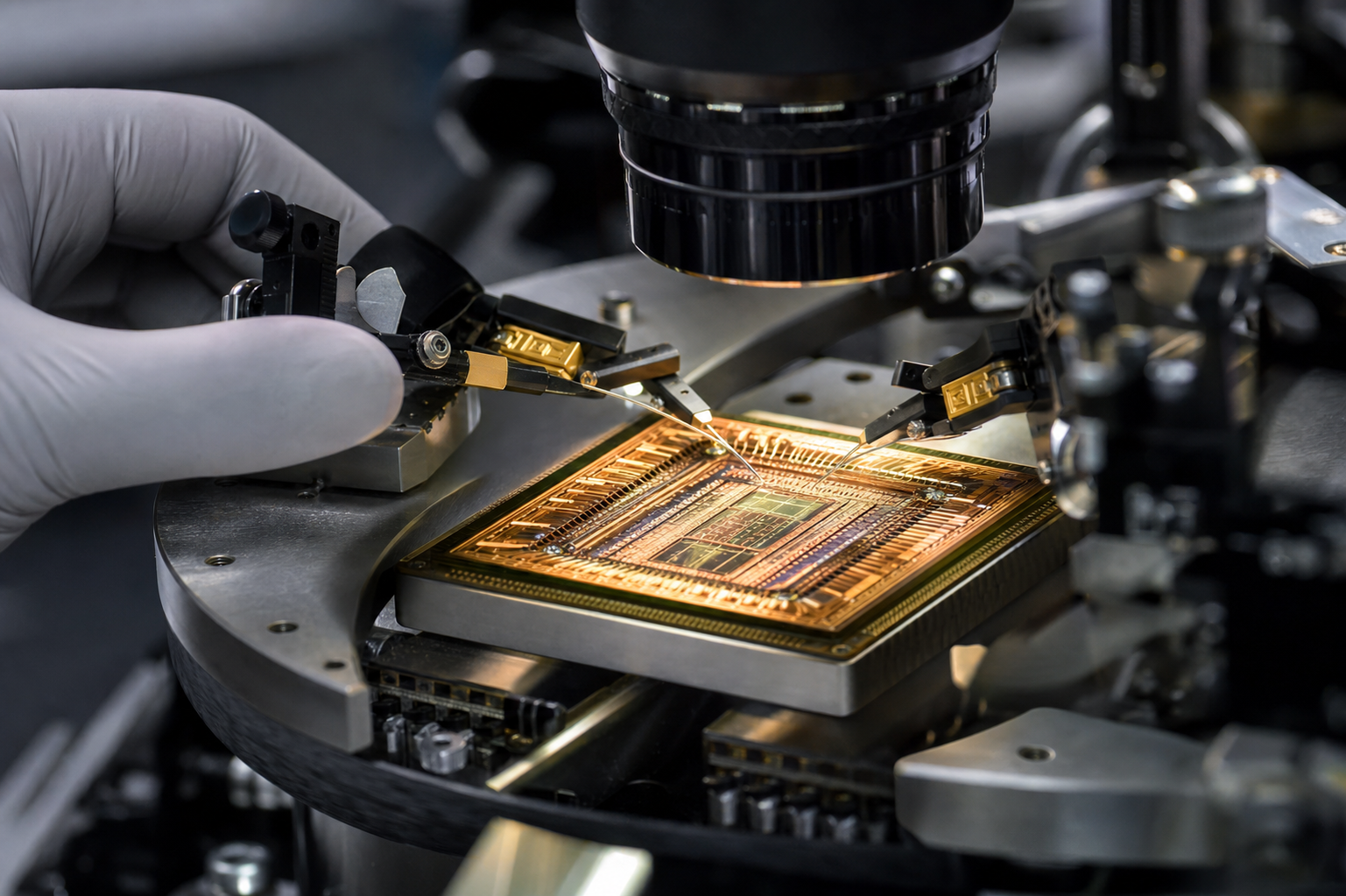
A researcher probes fine power connections on a semiconductor package under a microscope

<Chip-package power measurement, Example image 3.2>

The first image shows advanced wafer inspection, while the second shows laboratory measurement of fine power connections in a chip package. Backside power matters less as a node label than as a structural change that separates signal and power routing to reduce performance and efficiency bottlenecks.

Checkpoints

  • When adopting TSMC A16, measure usage cost and latency first. Real-time processing and long-running agent tasks can behave very differently at production scale than in a small demo.
  • backside power becomes more convenient as it gains broader data access, but broader access also requires audit logs and a way to revoke actions.
  • Claims around Super Power Rail should be read with their conditions attached. Model choice, hardware, input length, and network location can change the outcome.
  • In an early market, standards and vendor features move quickly. Keeping replaceable boundaries is usually safer than binding the whole workflow to one provider-specific feature.

The practical value of TSMC A16 is workflow connectivity, not simply smarter output. For now, teams that design small tests around permissions, cost, and validation will learn more than teams that chase the flashiest demo.

In practical discussions, useful terms include TSMC A16, backside power, Super Power Rail, GAAFET, AI chips

Runway Agent Skills and the new AI video workflow

Runway Agent Skills: how AI video tools are turning into campaign workspaces is less about another feature name and more about a shift in operating patterns. The most important signal in the recent material is that models and services are moving from one-off generation into real workstreams. Readers should ask what bottleneck this reduces and what new responsibility it creates before focusing on the branding.

For adjacent context, see our notes on agentic AI and Runway Gen-4.

Background

The official material around Runway Agent Skills points toward deployable workflows rather than quick demos. The primary announcement explains the product direction and scope, while this supporting reference adds details that developers and operators need to check before adoption. Cost, permissions, latency, and data-handling boundaries have to be considered during product design, not after launch.

Watch point Why it matters
Input Work can start from text, voice, video, web requests, or engineering artifacts.
Processing Models, runtime layers, and policy controls increasingly move as one system.
Outcome The result can be customer support, generated media, software changes, or chip-design efficiency.

How it works

In plain terms, Runway Agent Skills takes a user request, attaches the context needed to act, lets a model or specialized runtime make intermediate decisions, and returns an output that a person or system can review. In customer support, that might mean listening to a question, checking an order record, and drafting an answer for approval. In software development, a large issue can be split into parallel work on implementation, testing, and documentation. In semiconductor manufacturing, the same idea appears physically: rearranging wiring and power delivery so a chip can run more efficiently within tight area and thermal limits.

The key issue is not automation by itself. The product quality comes from control points: where a human approves, what data can leave the system, and where the workflow returns when it fails.

Structure

A video editor uses a professional color-grading console for an AI-assisted production

<AI-assisted video editing studio, Example image 3.1>

A production team reviews campaign footage with cameras and physical storyboard cards

<Campaign production collaboration, Example image 3.2>

The first image shows AI tools inside a professional post-production room, while the second connects shooting, storyboarding, and editing through team collaboration. As generation capabilities expand, people must retain clear ownership of shot selection, brand consistency, rights review, and final approval.

Checkpoints

  • When adopting Runway Agent Skills, measure usage cost and latency first. Real-time processing and long-running agent tasks can behave very differently at production scale than in a small demo.
  • AI video production becomes more convenient as it gains broader data access, but broader access also requires audit logs and a way to revoke actions.
  • Claims around Agent 2.0 should be read with their conditions attached. Model choice, hardware, input length, and network location can change the outcome.
  • In an early market, standards and vendor features move quickly. Keeping replaceable boundaries is usually safer than binding the whole workflow to one provider-specific feature.

The practical value of Runway Agent Skills is workflow connectivity, not simply smarter output. For now, teams that design small tests around permissions, cost, and validation will learn more than teams that chase the flashiest demo.

In practical discussions, useful terms include Runway Agent Skills, AI video production, Agent 2.0, Aleph 2.0, Seed Audio

Cloudflare AI Crawl Control and the rise of HTTP 402

Cloudflare AI Crawl Control: why HTTP 402 is becoming crawler policy infrastructure is less about another feature name and more about a shift in operating patterns. The most important signal in the recent material is that models and services are moving from one-off generation into real workstreams. Readers should ask what bottleneck this reduces and what new responsibility it creates before focusing on the branding.

For adjacent context, see our notes on agentic AI and Runway Gen-4.

Background

The official material around AI Crawl Control points toward deployable workflows rather than quick demos. The primary announcement explains the product direction and scope, while this supporting reference adds details that developers and operators need to check before adoption. Cost, permissions, latency, and data-handling boundaries have to be considered during product design, not after launch.

Watch point Why it matters
Input Work can start from text, voice, video, web requests, or engineering artifacts.
Processing Models, runtime layers, and policy controls increasingly move as one system.
Outcome The result can be customer support, generated media, software changes, or chip-design efficiency.

How it works

In plain terms, AI Crawl Control takes a user request, attaches the context needed to act, lets a model or specialized runtime make intermediate decisions, and returns an output that a person or system can review. In customer support, that might mean listening to a question, checking an order record, and drafting an answer for approval. In software development, a large issue can be split into parallel work on implementation, testing, and documentation. In semiconductor manufacturing, the same idea appears physically: rearranging wiring and power delivery so a chip can run more efficiently within tight area and thermal limits.

The key issue is not automation by itself. The product quality comes from control points: where a human approves, what data can leave the system, and where the workflow returns when it fails.

Structure

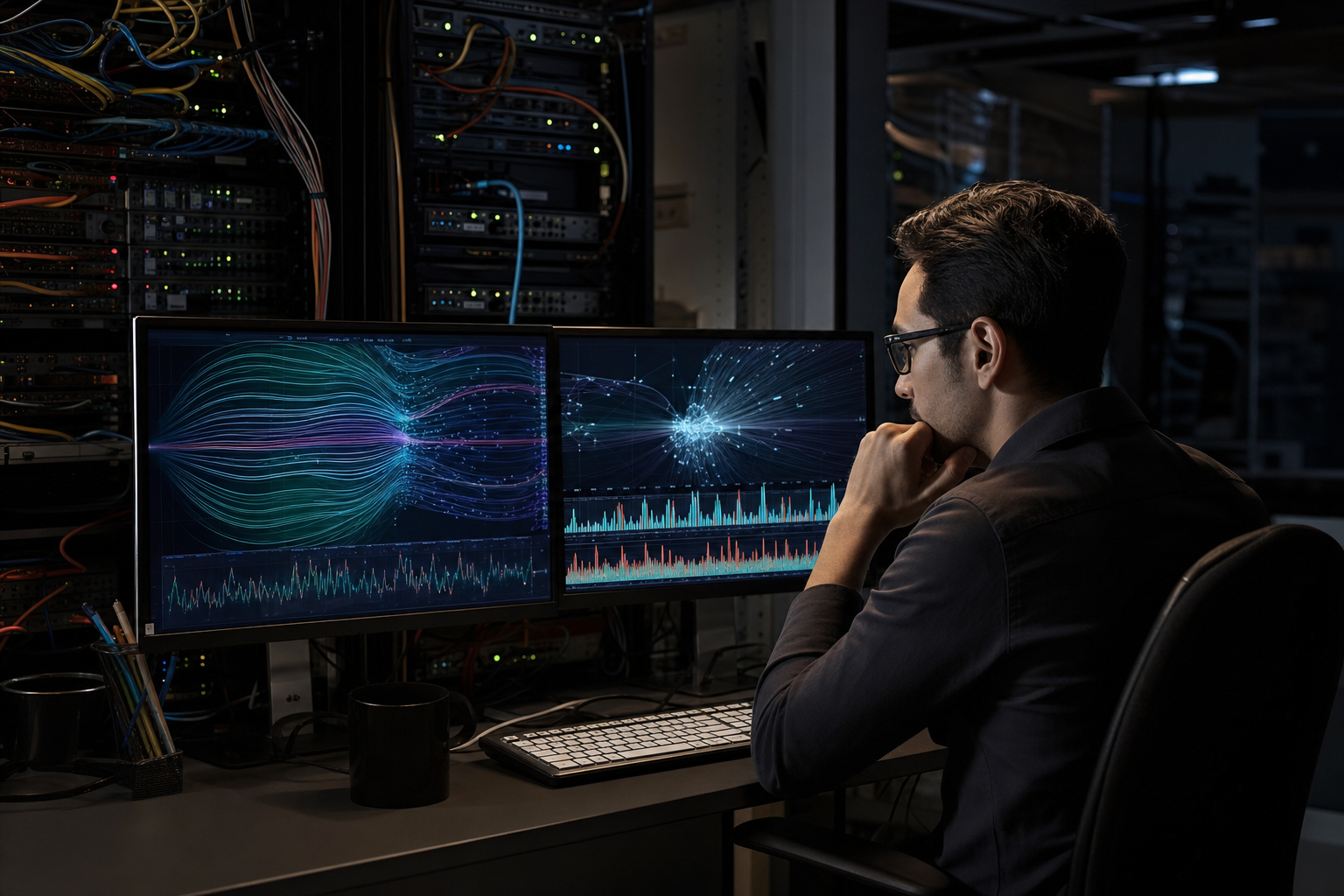
A network operator watches automated crawler traffic inside a real server room

<AI crawler traffic operations, Example image 3.1>

A publisher reviews traffic-cost material beside a server and payment terminal

<Publisher review of paid AI access, Example image 3.2>

The first image shows a network team observing automated crawler requests, while the second shows a publisher reviewing the economics of access. For HTTP 402 to become a working business model, request identity, pricing, payment handling, and failure policy must operate together.

Checkpoints

  • When adopting AI Crawl Control, measure usage cost and latency first. Real-time processing and long-running agent tasks can behave very differently at production scale than in a small demo.
  • HTTP 402 becomes more convenient as it gains broader data access, but broader access also requires audit logs and a way to revoke actions.
  • Claims around AI crawlers should be read with their conditions attached. Model choice, hardware, input length, and network location can change the outcome.
  • In an early market, standards and vendor features move quickly. Keeping replaceable boundaries is usually safer than binding the whole workflow to one provider-specific feature.

The practical value of AI Crawl Control is workflow connectivity, not simply smarter output. For now, teams that design small tests around permissions, cost, and validation will learn more than teams that chase the flashiest demo.

In practical discussions, useful terms include AI Crawl Control, HTTP 402, AI crawlers, content licensing, Cloudflare

GitHub Copilot in VS Code and parallel agent work

GitHub Copilot in VS Code: what parallel agent workflows change for developers is less about another feature name and more about a shift in operating patterns. The most important signal in the recent material is that models and services are moving from one-off generation into real workstreams. Readers should ask what bottleneck this reduces and what new responsibility it creates before focusing on the branding.

For adjacent context, see our notes on agentic AI and Runway Gen-4.

Background

The official material around GitHub Copilot points toward deployable workflows rather than quick demos. The primary announcement explains the product direction and scope, while this supporting reference adds details that developers and operators need to check before adoption. Cost, permissions, latency, and data-handling boundaries have to be considered during product design, not after launch.

Watch point Why it matters
Input Work can start from text, voice, video, web requests, or engineering artifacts.
Processing Models, runtime layers, and policy controls increasingly move as one system.
Outcome The result can be customer support, generated media, software changes, or chip-design efficiency.

How it works

In plain terms, GitHub Copilot takes a user request, attaches the context needed to act, lets a model or specialized runtime make intermediate decisions, and returns an output that a person or system can review. In customer support, that might mean listening to a question, checking an order record, and drafting an answer for approval. In software development, a large issue can be split into parallel work on implementation, testing, and documentation. In semiconductor manufacturing, the same idea appears physically: rearranging wiring and power delivery so a chip can run more efficiently within tight area and thermal limits.

The key issue is not automation by itself. The product quality comes from control points: where a human approves, what data can leave the system, and where the workflow returns when it fails.

Structure

A developer works with an AI coding assistant across several monitors in a real office

<AI-assisted coding workspace, Example image 3.1>

Two developers review parallel coding tasks across multiple screens and a mobile device

<Parallel agent review workflow, Example image 3.2>

The first image shows an individual developer using AI coding tools, while the second shows a team reviewing parallel work. As agent count rises, change boundaries, review ownership, and test isolation become more important than generation speed alone.

Checkpoints

  • When adopting GitHub Copilot, measure usage cost and latency first. Real-time processing and long-running agent tasks can behave very differently at production scale than in a small demo.
  • VS Code agents becomes more convenient as it gains broader data access, but broader access also requires audit logs and a way to revoke actions.
  • Claims around parallel sessions should be read with their conditions attached. Model choice, hardware, input length, and network location can change the outcome.
  • In an early market, standards and vendor features move quickly. Keeping replaceable boundaries is usually safer than binding the whole workflow to one provider-specific feature.

The practical value of GitHub Copilot is workflow connectivity, not simply smarter output. For now, teams that design small tests around permissions, cost, and validation will learn more than teams that chase the flashiest demo.

In practical discussions, useful terms include GitHub Copilot, VS Code agents, parallel sessions, 1M context windows, AI coding workflow

gpt-realtime voice agents for production APIs

gpt-realtime voice agents: API changes that make production voice apps more practical is less about another feature name and more about a shift in operating patterns. The most important signal in the recent material is that models and services are moving from one-off generation into real workstreams. Readers should ask what bottleneck this reduces and what new responsibility it creates before focusing on the branding.

For adjacent context, see our notes on agentic AI and Runway Gen-4.

Background

The official material around gpt-realtime points toward deployable workflows rather than quick demos. The primary announcement explains the product direction and scope, while this supporting reference adds details that developers and operators need to check before adoption. Cost, permissions, latency, and data-handling boundaries have to be considered during product design, not after launch.

Watch point Why it matters
Input Work can start from text, voice, video, web requests, or engineering artifacts.
Processing Models, runtime layers, and policy controls increasingly move as one system.
Outcome The result can be customer support, generated media, software changes, or chip-design efficiency.

How it works

In plain terms, gpt-realtime takes a user request, attaches the context needed to act, lets a model or specialized runtime make intermediate decisions, and returns an output that a person or system can review. In customer support, that might mean listening to a question, checking an order record, and drafting an answer for approval. In software development, a large issue can be split into parallel work on implementation, testing, and documentation. In semiconductor manufacturing, the same idea appears physically: rearranging wiring and power delivery so a chip can run more efficiently within tight area and thermal limits.

The key issue is not automation by itself. The product quality comes from control points: where a human approves, what data can leave the system, and where the workflow returns when it fails.

Structure

Voice AI operators check live waveforms with headsets and professional audio equipment

<Real-time voice AI operations, Example image 3.1>

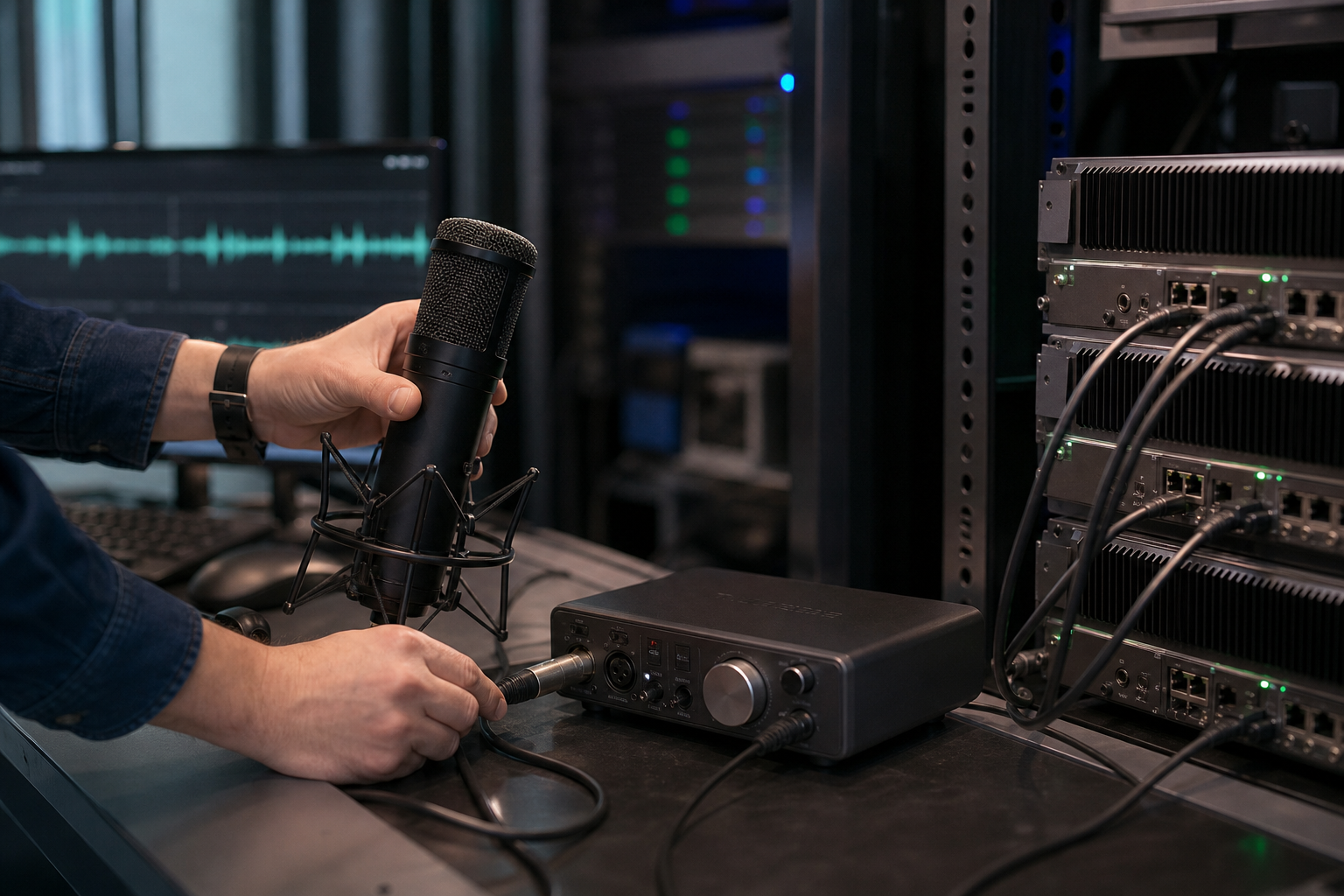
An engineer connects a microphone and audio interface to edge servers in a technical lab

<Voice AI infrastructure connection, Example image 3.2>

The first image shows the operating environment of a real-time voice service, while the second shows microphones, audio interfaces, and edge servers connected in a technical lab. A production design must combine this hardware path with cost tracking, permission scope, log retention, and recovery after failure.

Checkpoints

  • When adopting gpt-realtime, measure usage cost and latency first. Real-time processing and long-running agent tasks can behave very differently at production scale than in a small demo.
  • Realtime API becomes more convenient as it gains broader data access, but broader access also requires audit logs and a way to revoke actions.
  • Claims around voice agents should be read with their conditions attached. Model choice, hardware, input length, and network location can change the outcome.
  • In an early market, standards and vendor features move quickly. Keeping replaceable boundaries is usually safer than binding the whole workflow to one provider-specific feature.

The practical value of gpt-realtime is workflow connectivity, not simply smarter output. For now, teams that design small tests around permissions, cost, and validation will learn more than teams that chase the flashiest demo.

In practical discussions, useful terms include gpt-realtime, Realtime API, voice agents, SIP calling, MCP servers

Google AI Full-Stack Strategy 2 - From Solo Work to Vertex AI

Series · Google AI Full-Stack Strategy Article series · Completed Episode 2 · Google AI Full-Stack Strategy 2 - From Solo Work to V...