Elon Musk made a short but unusually specific promise on X on July 22, 2026: xAI’s Grok Imagine would produce a feature-length adaptation of Homer’s Odyssey before the end of the year. The claim landed at a moment when short AI-generated clips are improving quickly, and it immediately split the response between technical curiosity and deep skepticism.
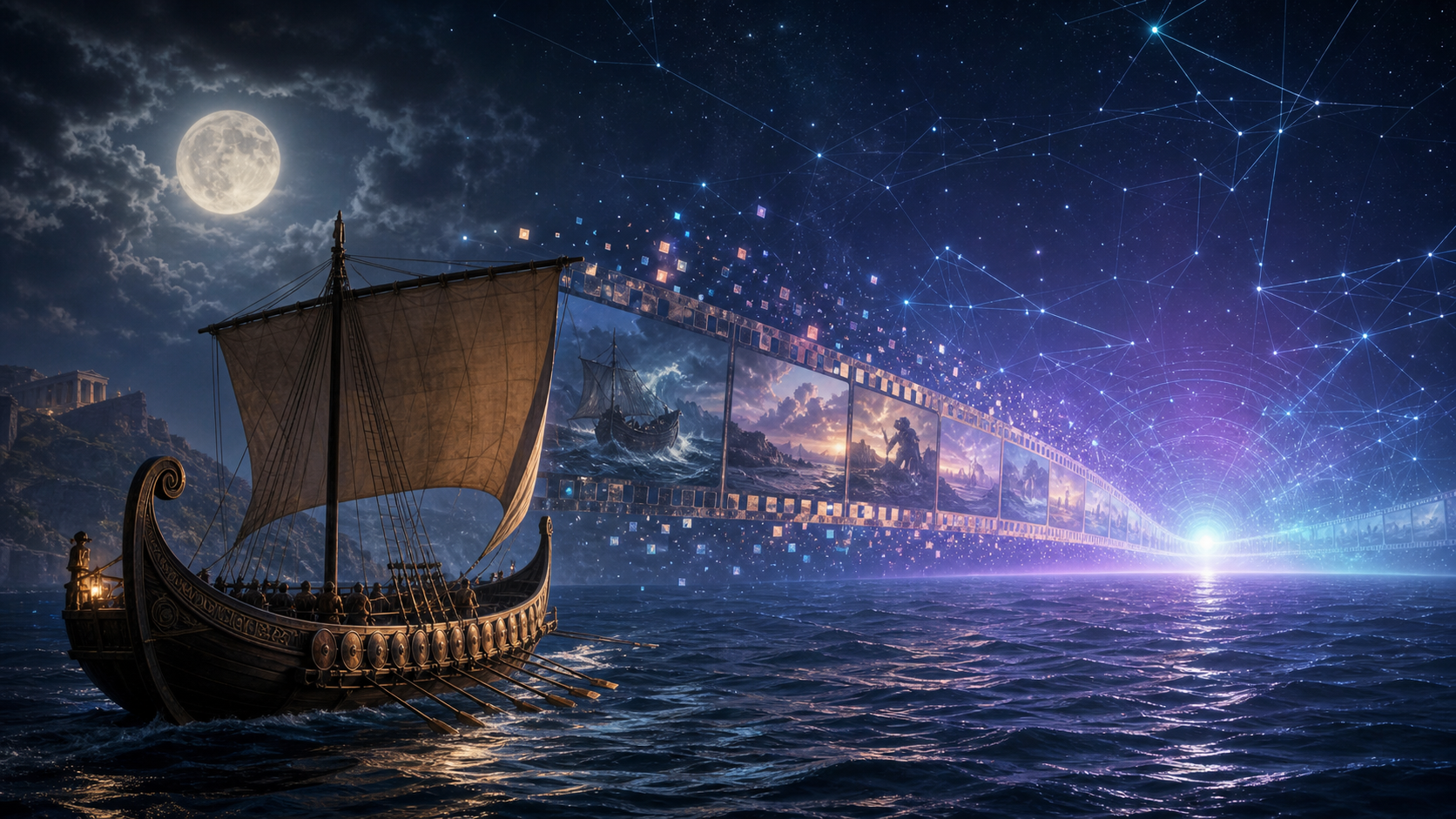
What Musk actually posted
Key details at a glance
| Reader question | Practical takeaway |
|---|---|
| What this article explains | Grok Imagine Odyssey Movie: Musk’s Promise and the Reaction |
| Core SEO focus | Grok Imagine, Elon Musk, AI filmmaking |
| How to read it | Separate the durable signal from vendor messaging, short-term hype, and implementation friction. |
| In the original X post, Musk said Grok Imagine would make a full-length movie that was “historically accurate and true to the art of Homer.” He was responding to a roughly three-minute Odyssey scene created by AI filmmaker Heavy Pulp. |
The announcement did not include a runtime, production team, release plan, or technical explanation for maintaining continuity. At this stage, the evidence supports describing it as a public target inspired by a demo—not a fully documented production announcement.
The context behind the post
Variety reported that Musk’s statement followed the release of Christopher Nolan’s The Odyssey. Musk had criticized the film’s casting before its release, which made the post more than a product demonstration: it also read as a cultural response to a major studio adaptation.
The technical gap between a strong short clip and a feature is substantial. A system has to preserve character identity, geography, dialogue, pacing, sound, and narrative causality across hundreds of shots. That is not merely a text-to-video prompt problem. It is a production pipeline involving story decomposition, reference control, generation, evaluation, editing, and repeated correction.
How people reacted
Supportive and curious reactions focused on the three-minute demo and the falling barrier to cinematic production. With anchor frames, repeated descriptions, and human editing, a small team can attempt sequences that would previously have required far more money and labor.
Skeptics focused on long-form coherence and the phrase “historically accurate.” In a response summarized by The Daily Beast, Grok itself characterized a coherent 90-minute adaptation by year-end as a steep technical climb. Director Scott Derrickson offered a much harsher rejection of Musk’s views on cinema, while other critics questioned whether a mythological poem should be framed as a historical record at all.
Rights and labor remain another unresolved layer. If a model’s training sources, generated likenesses, or visual references are unclear, technical completion does not settle questions about consent, attribution, copyright, or compensation.
My take: the real test is the production loop
The interesting part of Musk’s post is not the slogan that “AI can make a movie.” It is the possibility that feature production is becoming an agentic pipeline: one system plans scenes, another generates candidates, evaluators detect continuity failures, and editors choose what survives.
If those tools become widely available, producing an impressive isolated shot will stop being a durable advantage. The differentiators will be direction, taste, continuity management, and accountability for the final work. If Grok Imagine does deliver a film this year, the useful questions will be whether its characters and story hold together for an entire feature—and whether its creators can clearly explain the sources, rights, and human decisions behind it.



No comments:
Post a Comment