NVIDIA Blackwell is usually introduced as a new GPU architecture, but that phrase undersells the real problem it is built to address. Large AI systems do not slow down in only one place. They hit AI server bottlenecks across math throughput, HBM memory bandwidth, GPU-to-GPU communication, networking, power delivery, cooling, scheduling, and software orchestration.
That is why the Blackwell GPU architecture should be read as a data-center system story, not just a chip story. NVIDIA's Blackwell architecture page places it inside a broader stack of accelerated computing, NVLink, Tensor Cores, AI Enterprise software, DGX systems, and AI factory infrastructure. In plain terms: the value comes from reducing friction between the model, the server, the rack, and the cluster.
Why the bottleneck moved beyond raw compute
Earlier AI infrastructure discussions often focused on the number of GPUs. That still matters, but modern training and inference workloads expose a more complicated pattern. A model may have enough arithmetic capacity available and still wait on memory movement. A multi-GPU server may be fast locally and still lose efficiency when traffic crosses the rack. A serving cluster may deliver good benchmark numbers and still become expensive when requests have long context windows or unpredictable bursts.
NVIDIA Blackwell matters because it arrives in that environment. Frontier models, mixture-of-experts architectures, multimodal systems, and agentic workloads all pressure infrastructure differently. Some jobs need dense matrix math. Others need fast scale-up communication. Others need low-latency inference with cost per token under control.
This is also why programmable compute and AI infrastructure are increasingly discussed together. Developers do not experience “GPU architecture” directly. They experience queue time, response latency, failure recovery, deployment limits, and the bill at the end of the month.
What Blackwell changes in an AI server
At the server level, Blackwell is designed to make several layers work together. Tensor Cores accelerate the core AI math. High-bandwidth memory keeps more data close to the GPU. NVLink networking helps GPUs exchange data at high speed when a model or batch spans multiple accelerators. System-level products then package those pieces into servers and racks that operators can deploy as part of an AI factory.
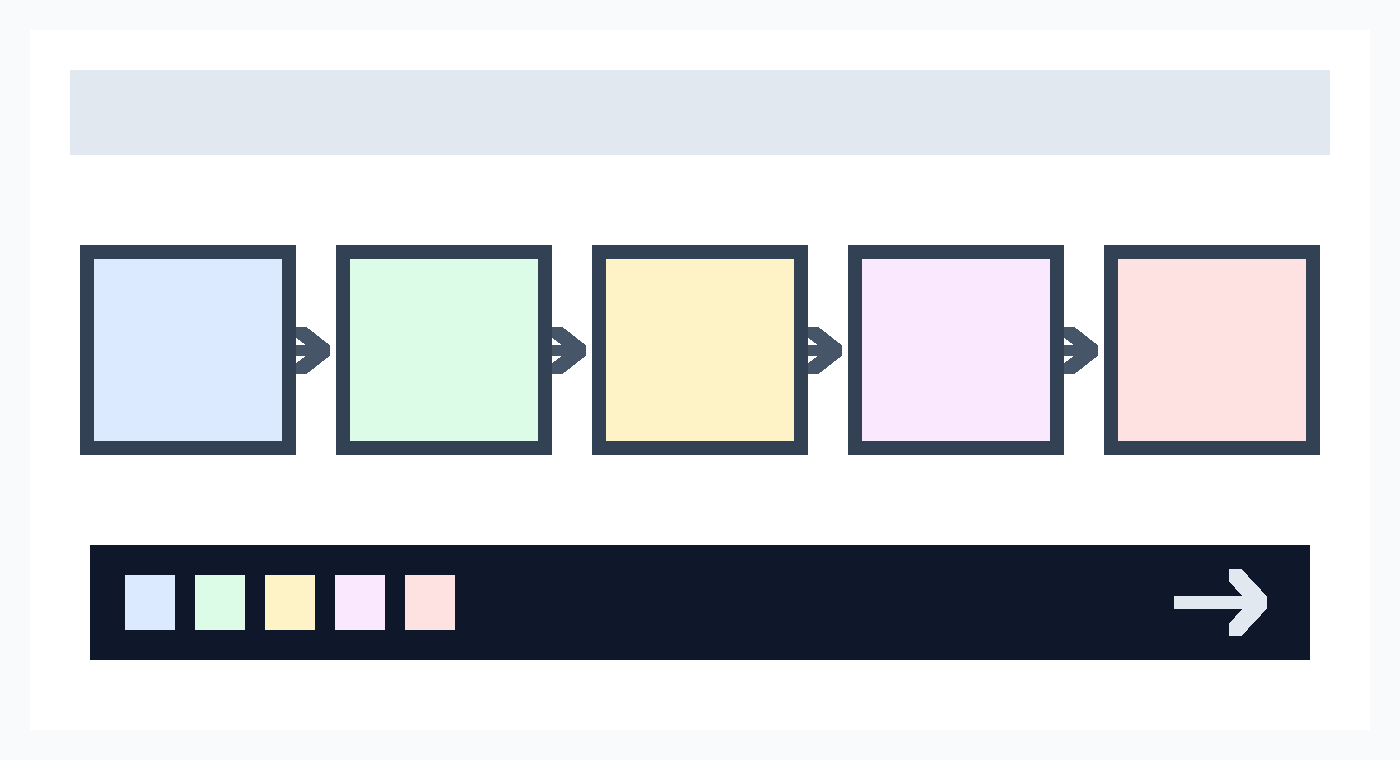
The practical takeaway is that teams should not evaluate Blackwell only by peak FLOPS. A useful review asks where the actual workload waits.
| Bottleneck | What to measure | Why Blackwell-era systems focus on it |
|---|---|---|
| Compute | Training throughput, inference tokens per second | Determines raw model execution speed |
| Memory | HBM capacity and bandwidth pressure | Large models repeatedly move weights, activations, and KV cache |
| Scale-up links | GPU-to-GPU communication patterns | Multi-GPU jobs lose efficiency when communication lags |
| Operations | Power, cooling, scheduling, observability | Infrastructure cost often decides production viability |
The same lesson applies to cloud coding agent workloads. The model may be the visible part, but the user notices whether the system can run tools, keep context, recover from failures, and stay within budget.
Adoption risks and cost questions
The first risk is overbuying for the wrong workload. A team serving small models with steady traffic may not need the same rack-scale design as a lab training frontier models. Before choosing hardware, measure request shape, context length, latency target, batch behavior, utilization, and growth assumptions.
The second risk is treating the hardware as a complete strategy. GPU supply, drivers, containers, model-serving frameworks, storage, networking, and observability all affect the result. An expensive accelerator can sit idle if scheduling is poor or data cannot arrive fast enough.
The third risk is energy and facility planning. AI servers concentrate power and heat. That means procurement decisions increasingly involve data-center capacity, cooling design, redundancy, and operational staffing. The right comparison is not only dollars per GPU; it is cost per useful unit of model work under the constraints of the site.
Finally, vendor lock-in deserves attention. NVIDIA's ecosystem is strong partly because the hardware, libraries, systems, and developer tools are tightly integrated. That integration can reduce deployment risk, but it can also make later migration harder. Teams should decide which layers must remain portable and which layers are worth standardizing on.
Bottom line
NVIDIA Blackwell is important because it targets the whole AI server path: compute, HBM memory bandwidth, NVLink networking, system packaging, and operational efficiency. For buyers and platform teams, the best question is not “How fast is the GPU?” It is “Which bottleneck in our workload does this architecture actually remove, and what new operational constraints does it introduce?”




No comments:
Post a Comment