Series · Tesla FSD Technical Analysis
Episode 1 · Tesla FSD Technical Analysis 1 - How It Drives Without Internet
Tesla FSD Technical Analysis 1 - How It Drives Without Internet
This series checks Tesla FSD's architecture and limitations against public sources. The first question is simple: Can FSD keep driving in a tunnel with no cellular signal? Yes. More precisely, FSD is not “serverless” in the web-development sense. It is an on-device inference system. Training happens in data centers, while perception, trajectory planning, steering and acceleration or braking commands are computed by the vehicle's AI computer.
Tesla sells the product as Full Self-Driving (Supervised). The current consumer feature is an SAE Level 2 driver-assistance system that requires continuous supervision and immediate intervention, not autonomous driverless operation.
Is FSD serverless: driving in the car, training on servers
Calling it serverless is only half right. It does not stream every driving frame to a server and wait for an answer. Network round-trip delay, dead zones and carrier failures would become safety failures. Tesla owner manuals say the FSD computer processes front, rear and side camera inputs through neural networks and makes decisions to guide the vehicle toward its destination. Tesla's official Connectivity FAQ is even clearer: a Premium Connectivity subscription does not affect how FSD works.
The system is easier to understand as three layers.
| Location | Role | When internet is unavailable |
|---|---|---|
| Vehicle | Camera capture, 3D scene representation, planning, steering/braking/acceleration commands and driver monitoring | Core FSD inference can continue |
| Tesla data centers | Large-scale training, auto-labeling, simulation, regression testing and model creation | No immediate effect on driving |
| Vehicle-cloud link | OTA, maps and routing, remote app services, selected telemetry and learning clips | New software and online services may be limited |
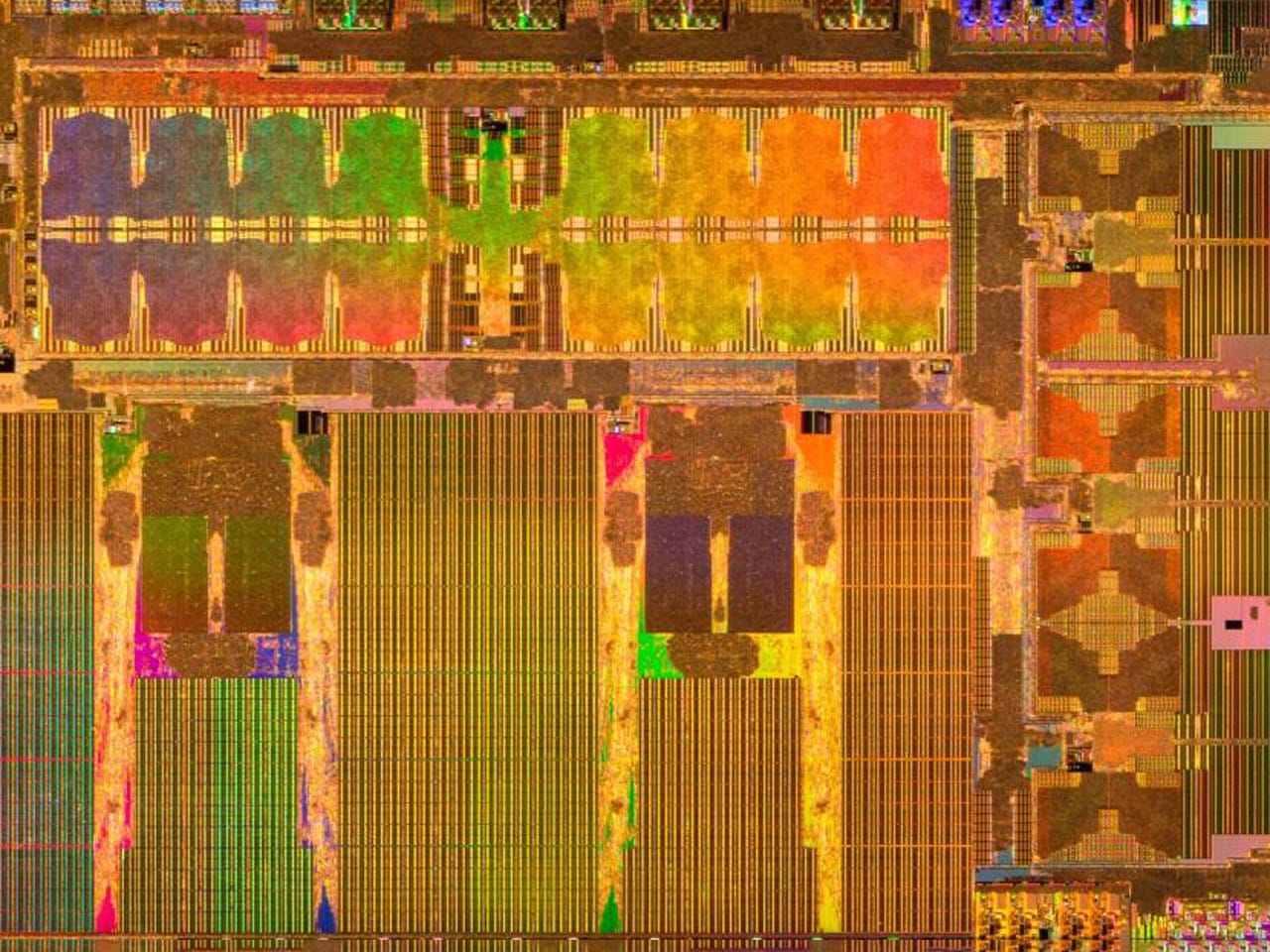
The image comes from Tesla AI & Robotics. Tesla says it designs inference chips around performance per watt, redundancy and deterministic operation, not just peak throughput. In a car, whether an answer always arrives within its deadline matters more than an impressive average benchmark.
Is the model stored as files in the car?
Yes, but it is not best understood as one giant desktop-style model file. Vehicle firmware bundles neural-network weights, execution graphs, AI-accelerator-compiled artifacts, pre- and post-processing code and safety control logic. Tesla has not disclosed the exact size or parameter count of the current model. Claims that it is a particular number of gigabytes or billions of parameters are therefore estimates, not confirmed facts.
Tesla's AI page still cites 48 networks, 70,000 GPU-hours for a full build and 1,000 output tensors per timestep. Those figures described the stack when they were published. They should not be presented as the size of the latest end-to-end FSD model. Large GPU clusters train the system; vehicles receive only the compiled, optimized inference artifacts they need.
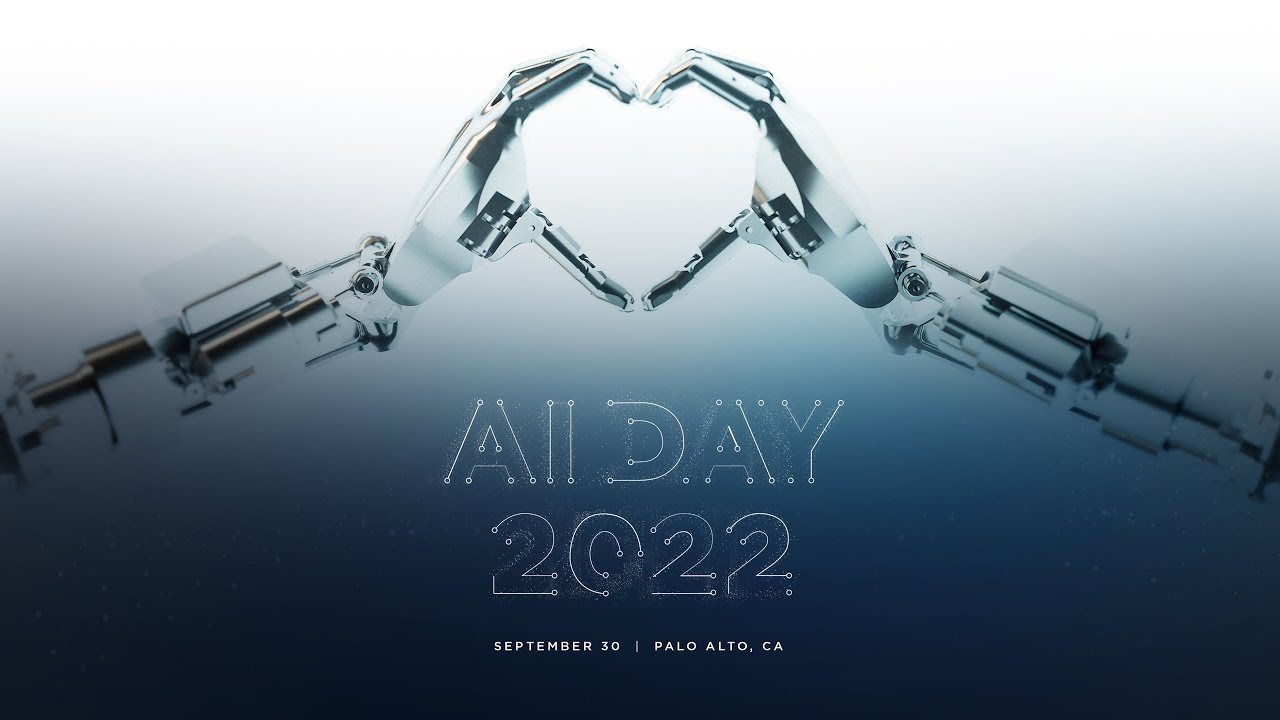
In the official Tesla AI Day 2022 video, the company described combining time-series video from multiple cameras into one vector space and predicting occupancy. The goal goes beyond labeling objects in a single frame: the system needs a three-dimensional, time-aware representation of what is free, what is blocked and what is moving.
What inputs does FSD use besides cameras?
FSD's central perception strategy is camera-based Tesla Vision, but that does not mean the car moves from pixels alone. Public manuals and vehicle architecture point to a wider input set:
- Front, rear and side exterior cameras
- The cabin camera for driver attention
- Vehicle speed, wheel rotation, steering angle, accelerator and brake state
- IMU acceleration, rotation and vehicle attitude
- GPS, navigation route and road information
- Ultrasonic sensors or radar, depending on hardware generation and market
Tesla's camera and sensor documentation also identifies ultrasonic sensors and radar on vehicles that are so equipped. The core environmental perception of recent consumer FSD is camera-centric, while exact sensor configurations vary by model, year and region.
Navigation is an intent input that provides the destination and broad route. Cameras and vehicle state are real-time inputs that determine whether the next movement is safe. Even when GPS drifts by several meters, lane centering has to be solved in a camera-derived local coordinate system.
Did Tesla train every actuator into the model parameters?
The claim that a neural network simply memorized every steering and brake characteristic is too strong. Neural networks play a growing role from perception through trajectory prediction, but vehicles still contain low-level steering, braking and drive controllers, operating limits, diagnostics and independent safeguards. A useful mental model is a hierarchy: the high-level system requests a trajectory or control target, while lower-level controllers execute it using current speed, steering angle, friction and body response.
Vehicle differences are not absorbed by a single universal parameter set. Wheelbase, steering ratio, mass, tires and brake response require configuration and calibration. A common control interface lets multiple vehicles share a high-level FSD software family. That is the practical meaning of drivetrain standardization.
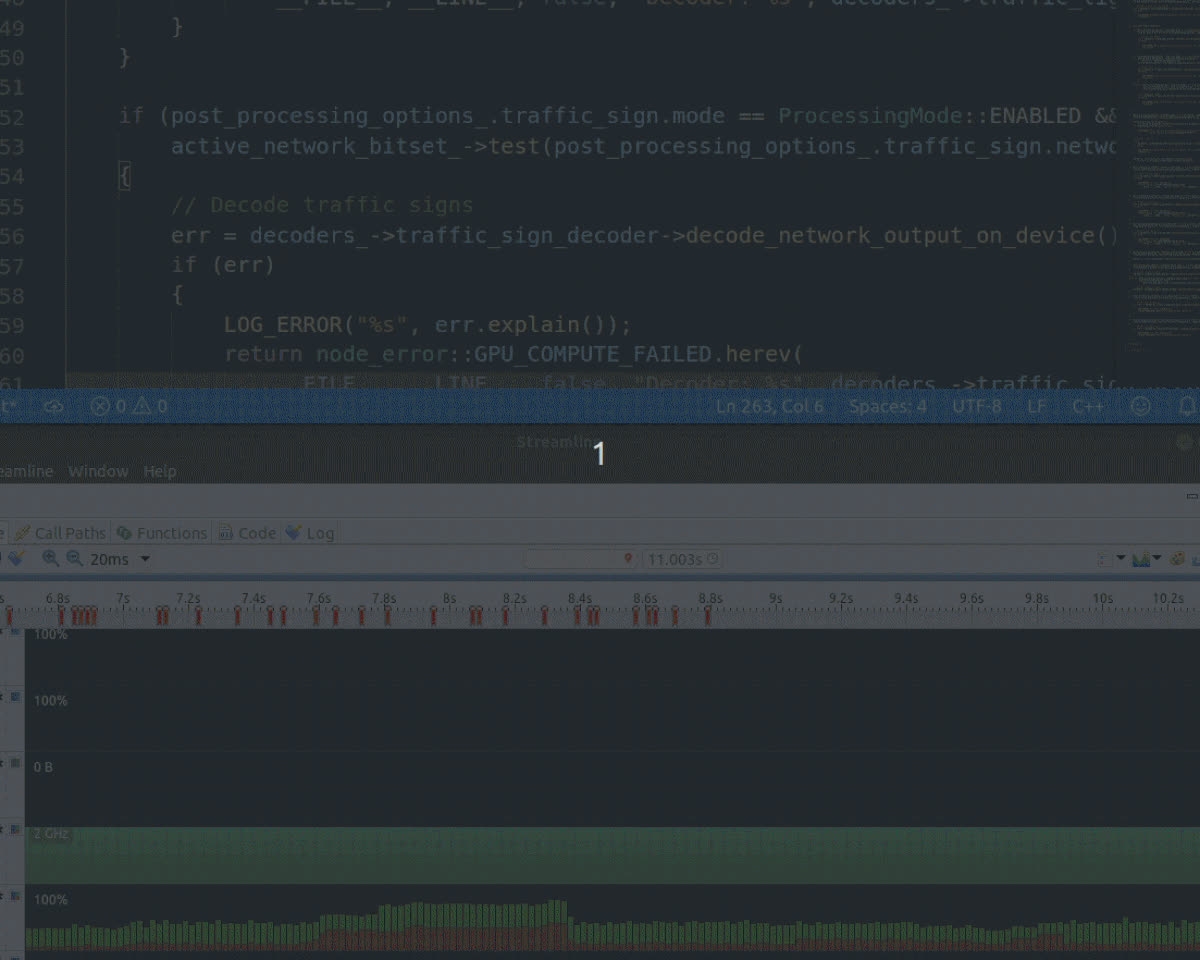
In its Code Foundations description, Tesla identifies throughput, latency, correctness and determinism as core metrics. It describes high-frequency sensor capture and compute pipelining across multiple system-on-chips without starving central memory or safety-critical code.
This also answers the question of being faster than a human. Human hazard recognition and muscular response cannot be compared directly with one neural-network inference time. FSD's advantage is continuous, fatigue-free observation and repeated decisions. Yet fast inference is only useful when the scene is understood correctly. A fast misunderstanding is still a fast mistake.
Why older Teslas are supported, and where support ends
Tesla gained a major head start by platformizing camera positions, vehicle communications, electronic steering and braking, and OTA deployment. It could update and test a fleet, not just one model. That does not mean every older Tesla runs current FSD at identical quality.
Tesla's AI Computer installation page says some owners who bought FSD with Computer 2.0 or 2.5 are eligible for a Hardware 3 computer replacement, and some early cameras must also be replaced. Subscription customers do not receive the same complimentary upgrade terms. Tesla explicitly says availability varies with model, year, hardware, software and region. Its Q1 2026 investor material also limited the new in-car Self-Driving app to AI4 vehicles.
Broad support rests on four engineering choices:
- Electronic steering, braking and acceleration were abstracted behind common software interfaces.
- Camera placement and vehicle networking were platformized early.
- The AI computer was designed to be physically replaceable on some older vehicles.
- OTA allows repeated improvement of the same vehicle.
But camera resolution, compute, memory and placement differences prevent one unchanged model from serving every generation. Tesla's advantage is not “almost no parameter change.” It is the ability to operate one software family at fleet scale while managing hardware variants.
Part 1 has a clear conclusion: immediate FSD driving decisions happen inside the vehicle, while the cloud is the factory that trains and distributes new brains. Part 2 examines what vehicle data is uploaded, who pays for connectivity, how OTA connects to fleet learning, and how Tesla's technical lead looks when safety evidence is included.



No comments:
Post a Comment