GPT-Live is an attempt to move voice AI beyond the familiar pattern of “wait until the user stops speaking, then answer.” On July 8, 2026, OpenAI introduced GPT-Live-1 and GPT-Live-1 mini, saying the new models power the updated ChatGPT Voice experience and are planned for API access. The central idea is a full-duplex architecture. Listening and speaking can overlap, and the model can make finer-grained decisions about backchannels, interruptions, and pauses, much closer to the rhythm of human conversation.
That matters because the bottleneck in voice interfaces has never been only answer quality. Earlier systems often felt hard to use as real assistants because of latency, awkward turn boundaries, and mistaken end-of-speech detection. GPT-Live separates the problem: a fast interaction layer keeps the conversation natural, while search or deeper reasoning can be delegated to a background model. As voice agents spread into support centers, language learning, in-car assistants, and accessibility tools, that separation becomes the key design pattern to watch for LLM programming beyond text chat.
Background
According to OpenAI’s technical explanation, the original ChatGPT Voice used a cascaded pipeline: speech-to-text, then a large language model, then text-to-speech. That made spoken access to frontier models possible, but information could be lost across steps and responses could feel slow. Later systems such as Advanced Voice Mode processed audio within one model, but still followed discrete turns: the model generally waited for the user to stop before responding.
GPT-Live directly targets that limitation. OpenAI says more than 150 million people use voice and dictation features with ChatGPT each week. At that scale, even a half-second delay or an unnecessary interruption can shape the product’s perceived quality. The GPT-Live announcement from OpenAI is notable because it puts conversational timing, not just model intelligence, at the center of the release.
| Dimension | Cascaded voice systems | GPT-Live approach |
|---|---|---|
| Processing flow | STT → LLM → TTS in sequence | Continuous listening and speaking decisions |
| Turn detection | Often inferred from silence | Ongoing decisions about speaking, waiting, or yielding |
| Hard requests | Conversation stalls while the model works | Deeper work can be delegated in the background |
| Product meaning | Voice input and output | Conversational work interface |
How it works
Full-duplex means both sides of the audio channel can be active at the same time, as in a phone conversation. GPT-Live keeps processing the user’s speech while deciding whether to speak, keep listening, offer a brief acknowledgment, or call a tool. If a user says, “For tomorrow morning’s meeting deck…” and pauses for a moment, the model is not forced to treat that silence as a final turn boundary.
The second design choice is role separation. GPT-Live handles the fast, expressive interaction layer, while web search, deeper reasoning, and longer planning can be passed to a frontier model running behind it. OpenAI said GPT-5.5 is used in that background role at launch. Developers building similar products should also check the separate OpenAI voice agents documentation. This is the same broad pattern that makes agentic AI useful outside code and screen automation: the front layer protects the user’s rhythm, while the back layer handles slower and heavier computation.
Architecture
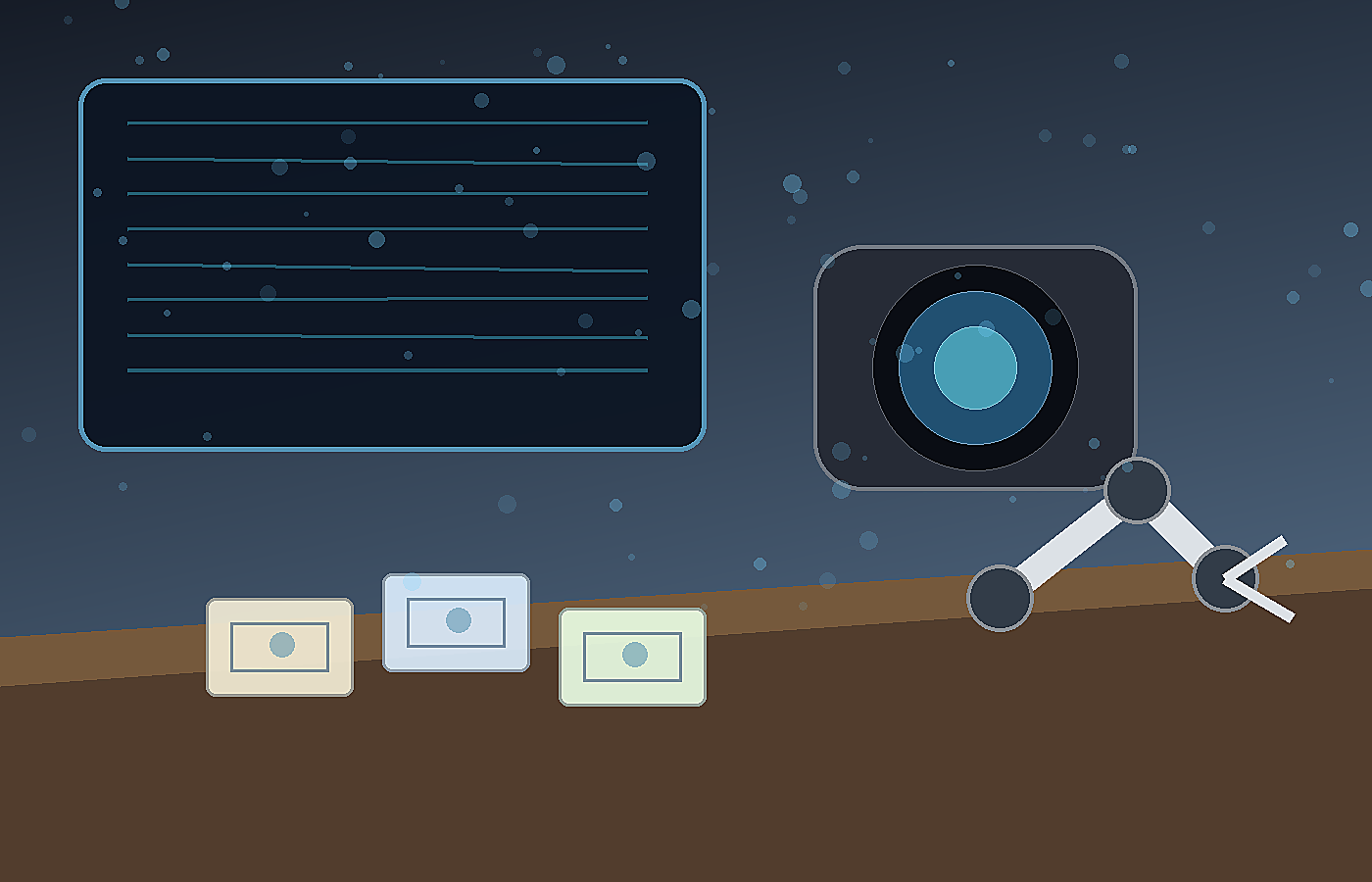
In the first image, the microphone on the left represents continuous user speech. The small cards in the center stand for moment-by-moment model decisions: listen, acknowledge, speak, or allow interruption. The separate work cards on the right show search and analysis tasks being handled away from the live conversational flow.
In voice AI, a smart answer and a comfortable answer are not the same problem. The real test for GPT-Live is whether latency, turn detection, and background delegation make everyday conversation feel less interrupted.
Checkpoints
First, the preference results OpenAI reports were produced under OpenAI-designed conditions. Improvements on GPQA, BrowseComp, and the internal τ³-Voice Telecom variant are useful signals, but real calls, noisy rooms, and multilingual accents still need independent validation.
Second, voice interfaces raise substantial privacy questions. If audio is continuously processed in meetings, cars, or homes, storage policy, real-time processing boundaries, and enterprise data controls become part of the buying decision.
Third, API access is still described as forthcoming. Developers who want to build their own voice agents will need to verify latency, pricing, tool-call permissions, and call-recording rules. For now, the safer way to evaluate the release is to watch how the new ChatGPT Voice experience changes daily use.
In short, GPT-Live treats voice AI less like a speaker attached to a larger model and more like a real-time work interface. Its success will likely depend less on benchmark charts than on whether conversations break less often and whether background work stays out of the user’s way.



No comments:
Post a Comment