The manufacturing AI Korea grant listed on K-Startup is a small but concrete support program for hardware manufacturers applying AI on the factory floor. The official K-Startup page states that applications run from July 22, 2026 at 00:00 to August 7, 2026 at 18:00 KST, with email submission to creativefactory@iact.or.kr.
For international readers tracking Korean public startup programs, the important point is scope. This is not broad cloud-credit funding or a generic software voucher. The notice, run by Kyungpook National University Startup Support Center, selects four companies and offers up to KRW 10 million per company as indirect materials support. The official Korean source is the K-Startup notice and its attached PDF announcement, while the operating center also maintains public information at the Kyungpook National University Startup Support Center site.
Program snapshot: materials for real manufacturing AI products
The attached notice describes support for consumable materials, subsidiary materials, consumable parts, and modules needed for product verification or prototype production. It explicitly excludes asset-like purchases such as general equipment, electronics, machinery, desks, and chairs. It also excludes outsourced development, facility or software rental, repairs, and labor costs.
| Item | Official notice summary |
|---|---|
| Program | Manufacturing AI technology commercialization support |
| Application period | July 22, 2026 00:00 ~ August 7, 2026 18:00 KST |
| Agreement period | September 1 ~ November 30, 2026, planned |
| Selection scale | 4 companies |
| Support limit | Up to KRW 10 million per company, indirect support |
| Application route | Email submission with the designated forms |
| Contact | 053-219-4105, creativefactory@iact.or.kr |
The K-Startup manufacturing AI notice is narrow: Korean hardware AI support is tied to a tangible factory or product outcome, and Korea AI materials support is limited to items that can be purchased for validation or prototyping.
Treat this as a materials-backed validation program. If the spending plan mainly covers SaaS subscriptions, outsourced engineering, or general-purpose equipment, it probably does not match the notice.
Eligibility: Korea-based manufacturing status plus AI deployment
The program targets hardware manufacturing companies that own or are developing AI technology usable in a manufacturing setting. The attached notice says the applicant's business registration should include manufacturing, and the company should be applying AI in the manufacturing field. In-house AI appears preferred, but the notice also allows use of external AI solutions.
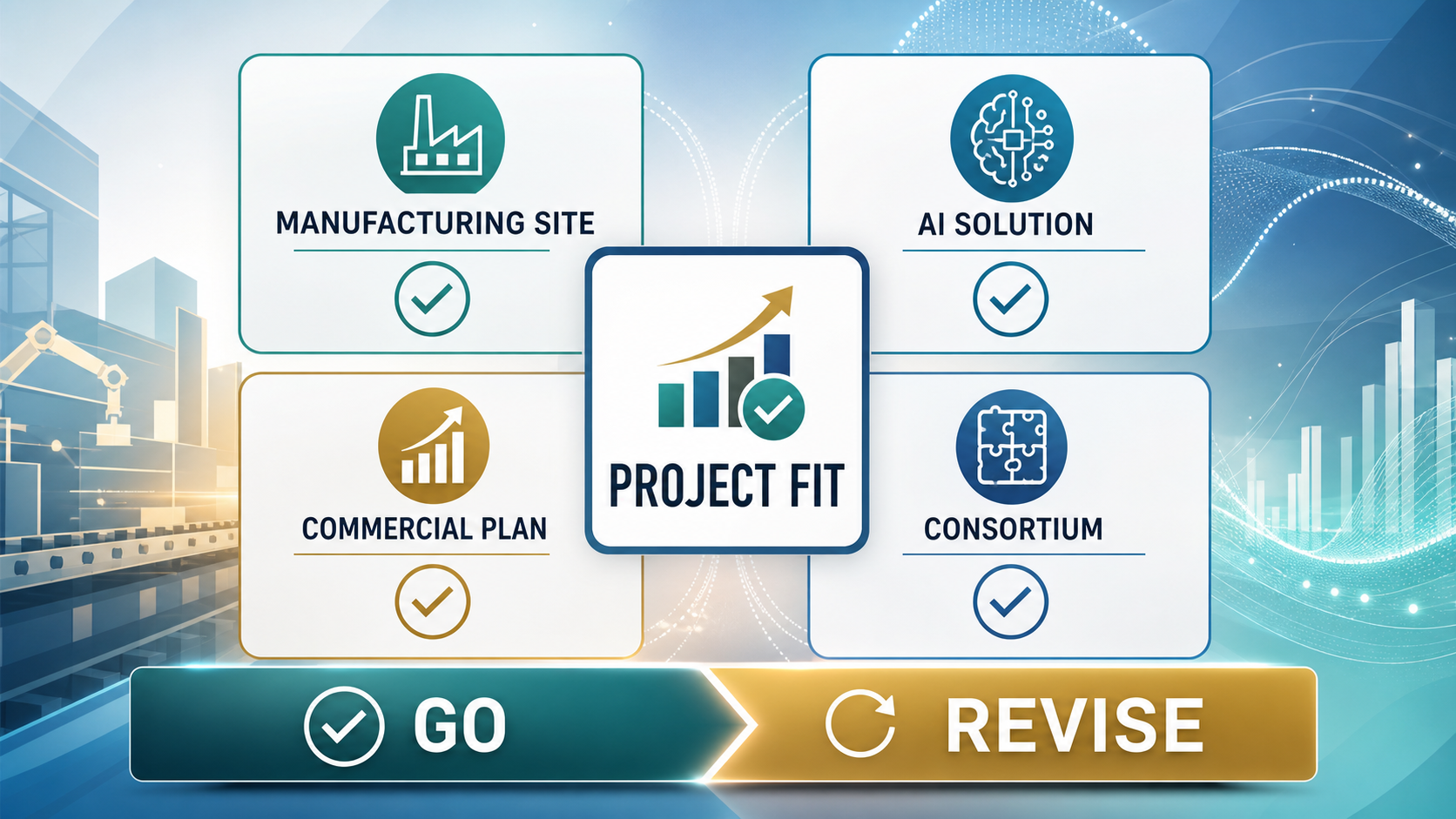
A Korean hardware team should check three gates before spending time on the application.
- The business registration clearly includes manufacturing.
- The AI use case is tied to operations such as process control, inspection, quality management, equipment operation, or production validation.
- The company is producing or developing a tangible product for market release, rather than simply distributing or reselling another product.
How to frame the application
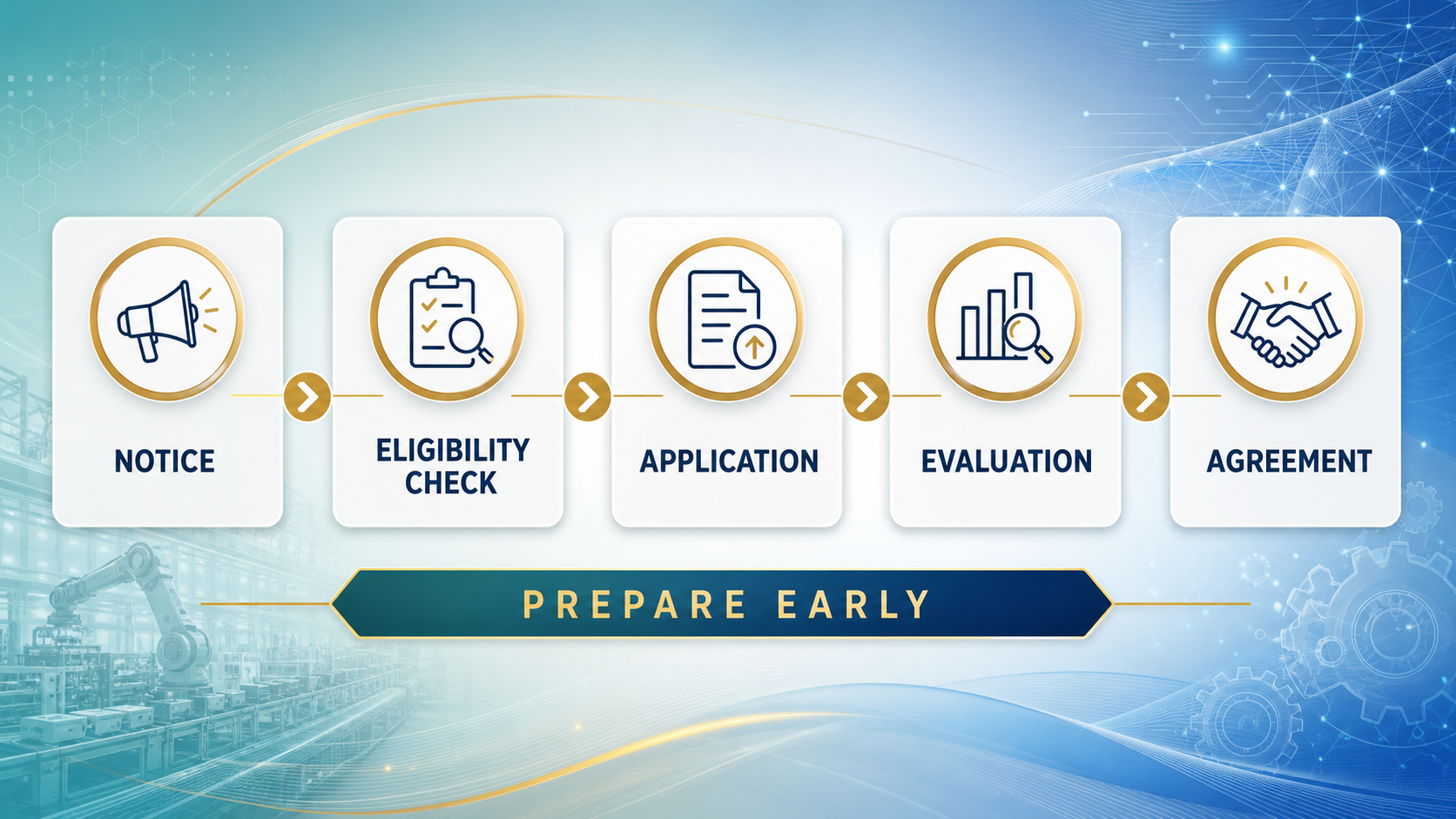
The review process combines document screening and an on-site review. The notice assigns the first round to need, completeness, and commercialization potential, then gives the second round heavier weight on execution, team capability, and expected impact. In practice, a strong application should show the current product state, the exact materials needed, and what measurable result can be produced during the short September-to-November execution window.
The application package includes the designated application form, company introduction, program plan, budget plan, privacy consent, integrity pledge, and evidence documents. The notice asks applicants to submit one PDF package by email. Because this is not a portal upload, applicants should avoid last-minute submission and confirm receipt with the program office.
Pre-submission checklist
- Use the email subject format requested in the notice:
Manufacturing AI support_company namein Korean as specified by the program. - Separate supported materials from excluded items before writing the budget table.
- Check whether the same product is already receiving support from another government, local-government, or institutional program.
- Verify tax, local tax, social-insurance, and public-subsidy restriction status before submission.
- Keep the plan realistic: purchasing, validation, and reporting must fit into roughly three months.
The best-fit applicant is not a team with a vague AI idea. It is a Korea-based manufacturer that can show where AI already touches production, why a specific set of materials unlocks validation, and what product outcome will be reported by the end of November.



No comments:
Post a Comment