Muse Spark 1.1 is the agentic multimodal AI model Meta introduced on July 9, 2026. The important point is not simply that the model sounds better in conversation. It is that Meta is exposing a model designed to work with external tools and computer interfaces through a developer API. Meta says Muse Spark 1.1 is available in Thinking mode in Meta AI and through the public preview of the Meta Model API.
That matters because the center of AI competition is shifting from “Can the model produce a good answer?” to “Can it complete a long-running task without breaking the workflow?” Muse Spark 1.1 is meant to bring planning, subagent delegation, tool calling, screen understanding and code repair into one operating loop. For developers, this is the kind of technology where permission boundaries, logs, recovery paths and safety evaluation matter before raw model scores do.
Agentic multimodal AI also makes computer use AI and long context agents part of the same deployment decision.
Background
Meta’s Muse Spark 1.1 announcement emphasizes three directions. First, the model is aimed at agentic work that adapts to tools, MCP servers and custom skills. Second, it connects multimodal understanding with coding and computer use. Third, Meta says the model can actively manage a 1 million-token context window, allowing it to retrieve earlier decisions during extended sessions.
This is related to the broader multi-agent direction, but it is different from the way a conventional chatbot is used. Imagine an ecommerce operator asking an agent to analyze last month’s return-support flow, revise an FAQ draft and check a test order in an admin console. The model would not merely read documents. It would have to inspect a screen, write a script when automation is faster, and directly click through the interface when that is simpler. Meta says Muse Spark 1.1 was trained to distinguish when scripting is the better path and when direct interface use is the more practical route.
| What to watch | Why it matters | Practical question |
|---|---|---|
| Tool calling | Executes external apps, MCP tools and functions | Which permissions should be exposed? |
| Computer use | Operates screens, browsers and applications | Which steps need human approval? |
| Long context | Maintains decisions across extended work | How are stale facts corrected? |
| Safety evaluation | Measures deployment risk before and after launch | Are blocking, audit and recovery logs available? |
How it works
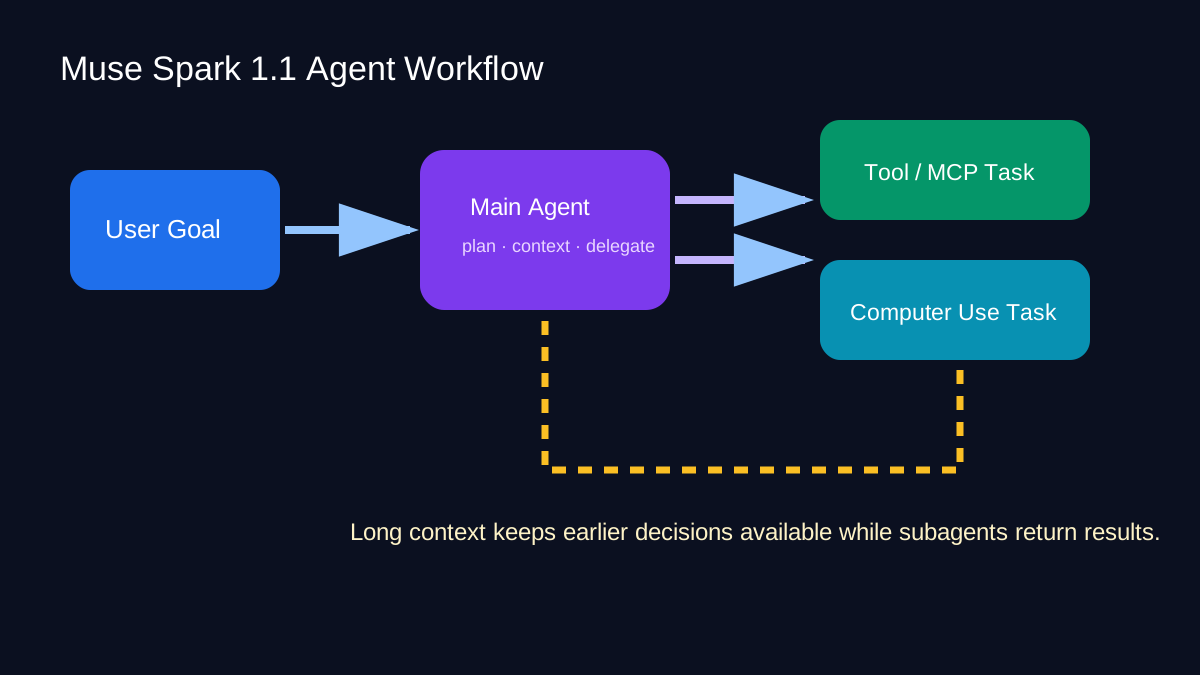
The operating principle behind Muse Spark 1.1 is closer to “a main agent divides work and coordinates tools and subworkers” than to “one large model reasons through every click by itself.” Meta’s announcement says that when the model acts as the main agent, it can gather context, make a plan and delegate execution across parallel subagents. When it acts as a subagent, it keeps to its assigned job and escalates back to the main agent when needed.
A coding example makes the pattern easier to see. The model builds a web app, much like the practical edge of browser AI agents, captures automated screenshots to identify user-visible failures, traces those failures back to relevant code, applies fixes and validates the result. Multimodal understanding is therefore not just a feature for “reading a screen.” It becomes useful when visual evidence can flow into code changes and test commands.
When an organization adopts agentic multimodal AI, task definition comes before model selection. Quality and safety depend on what the model may see, what it may execute and when it must stop and hand control to a human.
Architecture
The diagram below simplifies the Muse Spark 1.1 workflow. A user goal enters the system, the main agent manages the plan and context, and tool or computer-use tasks are split out for execution. Long context acts as the connective tissue that keeps earlier decisions and returned results available.
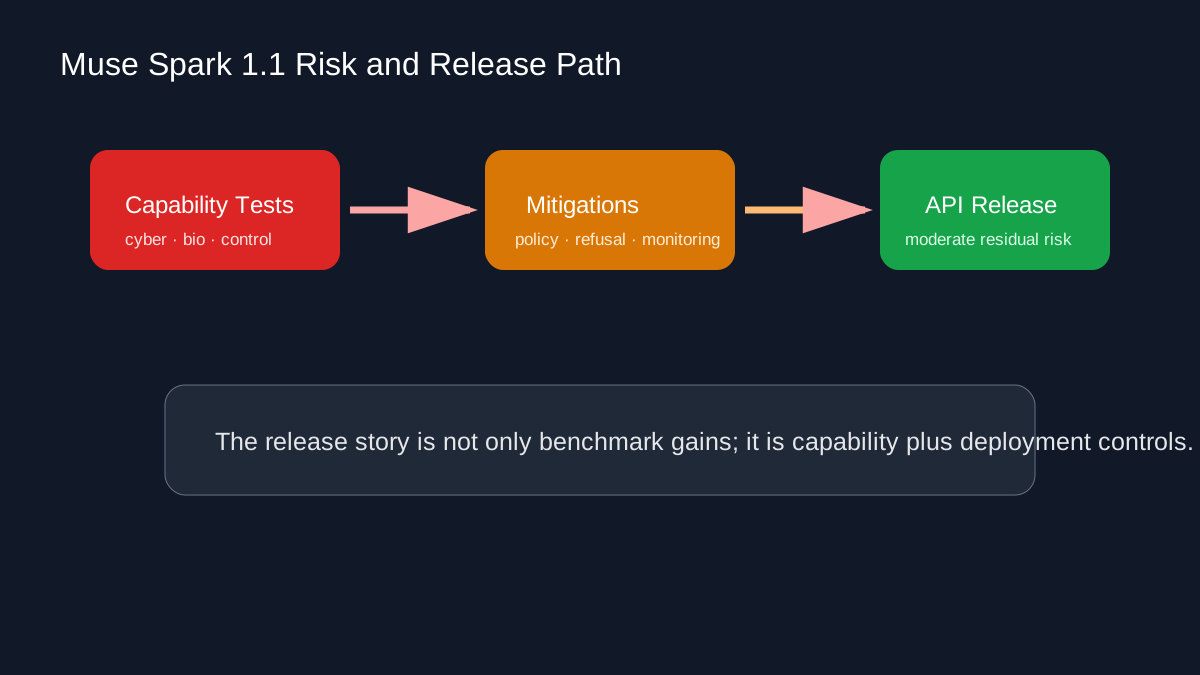
Once a public API can carry broad agentic permissions, risk assessment becomes part of the product rather than a footnote. The Muse Spark 1.1 Evaluation Report evaluates chemical and biological risk, cybersecurity, loss of control, adversarial robustness and model behavior. The report says that before mitigations, Meta cannot rule out Muse Spark 1.1 reaching a high-risk threshold in chemical and biological as well as cybersecurity domains; after deployment mitigations, Meta assesses the residual risk as moderate or lower.
Checkpoints
- A model connected to an API needs permission design more than a demo chatbot does. If files, browsers and internal systems are opened all at once, a small error can become a real-world change.
- Benchmark gains do not guarantee successful workplace automation. Company-specific interfaces, policies, exceptions and audit logs can make the same model behave very differently.
- Long context agents are useful, but it can also preserve outdated instructions or mistaken observations for too long. Context compaction and update rules need to be explicit.
- The publication of a safety report is a positive signal, but numbers are not a deployment license. Each organization still needs its own risk criteria and approval workflow.
In short, Muse Spark 1.1 is a sign that multimodal models are moving toward developer-facing agent platforms. The interesting part is not the model’s conversational polish; it is the packaging of tool use, screen understanding, long-task management and safety mitigations into one product surface. In practical adoption, the first question should not be “What can we automate?” but “How far should this be allowed to automate?”



No comments:
Post a Comment