Cloudflare Internal DNS is designed to change the old pattern of leaving private DNS to separate appliances and cloud-specific settings. In July 2026, Cloudflare announced general availability of Internal DNS, saying private name resolution can now be managed from the same control plane used for public DNS, Zero Trust, and networking. The goal is to manage internal service names, VPN-only domains, and cloud-private zones in one place.
This matters because outages often begin in small, old pieces of infrastructure. When public DNS, private DNS, cloud DNS, and security policy move separately, split-horizon DNS becomes hard to keep in sync. Drift appears when internal and external users are supposed to receive different answers for the same name. As services such as Cloudflare Workers AI spread across edge environments, consistent name-resolution policy becomes more important.
Background
According to the Cloudflare announcement, Internal DNS has two main components: Gateway Resolver and Internal Authoritative DNS. Gateway Resolver handles recursive resolution and policy evaluation. Internal Authoritative DNS serves authoritative answers for internal zones. Cloudflare also says the feature is included with Cloudflare Gateway for Enterprise customers at no additional charge.
| Problem | Common operating model | Internal DNS approach |
|---|---|---|
| Public/private split | Separate DNS platforms | One control plane |
| Split-horizon DNS | Manually synchronized duplicate zones | Views and zone references |
| Security policy | Policy outside DNS | Resolution controlled by Gateway policy |
| Change propagation | TTL and appliance-specific delays | API input followed by global propagation |
How it works
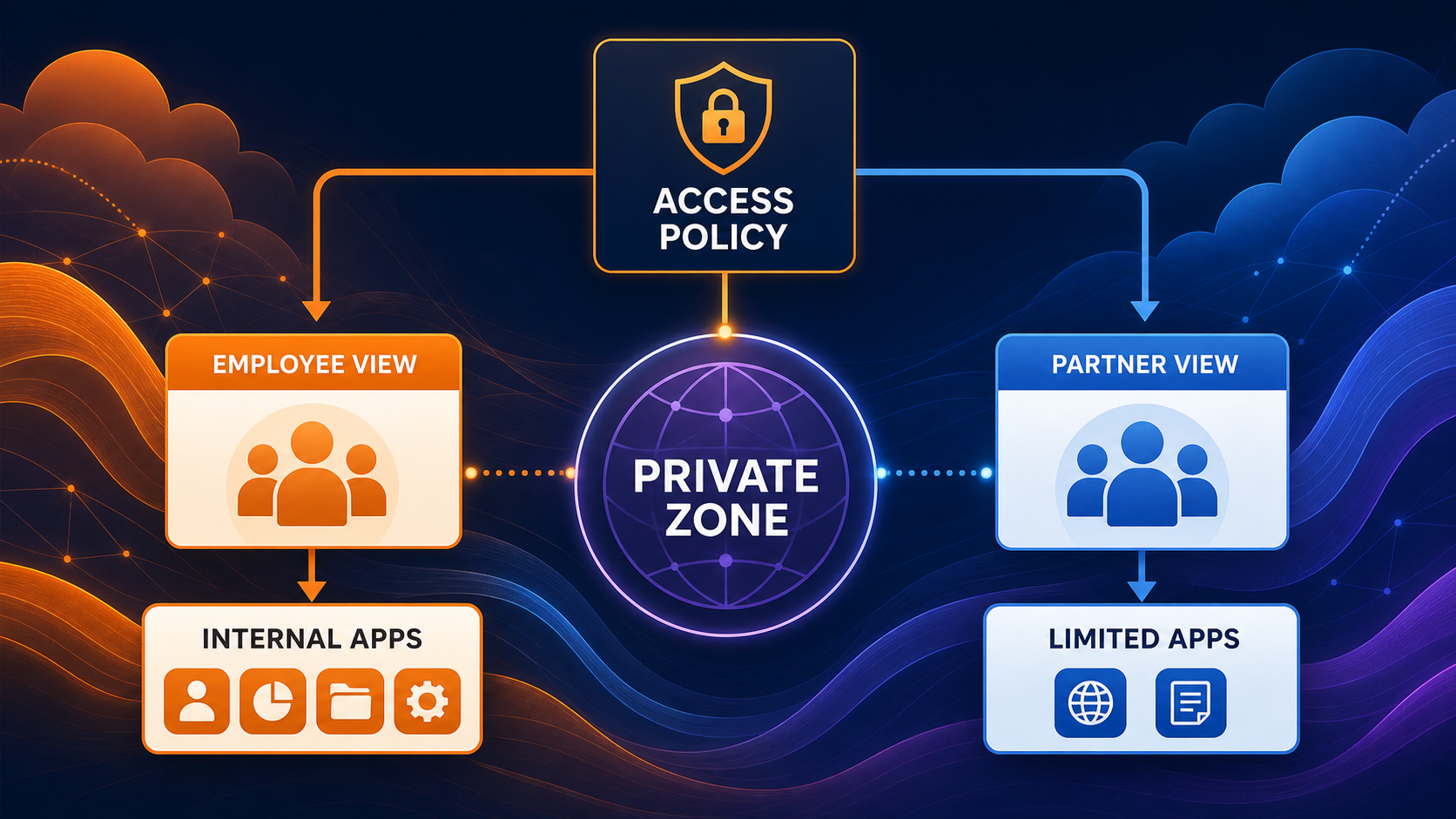
A DNS query first reaches Gateway Resolver. There, policy decides which view should answer based on the user, device, location, and expression rules. If a policy points to an internal view, Internal Authoritative DNS answers from the matching internal zone. If policy blocks the query, it is dropped. If the name is not internal, the query can follow the public DNS path through 1.1.1.1. The separate Cloudflare DNS policies documentation explains the policy and blocking model in more detail.
The key object is the zone reference. A common zone such as intranet.local can be referenced across multiple views rather than copied repeatedly. That allows different answers for regions, teams, or devices while reducing duplicated records. In edge containers and multicloud environments, this turns the question “which network can see which name?” into policy rather than scattered configuration.
Architecture
The first image shows a user query passing through a policy board and branching to an internal view, a block decision, or public DNS. The second image shows dashboard, Terraform, and API changes entering one DNS Records API before propagating to the global edge.
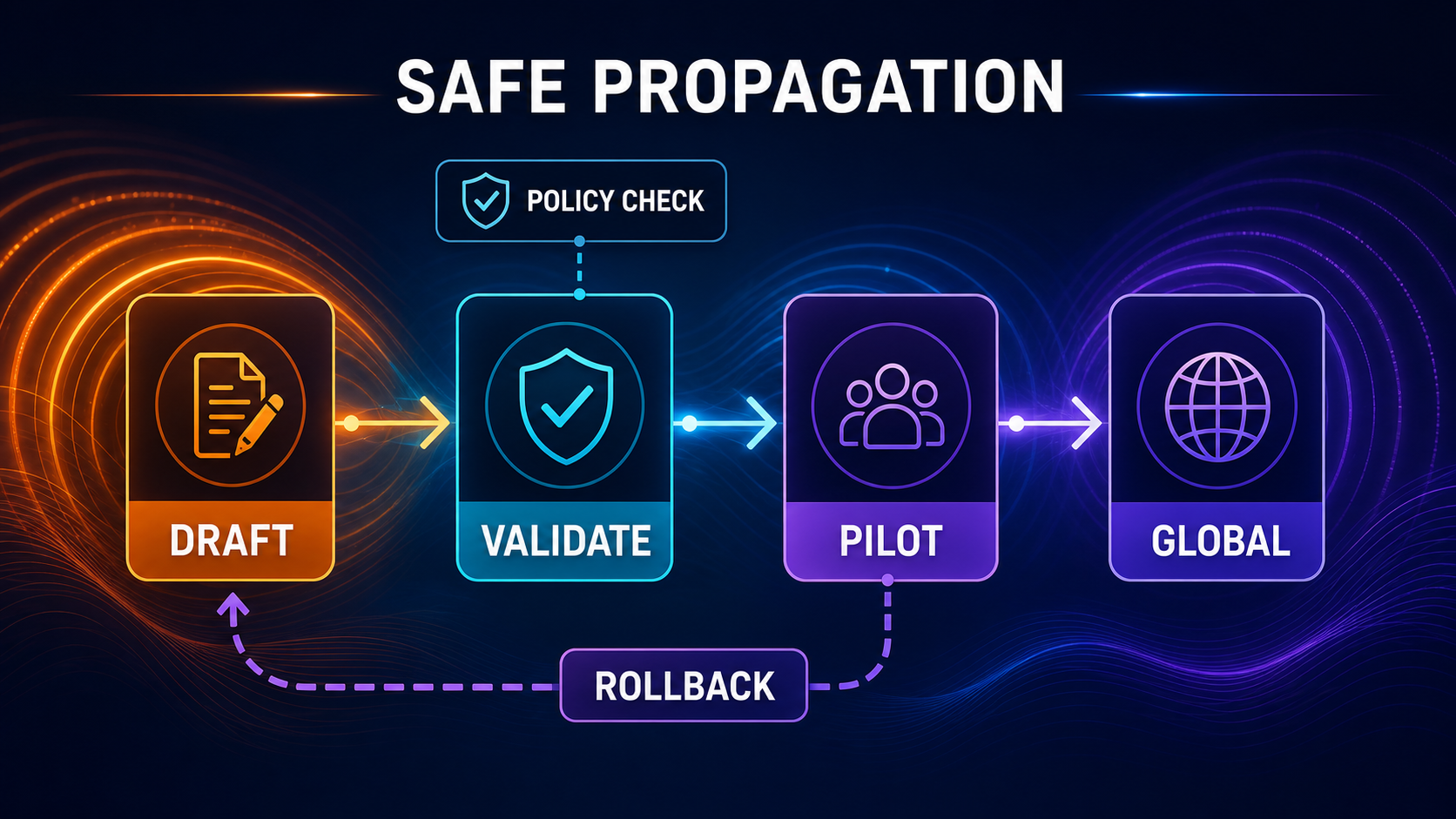
Modernizing private DNS is not only about faster name resolution. The larger change is bringing public names, private names, user policy, and audit logs into the same operating model.
Checkpoints
Internal DNS is a natural fit for Enterprise organizations already using Cloudflare Gateway, but it will not match every environment immediately. Organizations with existing Active Directory DNS, cloud-native private zones, and on-premises conditional forwarders need a careful migration order. Internal name resolution has a large blast radius, so view design and rollback plans matter.
The significance of Cloudflare Internal DNS is that private DNS is moving from an old back-office infrastructure item into the Zero Trust policy layer. Teams with many internal services and complex multicloud networks should treat DNS not merely as record storage, but as the starting point for access control and visibility.




No comments:
Post a Comment