Amazon Bedrock Managed Knowledge Base is an attempt to package the work of building RAG into a managed service. Retrieval-augmented generation improves model answers by attaching retrieved enterprise data, but real operations involve connectors, permissions, parsing, chunking, embeddings, reranking, vector storage, and evaluation. In its 2026 announcement, AWS positioned Managed Knowledge Base as a single primitive that reduces that complexity.
For enterprises, this is not a small shift. Internal knowledge is scattered across SharePoint, Confluence, Google Drive, OneDrive, S3, and web pages, and each source has its own permissions and formats. If an agent answers business questions, it must not only find current documents but also preserve who is allowed to see them. That makes a knowledge base less like a model feature and more like an AI infrastructure cloud operations problem.
Background
The AWS News Blog says Managed Knowledge Base manages storage, retrieval, embeddings, reranking, and foundation-model selection by default. At launch, supported connectors include Amazon S3, SharePoint, Confluence, Web Crawler, Google Drive, and OneDrive. The Amazon Bedrock documentation says Managed Knowledge Base integrates with AgentCore Gateway so MCP-compatible agent frameworks can invoke a knowledge base as a tool.
| Component | Role | Operational burden reduced |
|---|---|---|
| Native connectors | Connect enterprise sources | Source-specific connector development |
| Smart Parsing | Parse by document type | Handling PDFs, PPTX files, and visual documents |
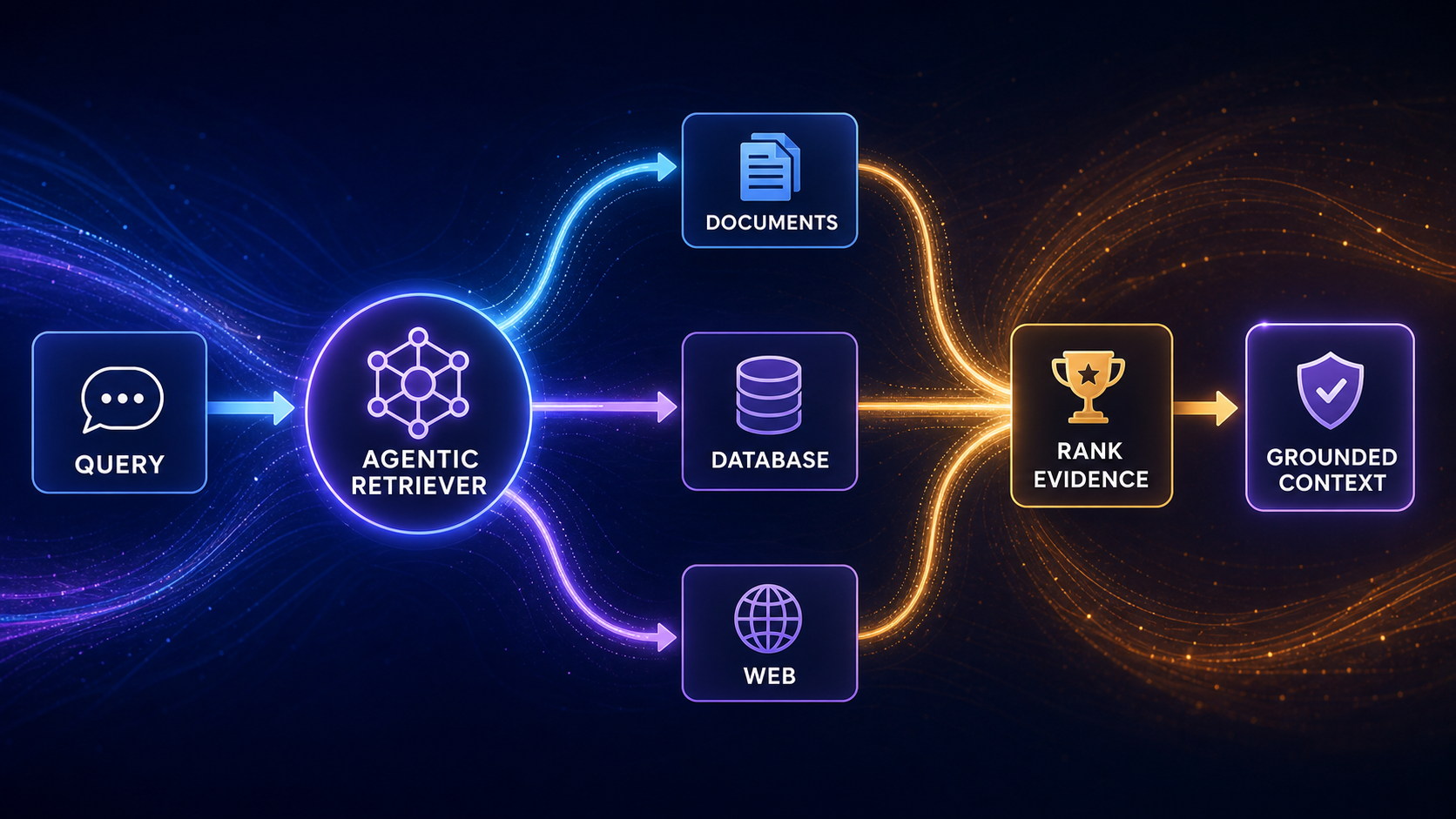
| Agentic Retriever | Plan multi-hop retrieval | Decomposing complex questions and iterating search |
| Observability | Retrieval traces and metrics | Checking evidence and answer quality |
How it works
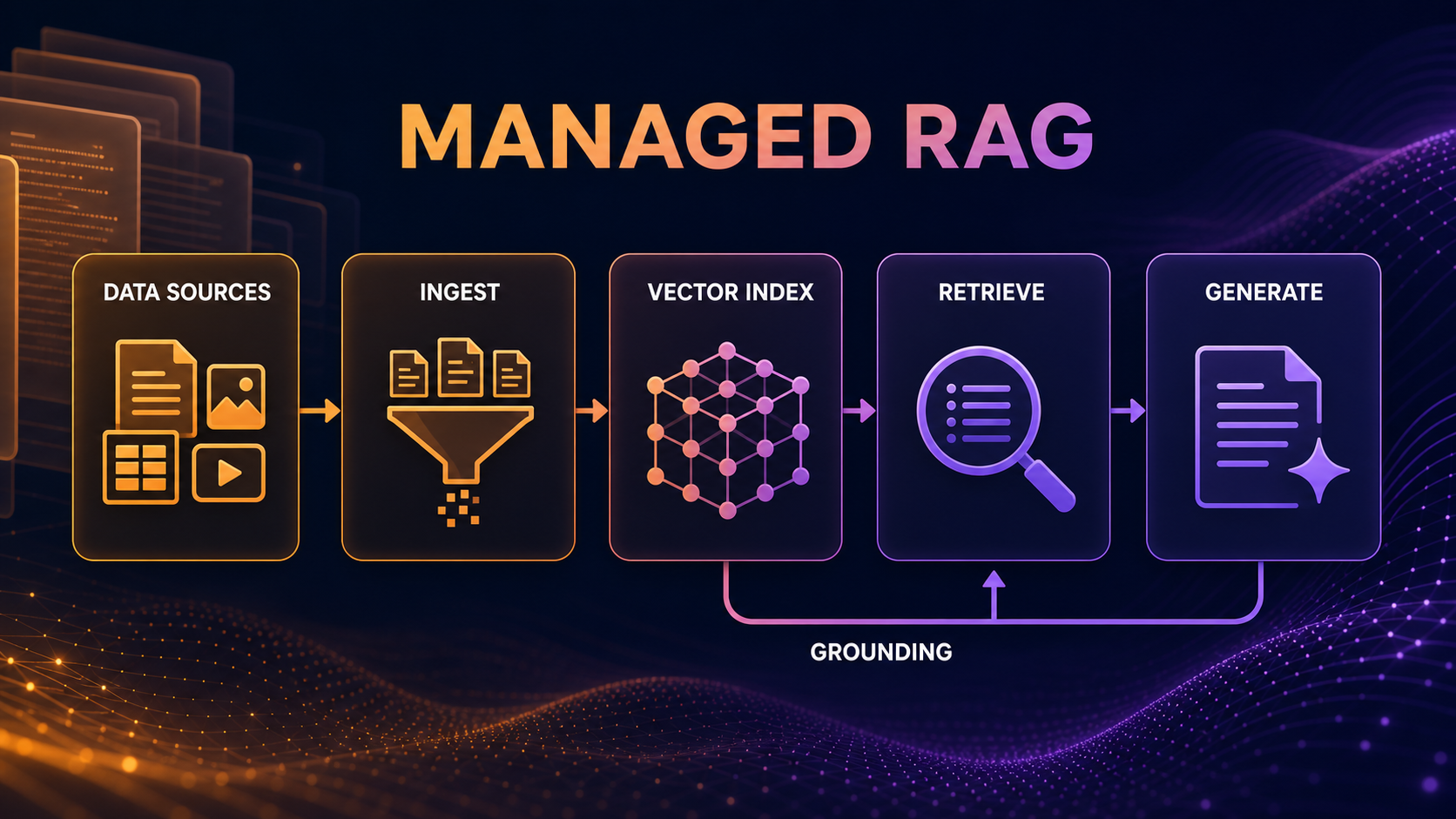
A typical RAG pipeline chunks documents, stores embeddings, finds relevant passages for a query, and adds them to the model prompt. The problem is that real questions are rarely simple. A question such as “Can the ML platform team prepay annual commitments from its budget?” may require both the team budget document and the expense policy. AWS describes Agentic Retriever as decomposing such questions, searching across one or more knowledge bases, and gathering enough evidence before returning results.
Smart Parsing matters as well. Tables, images, scanned documents, and video descriptions are easy to lose with basic text extraction. A managed parser attempts to choose the right strategy for each document type and turn it into retrievable units. This is the memory-and-permission layer that agentic AI needs before it can move into real enterprise work.
Architecture
The first image shows several stacks of enterprise documents flowing into one knowledge base, with retrieved evidence passed to an agent. The second shows Agentic Retriever splitting a complex question into smaller question cards and recombining the evidence.
The hard part of RAG is not merely attaching a vector database. It is preparing data and preserving permissions. Managed knowledge bases try to absorb that recurring operational work into a cloud service.
Checkpoints
A managed service can speed up the first deployment, but it can also create platform dependence. Even when connectors and default model choices are convenient, retrieval quality and permission mapping must be tested against the organization’s own data. Multi-hop retrieval may improve answers while increasing cost and latency. If sensitive documents are involved, ACL filtering, audit logs, and regional availability should be checked first.
The main point of Bedrock Managed Knowledge Base is that RAG is moving from experiment code into operational infrastructure. For enterprise agents, advantage may depend less on the model name and more on the data layer that can retrieve the right evidence safely.




No comments:
Post a Comment