GitHub AI security detections add another layer to pull-request review. CodeQL remains important, but no static analysis system covers every language, framework, and application pattern perfectly. AI-assisted detections are designed to surface additional candidate vulnerabilities in the PR interface so reviewers can inspect risky code earlier.
The practical value is timing. A vulnerability found after deployment is expensive. A warning shown during PR review gives the team a chance to check authentication, authorization, input validation, data exposure, and dangerous framework usage while the context is still fresh.
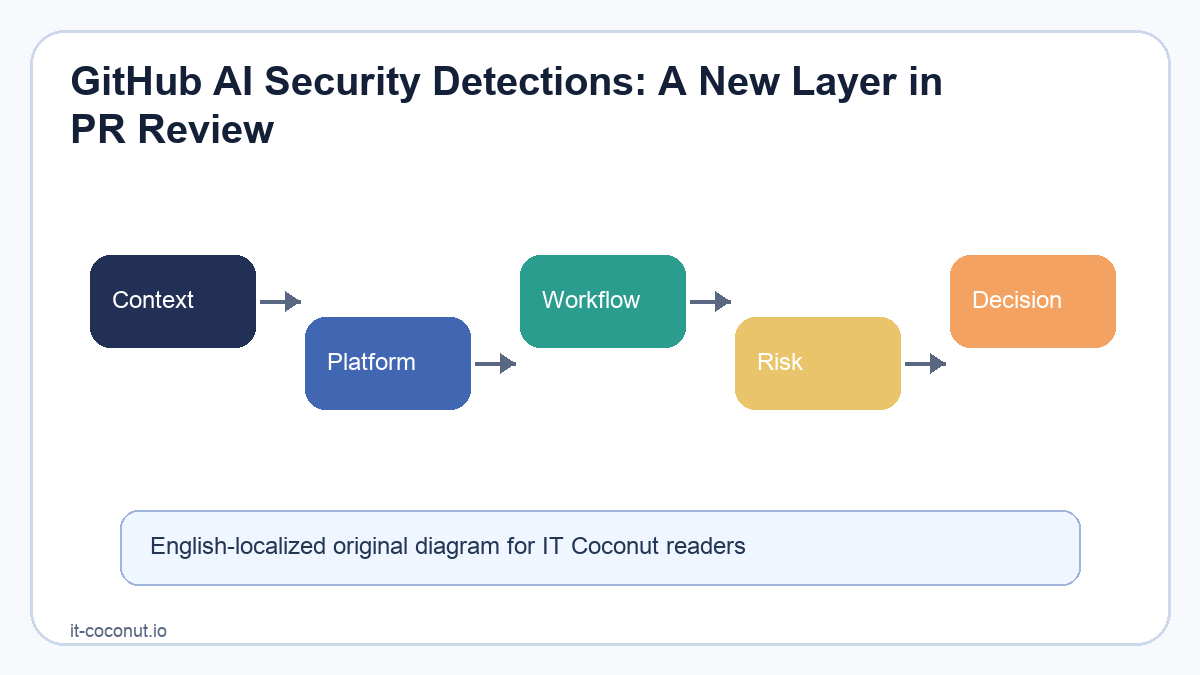
AI findings need interpretation
Key details at a glance
| Reader question | Practical takeaway |
|---|---|
| What this article explains | GitHub AI Security Detections: A New Layer in PR Review |
| Core SEO focus | GitHub AI security detections, GitHub code scanning, CodeQL default setup |
| How to read it | Separate the durable signal from vendor messaging, short-term hype, and implementation friction. |
| The word AI should not make teams treat every finding as an automatic block. GitHub's framing separates AI-detected findings from traditional analysis results, which is important. The reviewer needs to understand whether the finding reflects a real vulnerability, a missing guardrail, or a pattern that is safe in the project's architecture. |
That makes the feature most useful when paired with clear ownership. Security teams can define review rules; application teams can explain intent; platform teams can tune defaults.
Why generated code raises the stakes
AI coding tools can generate a large amount of code quickly. Some of it will be correct. Some will be plausible but unsafe. A PR-level security layer helps teams catch issues before they spread through the codebase. It belongs next to tests, dependency checks, secret scanning, and human review.
The broader lesson is the same as with code quality gates: software teams need controls that match the speed of AI-assisted development. More output only helps when review systems scale with it.
For readers comparing search terms, this article is also relevant to PR security review.
Primary sources
Related reading
For broader context, read AI coding agents.
A second useful reference is Claude 4 agentic coding.
Readers following the infrastructure side may also want OpenAI Codex cloud agent.




No comments:
Post a Comment